A new wave of Vietnamese founders, many with scientific backgrounds, is turning cutting-edge research into innovation from brain-computer interface wearables to biotechnology breakthroughs with the shared ambition of building world-class technology brands rooted in Vietnam.
Alongside established businesses that have built their brands over decades, a new generation of young founders, often scientists, are continuing this development. Their individual dreams are being combined into a national strength: establishing a leading technology brand originating from Vietnam.
Made-in-Vietnam brainwave device offers a new path to mental well-being
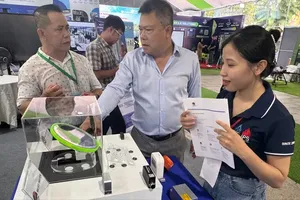
In a modest office in Ho Chi Minh City, a small device is "reading" human brain signals to assess concentration levels – this is not science fiction, but a reality being created. That's Brain Life Focus, a smart wearable device that applies AI (artificial intelligence) and BCI (brain-computer interface) created by Vi Chi Thanh from International University - Vietnam National University Ho Chi Minh City and his colleagues to measure brainwaves, identify states, and provide personalized solutions to improve people's mental health. A big dream to help people understand and master their minds through technology; a dream nurtured by Vietnamese scientists.
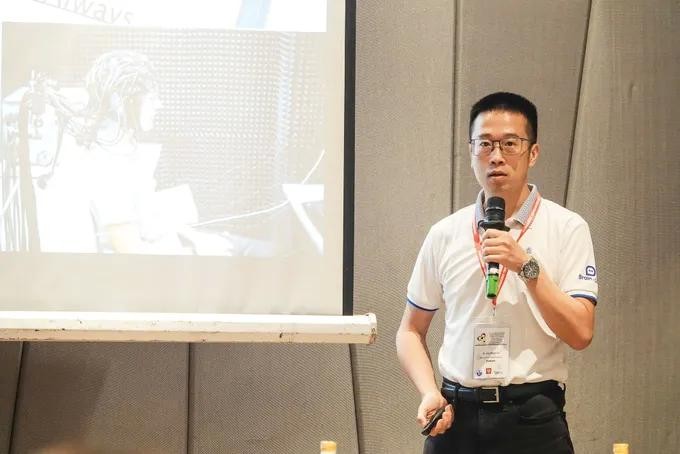
The Brainlife head-worn device is a biomedical product entirely "made in Vietnam." For Vi Chi Thanh, this marks the reason he returned to his country: "To directly serve the people of the land where I was born and raised." The Alpha version of the device has been tested in real-world settings at numerous universities and laboratories in Vietnam, the UK, and the US, demonstrating its high applicability and vast potential.
Vi Chi Thanh is also one of the founders of Brain-Life, a startup specializing in BCI solutions combined with AI, to realize the big picture: Understanding mental health, managing stress, improving concentration, and enhancing quality of life. He shared: "In early 2023, I founded Brain-Life with a humble dream: to bring brain-computer interface technology out of the lab, so that anyone can understand and manage their own mind. The device doesn't emit signals or Bluetooth; it's a passive sensor as it is completely biosafety-free. The data collected allows for the detection of signs of stress, tension, lack of concentration, and from there, provides advice. For the average user, the device acts as a 'mental coach.' For doctors, it's a tool to support real-time monitoring and assessment of patients."
Currently, the product is in the trial supply phase to research units, laboratories, and hospitals through a pre-order system. Approximately 20 devices have been used by research groups both domestically and internationally. The large-scale production line is expected to become operational in 2026. With their achievements, the Brain-Life team has become one of the Top 5 global NeuroTech startups according to the Global Rising Star ranking by StartUs Insights (Austria), and one of the Top 11 AI startups in Vietnam, selected by VietLeap Accelerator 2025.
In early 2026, the team will be sponsored by CES Eureka Park 2026 (Las Vegas, USA) to participate in the world's largest technology event, as a promising startup in the field of applied AI neuroscience.
Using Vietnamese technology to rescue the global coconut industry
In the final days of the year, the research team at Growlab Company in Ho Chi Minh City received welcome news when they won the National Creative Startup Talent Search 2025, also known as TECHFEST Vietnam 2025. Notably, this was the first time the competition invited international teams to help address practical challenges in Vietnam, raising both its level of integration and professional standards.
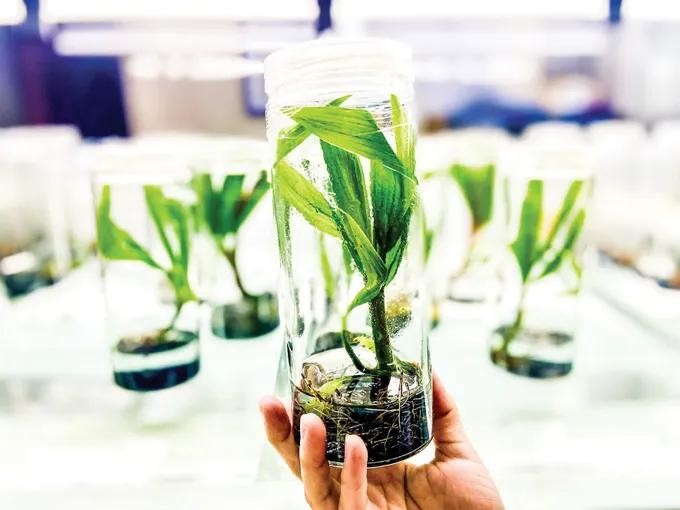
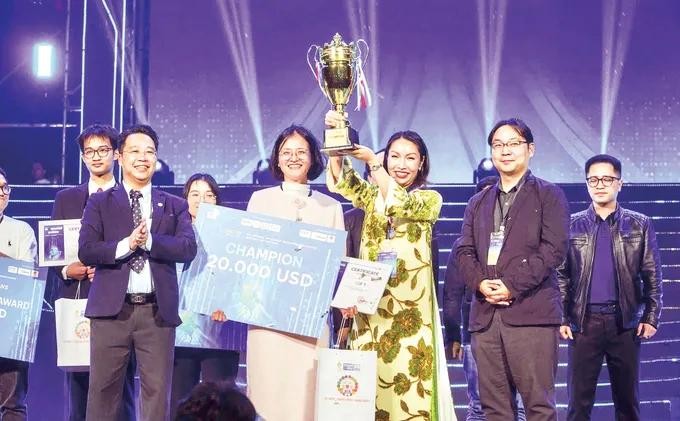
As a result, competition among startups became more intense and more demanding. Growlab, a Vietnamese biotechnology startup, claimed first prize and secured a place at the Startup World Cup 2026 in San Francisco, United States.
Growlab’s solution has drawn strong interest for its potential to revitalize the coconut industry and create new opportunities for millions of farmers. With billions of coconut trees worldwide aging and producing lower yields, the industry faces a serious shortage of high quality seedlings. Growlab is the first organization to successfully implement large scale coconut tissue culture. Associate Professor Nguyen Phuong Thao, the company’s senior advisor, said the project could transform the industry through Multipuno, a patent pending technique capable of producing uniform, high yield coconut seedlings on an industrial scale. According to her, Multipuno seedlings could help farmers increase their incomes up to twentyfold, generate jobs and ensure a stable supply for processing and export.
Seeing global challenges as opportunities for Vietnamese innovation, Growlab chose a path widely considered both difficult and valuable. The company pursued industrial scale coconut propagation using tissue culture technology. Although many countries and leading research institutes have worked on the technique for decades, none had previously achieved stable commercial production.
Reflecting on the journey, Associate Professor Nguyen Phuong Thao said entrepreneurship differs sharply from academic research. Scientists, she noted, are often readily heard and respected in professional settings. Entrepreneurs, by contrast, frequently face rejection and skepticism when seeking investment. She recalled a 2024 conversation with Professor Klaus Schwab, founder and chairman of the World Economic Forum, who emphasized that people of any age can start a business. Encouraged by that perspective, she decided to bring her research to market because of its tangible social impact, particularly for Vietnamese farmers. The team invested its own money, time and effort, working through repeated trials, setbacks and restarts to turn theory into viable solutions.
Risk, she added, is inherent in scientific work. When the project finally succeeded, many international colleagues expressed astonishment, having long believed that industrial scale coconut propagation was commercially unfeasible despite its theoretical promise. Growlab’s first place finish stands as a testament to the spirit of Vietnamese startups and their willingness to attempt what others consider impossible.
Vietnam’s hera drone breaks global barriers
For years, unmanned aerial vehicles (UAVs) were the domain of technological giants. But in 2022, a newcomer from Vietnam stunned the industry: the Hera series, developed by Real-time Robotics VN (RtR).
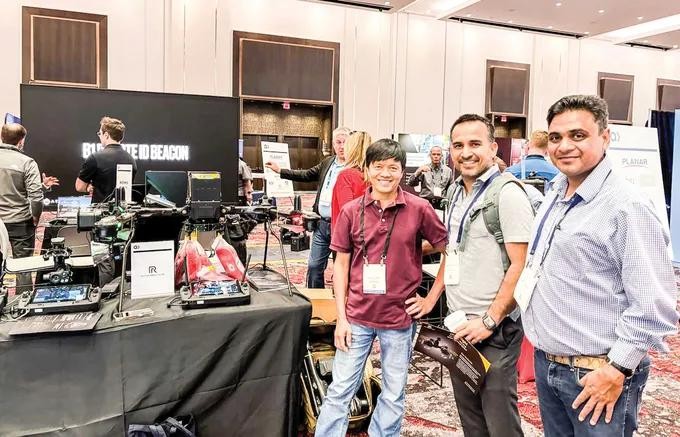
Hera quickly earned global recognition by mastering core technologies with 12 advanced features that outperformed existing drones. During test flights in Alaska in late 2024 and early 2025, Hera was the only drone to complete all operational requirements in extreme conditions of wind and temperatures as low as -30 Celsius degrees. Remarkably, the drone was fully designed and manufactured in Vietnam.
Behind Hera is Luong Viet Quoc, a PhD in economics rather than engineering. Growing up along the Nhieu Loc canal, he overcame hardship with determination and a vision: to prove that Vietnamese talent can excel in high-tech fields. By leading a team of young engineers and collaborating with international experts, Quoc invested heavily in research and development to deliver world-class innovations.
Among Hera’s standout technologies is a gimbal system described as having a “brain” that coordinates two cameras, doubling observation capacity. Another breakthrough, the Sky Watch 360, is the world’s first continuously flying drone equipped with four EO-IR cameras offering a 360-degree view—ideal for search and rescue missions. Both products will debut at the Commercial UAV Expo in Las Vegas in September 2025.
RtR’s achievements are backed by patents that compact drones with high lifting capacity (Australia, 2024), dual-camera gimbals, and small drones capable of carrying shoulder-fired missiles (United States, 2024). These milestones mark Vietnam’s bold entry into the global UAV industry, positioning Hera as a symbol of innovation and resilience.