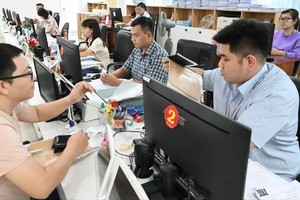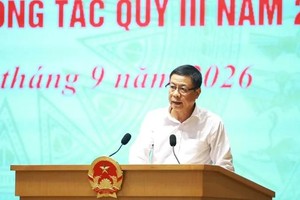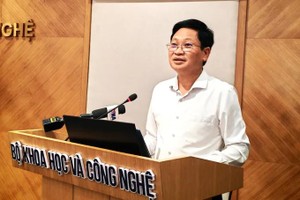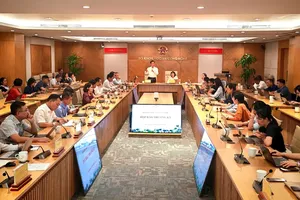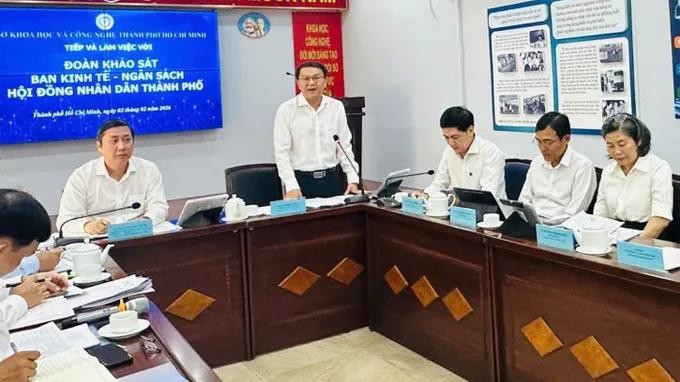
Yesterday afternoon, the Economic and Budget Committee of the Ho Chi Minh City People’s Council held a working survey with the Department of Science and Technology (S&T) to review the implementation of major policies and guidelines issued by the Central Government and the National Assembly on the development of science, technology, innovation, and digital transformation.
Nguyen Cong Danh, Head of the Economic and Budget Committee of the Ho Chi Minh City People's Council, chaired the survey session. The discussions centered on the implementation of Resolution No. 57-NQ/TW of the Politburo, which aims to create breakthroughs in national science, technology, innovation, and digital transformation. This effort is being coordinated with the National Assembly’s Resolution No. 98/2023/QH15, which was recently amended and supplemented by Resolution No. 260/2025/QH15, to pilot specific mechanisms and policies tailored for the development of Ho Chi Minh City.
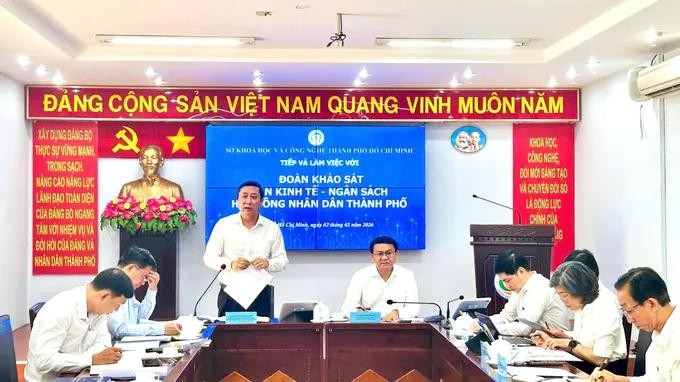
Delegates examined concrete outcomes in science, technology, and digital transformation, while also assessing their practical impact on economic growth, labor productivity, administrative reform, and improvements in the quality of public service delivery in the city.
A key issue raised during the survey was the advisory role of the Department of Science and Technology to the HCMC People’s Council in the coming period, particularly the need to further concretize assigned tasks stipulated in relevant laws, resolutions, decrees, and circulars.
Through the survey, the committee requested detailed clarification on implementation roadmaps, progress to date, challenges and bottlenecks encountered, as well as proposed solutions and recommendations to ensure feasibility and consistency when matters are submitted to the City People’s Council for consideration and decision.
The delegation also reviewed the current status of investment in network infrastructure, data centers, digital platforms, and information technology equipment within the city administration and local authorities under the two-tier local government model. Issues related to system integration, shared usage, data security, and obstacles in investment, procurement, and leasing mechanisms for IT services were openly discussed with the aim of identifying and addressing them promptly.
In addition, the Economic and Budget Committee assessed the allocation and effectiveness of state budget funding for science, technology, innovation, and digital transformation in 2026, including specific tasks and projects, total investment levels, funding sources, implementation timelines, and capital absorption capacity.
In his closing remarks, Mr. Nguyen Cong Danh emphasized that the survey findings provide a critical foundation for future legislative action. He noted that the data will enable the committee to conduct rigorous synthesis and analysis, directly informing the City People’s Council on key policy and mechanism decisions.
Furthermore, the findings are set to bolster the Committee's oversight of science, technology, innovation, and digital transformation initiatives across Ho Chi Minh City.