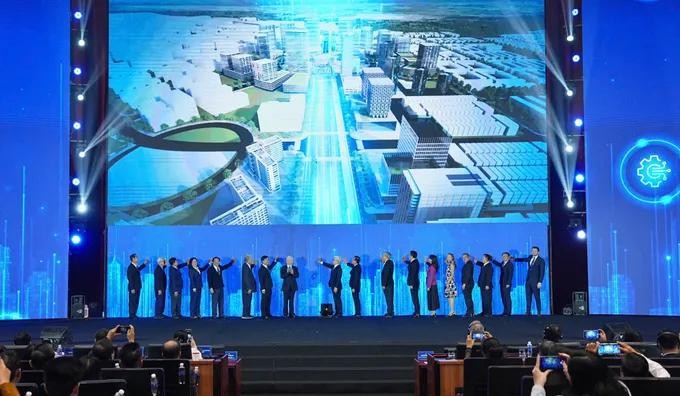
The North Ho Chi Minh City Science and Technology City is designed to serve as the metropolis’s "innovation brain," promoting research, high-tech manufacturing, and sustainable development up to the year 2035.
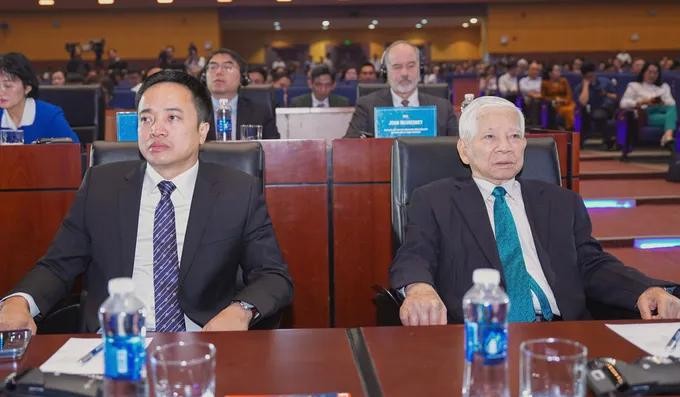
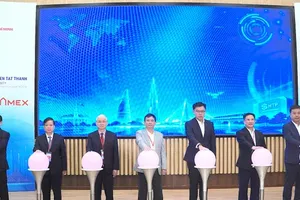
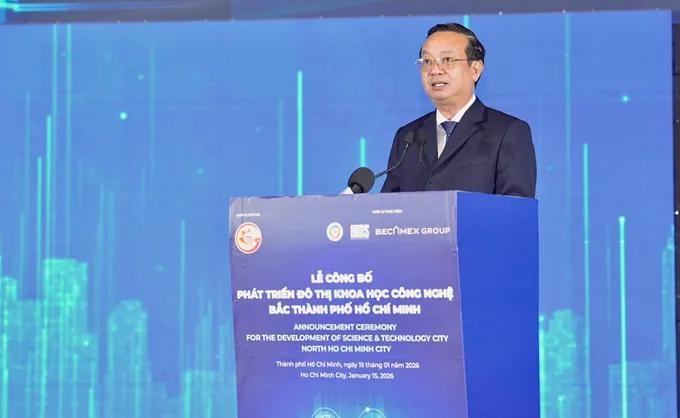
Speaking at the ceremony, Bui Minh Thanh, Vice Chairman of the Ho Chi Minh City People’s Committee, highlighted that developing a science and technology city in this area will not only establish a new growth hub but also create strategic opportunities to redistribute and relocate urban and industrial activities away from the city’s center.
He noted that this is a crucial condition for Ho Chi Minh City to develop into a multi-polar megacity model, reducing pressure on the existing inner city area while improving the efficiency of space and infrastructure use.
The North Ho Chi Minh City Science and Technology City will play a strategic supporting role, alongside the international financial center in Ho Chi Minh City. If the central area plays a role in finance and high-end services, the northern science and technology city will assume the role of a nucleus for research and development, innovation, and high‑tech production. These two pillars complement each other, creating a balanced development structure that helps Ho Chi Minh City enhance its long-term competitiveness.
The Science and Technology City in the North of Ho Chi Minh City is envisioned as the “science and technology brain” of the high-tech production region. The project is organized into an integrated development space. Within this, the Science and Technology Development Center covers approximately 103 hectares.
In addition, there are 220 hectares of facilities for research and development, high-tech production, and small-scale testing. These two spaces form the core innovation hub, concentrated in Binh Duong Ward, serving as a strategic starting point for the entire ecosystem.
The project is implemented in three phases: completing the legal framework and launching the core infrastructure this year; accelerating development over the next four years; and aiming to complete and fill all sub-areas by 2035. The total investment for the project amounts to hundreds of thousands of billions of Vietnamese dong, following a state-led development model that combines specific mechanisms, transit-oriented development (TOD), and public-private partnerships.
The project creates new growth drivers based on a knowledge-based economy, attracting high-quality foreign direct investment and training human resources linked to Industry 4.0. At the same time, it is a pioneering model for green development, aiming for net-zero emissions by 2050 and enhancing Ho Chi Minh City’s international standing.
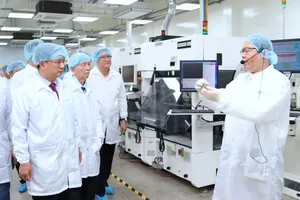
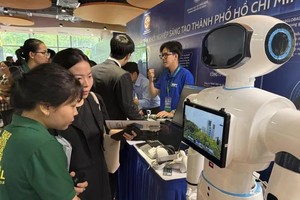
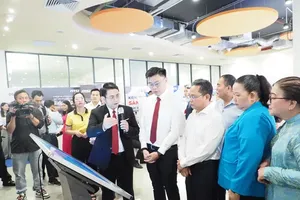
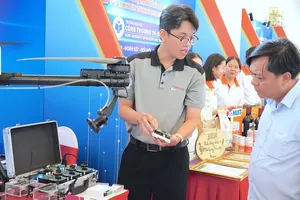
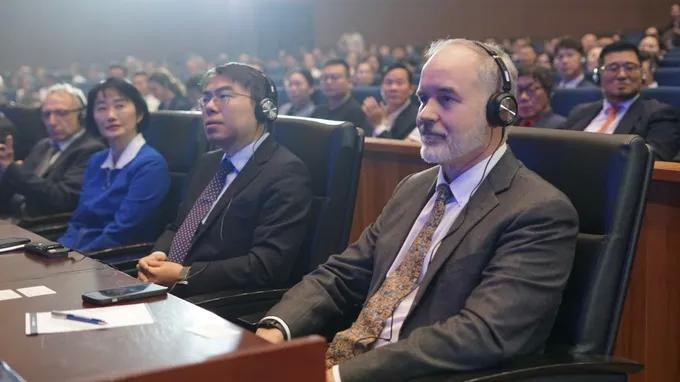
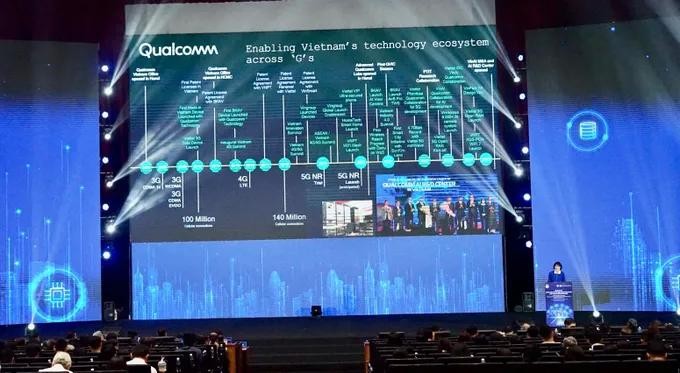
Immediately after the announcement ceremony, leading international corporations and technology experts participated in discussions, sharing their experiences in implementation, potential for cooperation, and technological development, with a particular focus on semiconductor technology.
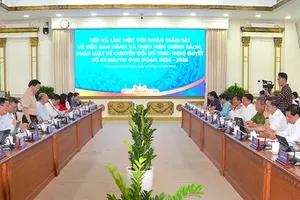
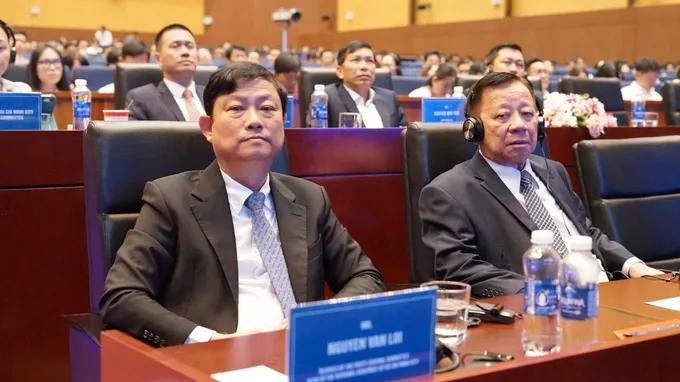
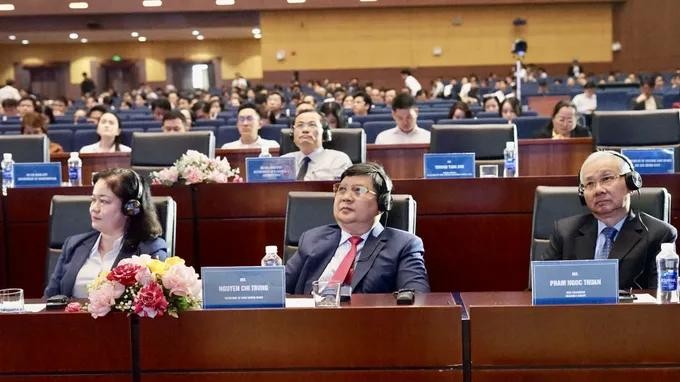
Attendees included Nguyen Minh Triet, former Politburo member and former President of Vietnam; Nguyen Van Loi, member of the Central Committee of the Communist Party of Vietnam and Head of the Ho Chi Minh City National Assembly Delegation; Vo Van Minh, Deputy Secretary of the City Party Committee and Chairman of the Ho Chi Minh City People's Council; Bui Minh Thanh, Vice Chairman of the municipal People's Committee.