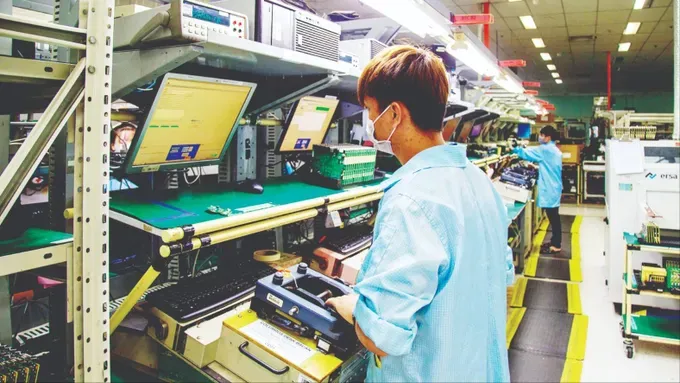
Passed by the 15th National Assembly on June 14, 2025, and effective from January 1, 2026, the Digital Technology Industry Law establishes a comprehensive legal framework for the development of the digital technology industry in Vietnam. The law covers a wide range of fields, including Artificial Intelligence (AI), semiconductors, Internet of Things (IoT), cybersecurity, digital data, cloud computing, and 5G/6G.
For the first time, the Digital Technology Industry Law provides definitions and legal regulations for digital assets (intangible assets in an electronic environment) and encrypted assets (digital assets with transaction authentication).
It ensures consistency with existing laws while adopting a flexible approach, aiming to develop the digital technology industry into an economic pillar, promote innovation, and attract talent. Beyond digital assets, the law also encourages AI research and application through preferential policies such as financial support, investment in AI data center infrastructure, and international cooperation.
Experts assess that the enactment of the Digital Technology Industry Law in Vietnam is a strategic step contributing to promoting research and innovation; developing synchronous and modern digital infrastructure; and forming a digital technology industrial ecosystem capable of competing in the region. With a market scale of nearly 100 million people and high growth in digital tech revenue, Vietnam possesses many favorable conditions to rise as a new technology hub in Asia.
For HCMC, the country’s largest hub for science-technology and innovation, the Digital Technology Industry Law not only opens up new policy space but also creates a “lever” to realize the goal of becoming a leading digital technology center in the region. In the context of the city expanding its development space with a population of over 13 million, digital technology is identified as the primary growth driver for the coming period.
The city identifies high-quality human resource development as a pillar of sustainable growth, running parallel with institutions and technology. This is evidenced by the presence of nearly 100 high-quality training facilities, over 450 science-technology organizations, 134 modern laboratories, and 123 intermediary organizations supporting Sci-Tech and innovation activities.
Along with these, advanced science-technology models have established their brands over many years, such as the Saigon High-Tech Park (SHTP), the City High-Tech Agricultural Park, the HCMC Innovation & Startup Hub (SIHUB), and Quang Trung Software City.
Notably, SHTP affirms it will continue to play the “nucleus” role, coordinating closely with ministries, agencies, localities, and the business community to bring the new legal framework into practice, contributing to the city’s sustainable and modern development.
Consequently, SHTP has set key tasks of utilizing incentives from the law; attracting more strategic projects in semiconductor chips, AI, digital devices, data centers, and high-tech hardware manufacturing; and intensifying investment promotion to introduce SHTP as a “priority destination” for global technology corporations.
However, to leverage the Digital Technology Industry Law effectively in practice, the Government needs to issue documents guiding the law’s implementation soon. Preferential contents and support need to be concretized into detailed documents to transparently clarify policies. Incentives, export support, and the simplification of administrative procedures are essential for businesses to easily access these benefits.
The implementation of the Digital Technology Industry Law creates an opportunity for HCMC to realize its goal of becoming a leading digital technology center in the region, playing a leading role in the country's digital economy. If solutions are deployed synchronously, 2026 is expected to become a turning point for the city with a strong increase in investment attraction, high-tech product development, human resource expansion, infrastructure completion, and the promotion of international cooperation.