On July 30, the Ho Chi Minh City People's Committee Office announced that Vice Chairman of the Ho Chi Minh City People's Committee Nguyen Manh Cuong had signed Decision No. 4714/QD-UBND approving the city's Smart City Development Plan for the 2026-2030 period, with a vision to 2045.
The plan identifies smart city development as one of the city's key priorities to modernize urban governance, improve residents' quality of life, promote green growth and the digital economy, and advance sustainable development.
The smart city initiative is built on the foundation of the National Digital Transformation Strategy, placing people and businesses at the center of development. All urban governance, administrative and public service delivery activities are designed to serve residents more quickly, conveniently, transparently and securely, while ensuring digital inclusion and narrowing disparities in access to digital services.
The plan underscores that smart city development is not merely about adopting new technologies but about transforming state and urban governance driven by data and digital technology. The city will treat data as a strategic resource for development while accelerating the adoption of artificial intelligence (AI), large language models (LLMs), predictive analytics, Digital Twin technology, the Internet of Things (IoT) and big data to support decision-making, provide early risk warnings and optimize urban operations.
The implementation of the plan will comply with relevant legal regulations and align with the National ICT (Information and Communications Technology) Architecture Framework for Smart City Development. It adopts a data-centric approach, ensuring connectivity, interoperability and data sharing across systems while safeguarding information security, cybersecurity and citizens' privacy.
The city will also implement the plan in phases in line with available resources, prioritizing shared digital platforms to avoid fragmented or overlapping investments and minimize reliance on any single technology provider.
The plan will be implemented citywide and applies to state agencies, public service units, organizations, businesses and residents involved in accessing and using smart city services.
Under its long-term vision, Ho Chi Minh City aims to rank among the world's top 50 smart cities by 2030. By 2035, it aspires to become one of Vietnam's three national smart city operations centers, serving as a leading hub for data, technology and innovation.
By 2045, the city targets achieving the highest level of maturity under the National Sustainable Smart City Criteria, positioning itself as an advanced smart city and a leading science, technology and innovation hub in the Asia-Pacific region.
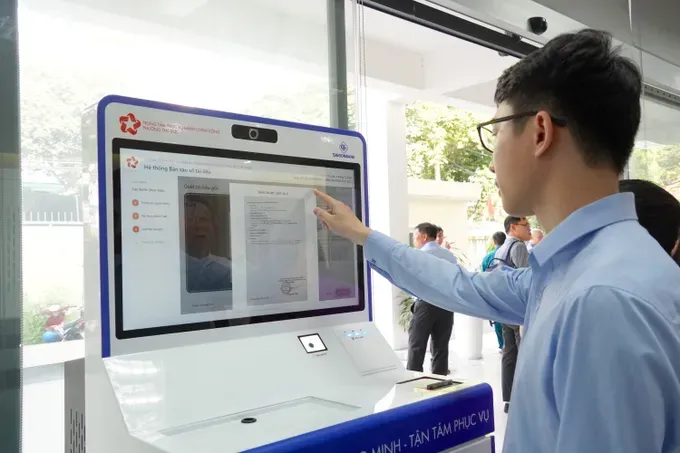
To achieve these goals, the city will, by 2030, complete a data-driven smart urban governance model, develop and upgrade its Intelligent Operations Center (IOC) to enable real-time connectivity with municipal departments, agencies and local authorities, and expand the use of artificial intelligence (AI) for simulation, forecasting and decision support.
At the same time, Ho Chi Minh City will build a shared urban data platform, establish a City Data Exchange, and deploy a Digital Twin platform integrating geospatial data with Internet of Things (IoT) sensor networks to support real-time urban management. Priority sectors for technology adoption include transport, healthcare, education, the environment, culture and tourism, social welfare and public services, to improve service quality and public satisfaction.
The city will continue investing in digital infrastructure, data centers and telecommunications networks, while strengthening information security and personal data protection. It will also enhance the digital capabilities of residents and the workforce, laying a solid foundation for sustainable smart city development in the years ahead.







)