
On July 30, Mr. Dang Minh Thong, Vice Secretary of the Ho Chi Minh City Party Committee and Standing Deputy Head of the city's Steering Committee for Science and Technology Development, Innovation and Digital Transformation, chaired a conference reviewing the progress of digitizing and processing of records and archives of Party agencies, the Vietnam Fatherland Front system, and Party Committees of wards, communes and special zones across the city. The conference was held in a hybrid format, combining in-person and online participation.
Evaluating the current progress, Vice Secretary of the Ho Chi Minh City Party Committee Dang Minh Thong noted that the classification and digitization of archives at several agencies, units, and localities remain slow and fall short of targets. He urged authorities to act with greater urgency and determination, making full use of both day and night shifts to accelerate execution.
Implementation results will be monitored, measured, and evaluated through the city’s Key Performance Indicator (KPI) system.
During the process, heads of agencies and localities will be held strictly accountable for managing archived records, with zero tolerance for the unauthorized destruction, loss, or damage of files. Additionally, officials must ensure stringent information security and prevent any data leaks throughout the digitization workflow.

On the same day, the Ho Chi Minh City Department of Science and Technology, in coordination with the municipal Statistics Office and the University of Economics Ho Chi Minh City, hosted a thematic conference on July 30 titled “Promoting the Digital Economy’s Contribution to the City’s GRDP Growth.”
Speaking at the conference, Vice Secretary of the Ho Chi Minh City Party Committee Dang Minh Thong emphasized that following administrative mergers, a new development landscape requires the city to fundamentally transform its growth model from extensive to intensive growth. This shift must be centered on productivity, science and technology, innovation, and particularly digital transformation, with a target for the digital economy to account for 30 percent to 40 percent of Gross Regional Domestic Product (GRDP) by 2030, fueling the city's ambition for double-digit annual growth.
While the city still possesses vast untapped potential in science, technology, innovation, and digital transformation, many initiatives remain largely at the policy stage or in preliminary pilot phases. Effective long-term strategies and tangible results to reshape the city’s growth model have yet to materialize.
Specifically within the digital economy, key sectors and primary drivers responsible for propelling GRDP growth and restructuring the city's economic model have not been clearly identified.
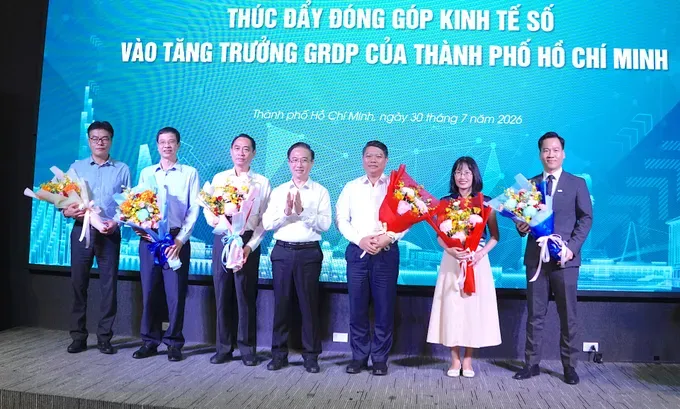
He expressed his hope that through the conference, specialized agencies and experts would offer policy recommendations and insights on controlled testing solutions to foster new digital services. He also called for proposals on designing "green lanes" to streamline administrative procedures, shorten processing times for technology investment projects, and establish support policies to attract key strategic industries.
At the conference, economic experts and scholars shared a consensus that to propel the digital economy forward, Ho Chi Minh City should innovate its governance mindset across three core pillars: shifting from project management to GRDP growth management, leveraging a shared data space, and developing high-quality human resources tied directly to enterprise needs. These strategic orientations are expected to help the city optimize its resources and generate tangible economic value.







)