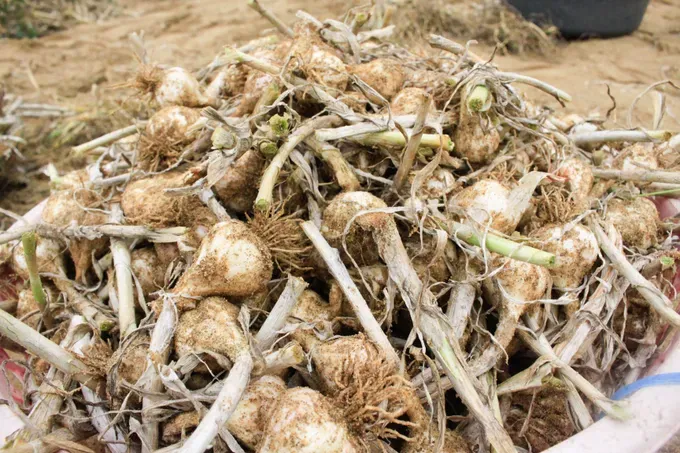
Garlic prices have dropped sharply and many cultivation areas have been damaged, causing difficulties for farmers in Ly Son Special Zone of Quang Ngai Province during this year’s garlic harvest. Fresh garlic is currently priced at only around VND30,000 (US$1.14)–VND35,000 (US$1.32) per kilogram.
In the 2025–2026 winter–spring garlic crop, Ly Son Special Zone planted about 314 hectares of garlic, with an estimated harvest of around 2,400 tons. After more than four months of cultivation, many garlic fields have now entered the harvest period.
However, this year’s garlic crop has faced numerous challenges as part of the cultivation area suffered damage. According to garlic growers in Ly Son, the plants initially grew well and remained lush and green after planting, but many fields later gradually withered and died, causing significant losses.
Mr. Nguyen Co, a farmer in Ly Son, said his family cultivated 3,500 square meters of garlic, but prolonged sunshine in the last lunar month weakened the plants and reduced yields. This year, it yielded only about 300–400 kilograms, much lower than in previous years when production often exceeded 500 kilograms per square meter. In addition to lower yields, garlic prices have also dropped, with fresh garlic currently selling for around VND35,000 per kilogram.
At this price level, garlic farmers can hardly make a profit. Typically, prices need to reach around VND60,000–VND70,000 (US$2.27- US$2.64) per kilogram for farmers to cover production costs and earn a return, he said.
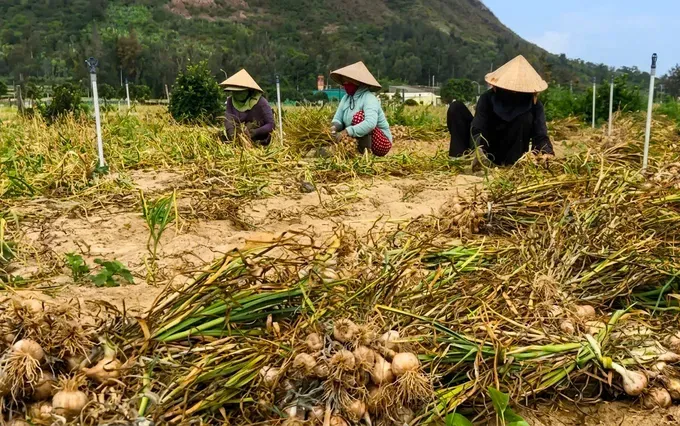
Ms. Mai Thi Ba, another farmer in Ly Son, said some of her family’s garlic fields were completely lost this season, while the remaining plots required extra care in hopes of salvaging some harvest.
Production costs for one square meter field of garlic, including seeds, fertilizers, irrigation, pesticides and labor, now total nearly VND15 million (US$568), while fresh garlic prices have fallen to only about VND30,000–VND35,000 per kilogram that much lower than in previous years, leaving farmers with almost no profit, she said.
In response, many farmers are drying and storing their garlic while waiting for market prices to rebound and reduce their losses.