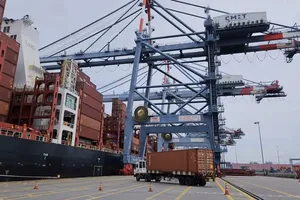
Since mid-March, many domestic shipping lines have announced adjustments to container freight rates, with increases typically ranging from 15 percent to 25 percent depending on routes and container types. Hai An Container Transport Company Limited applied its new pricing from March 19. For loaded 20-foot containers, freight rates are VND6.5 million (US$247) per container on the Hai Phong–Ho Chi Minh City route, VND7.5 million (US$285) on Hai Phong–Cai Mep, and VND8.5 million (US$323) on both Nghi Son–Cai Mep and Cai Mep–Da Nang routes.
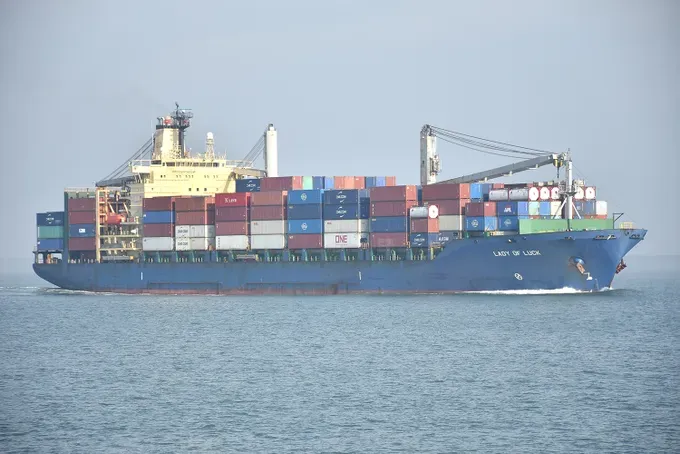
For 40-foot containers, rates on the Hai Phong–Ho Chi Minh City, Hai Phong–Cai Mep and Nghi Son–Cai Mep routes are VND9 million (US$342), VND10.5 million (US$399) and VND11 million (US$418) per container, respectively. Some routes are priced higher, such as Cai Mep–Da Nang and Cai Mep–Nghi Son, both at VND11.5 million (US$437) per container. Compared to rates applied from March 15, 2025, the company’s new tariff has increased by an average of VND1 million (US$38)– VND1.5 million (US$57) per container, reflecting mounting input cost pressures.
Similarly, Vsico Maritime Joint Stock Company announced freight rate adjustments effective March 25. Specifically, the Hai Phong–Ho Chi Minh City route is priced at VND7 million (US$266.2) per 20-foot container and VND10 million (US$380) per 40-foot container, while the reverse route from Ho Chi Minh City to Hai Phong is VND6 million (US$228) and VND8.5 million (US$323) per container, respectively.
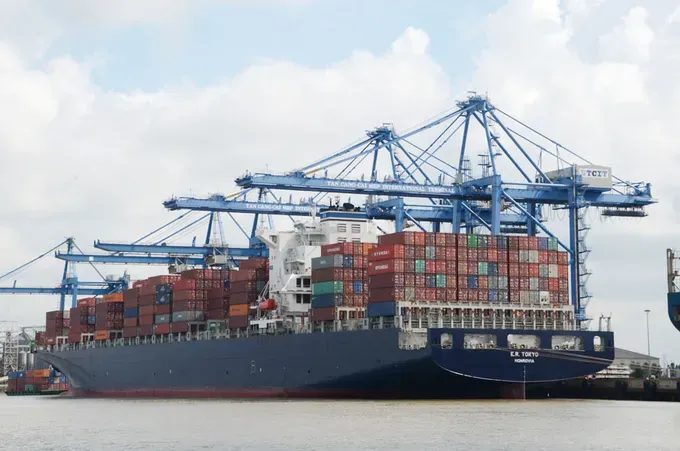
According to the company, compared to the previous filing period, rates have risen by more than 17 percent on average, with the Hai Phong–Ho Chi Minh City route for 40-foot containers seeing the sharpest increase of up to 25 percent. Notably, Vsico has also applied a fuel surcharge since March 15. The company said the increase is due to higher fuel prices caused by Middle East tensions, which are expected to persist, forcing shipping lines to raise rates to cover costs.
Experts noted that the rebound in domestic freight rates is adding further pressure to businesses’ logistics costs, especially as global supply chains remain exposed to unpredictable fluctuations.