Due to escalating conflict in the Middle East, shipping companies from Ho Chi Minh City to Europe and the East Coast of the United States have had to adjust their routes, extending transit times by 10-15 days. In response to this disruption, seaports and logistics businesses are proactively adjusting their operational plans, accelerating digitalization, and developing green port models to minimize the impact.
Extended routes, increased transportation costs
According to a report from the Ho Chi Minh City Maritime Port Authority to the Vietnam Maritime and Waterway Administration, normally, container ships from Vietnam to Europe would travel through the East Sea, the Indian Ocean, the Red Sea, and into the Suez Canal. However, due to the risk of maritime insecurity caused by armed conflict, many shipping companies have been forced to change their routes, bypassing the Cape of Good Hope (South Africa).
This change in shipping routes has extended transit times by 10-15 days compared to before, while logistics costs have also increased due to fuel costs, ship operating costs, and maritime insurance. In addition, there is a risk of shortages of ships and containers at ports due to extended ship operating cycles. For shipping routes to the US, ships heading to the West Coast, such as Los Angeles or Long Beach, still travel through the Pacific Ocean and are therefore unaffected. However, routes to the East Coast, such as New York or Miami, must avoid the Red Sea and detour around Africa.
The Ho Chi Minh City Maritime Port Authority reports that the current impact is not too sudden, as many shipping companies have proactively developed operational plans to avoid the Suez Canal route since 2024. Currently, only about 5 percent-6 percent of import and export goods directly related to Middle Eastern countries are significantly affected by the conflict in the region.
Nguyen Xuan Ky, Secretary General of the Vietnam Port Association (VPA), expressed concern that changes in shipping routes would have many negative consequences for Vietnamese import-export businesses, such as increased maritime surcharges, higher international freight rates, and limited slots for goods from Asia due to longer ship journeys.
Unpredictable ship schedules strain ports amid global route changes
The changes in global shipping routes have made vessel schedules increasingly unpredictable, placing significant strain on port operations. According to Mr. Phan Hoang Vu, General Director of Saigon International Container Port–SSA (SSIT), rerouting some vessels around the Cape of Good Hope has reduced schedule reliability. Ships no longer arrive on fixed timetables, complicating berth allocation and port planning.
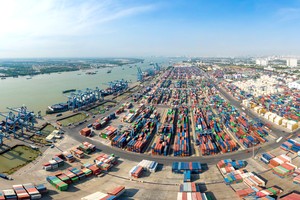
Ship volumes fluctuate sharply, with quiet weeks followed by the simultaneous arrival of two to three vessels, creating congestion and straining port operations. The surges have pushed container yard occupancy above normal levels, forcing export cargo to remain in storage longer while awaiting shipment. To speed up clearance, ports are deploying maximum numbers of trailer trucks and rubber-tyred gantry cranes (RTGs) to prevent bottlenecks in receiving areas.
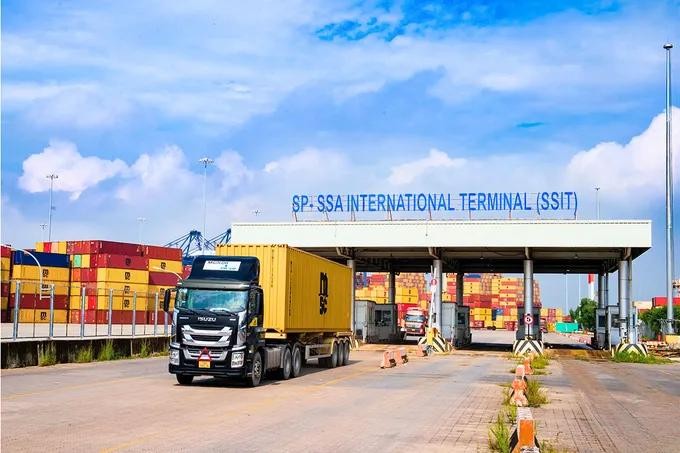
In response to ongoing volatility in global shipping, seaports are intensifying coordination with shipping lines and international transshipment hubs. At SP-SSA International Terminal (SSIT), the Transit Operations System (TOS) provides real-time data updates, allowing for more flexible berth scheduling. The port also monitors congestion at regional hubs such as Singapore and Malaysia to better anticipate vessel arrival times.
Digital transformation is playing a crucial role in reducing congestion at port gates. Through the Eport system, customers can register to bring export containers to the port or receive import containers, and complete procedures and payments online before arriving at the port. As a result, processing times have been shortened, reducing congestion during peak hours.
Simultaneously, many seaports are accelerating their "green port" development strategies to reduce reliance on fossil fuels amidst fluctuating oil prices. SSIT has implemented the use of all electric E-RTG yard cranes and electric STS shore cranes, saving fuel and significantly reducing CO2 emissions, while also researching the installation of solar power systems in the near future.
Meanwhile, at Tan Cang - Cai Mep International Terminal (TCIT), 100 percent of the yard cranes are electrically operated. The port is also gradually converting its fleet of tractor trucks to electric vehicles, with four electric tractor trucks already in operation.