Following Conclusion No. 23-KL/TW issued by the Politburo, the pilot implementation of the public lawyer (PL) institution is being accelerated, with a draft resolution submitted to the National Assembly for consideration during the second phase of its first session. While the policy direction is clear, a number of practical issues remain under discussion from defining the role of public lawyers to addressing challenges related to human resources, operational mechanisms, and implementation feasibility.
Speaking to SGGP Newspaper, Ung Thi Xuan Huong, former Chief Judge of the Ho Chi Minh City People’s Court and Chairwoman of the Ho Chi Minh City Lawyers Association, emphasized that the model should be designed with flexibility to both safeguard public interests and attract qualified professionals.
According to Conclusion No. 23-KL/TW dated April 7, 2026, public lawyers are categorized as officials, civil servants, public employees, police officers, military officers, and employees of state-owned enterprises who possess legal practice certificates and receive salaries from the state budget. This classification sets them apart from private lawyers who practice independently in accordance with the Law on Lawyers, earning fees from clients and assuming responsibility for their legal services.
In essence, private lawyers primarily address the legal requirements of individuals and businesses, whereas public lawyers function within the state framework, providing direct advice and managing legal matters that arise in public administration, state projects, and intricate disputes, including those of an international cases.
Currently, legal departments within state agencies mainly focus on advising on lawmaking, reviewing and systematizing legal documents, and consolidating regulations within their respective sectors. However, the operation of state agencies and enterprises increasingly generates risks that may lead to complaints, lawsuits, or international legal disputes in areas such as investment, trade, finance, and intellectual property.
At the same time, efforts to protect public interests and expand legal services for public purposes face several constraints. These include the lack of financial mechanisms to compensate lawyers for public-interest work, limited use of legal counsel in international investment disputes, and the absence of frameworks to attract experienced lawyers to policy advisory roles or major socio-economic projects. Establishing a public lawyer institution is therefore seen as necessary to create a dedicated legal force within state agencies and state-owned enterprises, tasked with advising and safeguarding the State’s lawful rights and interests in litigation, commercial disputes, administrative matters, and public international law.
According to Ms. Huong, defining public lawyers strictly as state-paid officials may be overly restrictive, limiting the ability to engage highly qualified legal experts, particularly in complex areas such as international dispute resolution. She suggested broadening the concept to include lawyers contracted by state agencies or organizations to provide specialized legal services and represent state interests. Such an “open” mechanism would enable the State to engage the most suitable legal expertise when needed, while also supporting the broader goal of attracting talent into the public sector.
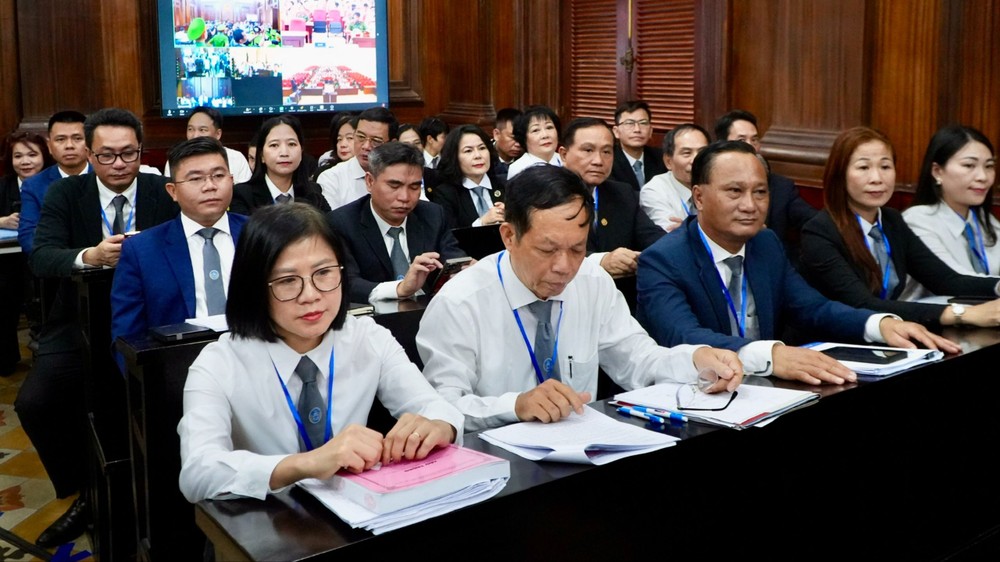
Public lawyers are expected to play a key role in protecting the lawful rights and interests of the State, its agencies, and state-owned enterprises. More broadly, in an expanded sense that includes legal aid functions, they also contribute to safeguarding human rights and citizens’ rights, promoting justice and social equity. Early and systematic legal consultation can help minimize policy and project risks, reducing prolonged disputes and complaints.
In administrative cases and disputes involving public interests, a professional public lawyer corps would also help ensure that decisions issued by state authorities are legally sound and more transparent. This, in turn, would better protect citizens’ rights and strengthen public trust in the legal system.