N.T.H., who resides in Chanh Hung Ward of HCMC, once experienced profound anxiety when she continuously received debt collection calls from strange phone numbers, despite never having initiated such loans. Upon investigation, she discovered that a phone number registered under her name had been exploited to apply for online credit.
“Previously, registering a SIM was quite straightforward, requiring only basic information. I can’t recall how many SIMs I’ve registered; some were abandoned long ago but never officially canceled. When an incident occurs, it’s perplexing to know where to begin to prove one’s non-involvement,” Ms. H. shared.
The dominance of unregistered and “junk” SIM cards over an extended period has triggered numerous severe consequences, particularly the widespread scourge of impersonation, harassment, and outright fraud. Besides, users encounter significant difficulties when attempting to verify and manage the subscriptions registered under their names.
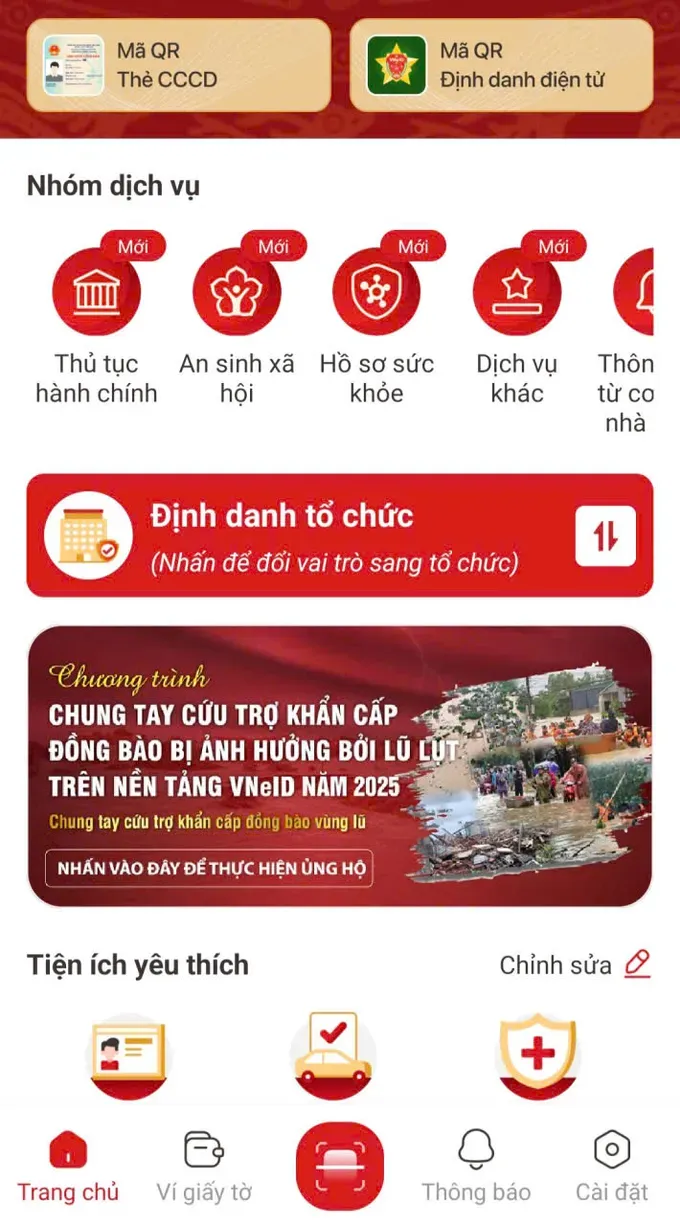
Confronting this stark reality, starting from April 15, 2026, users are compelled to authenticate their official SIM cards through the national electronic identification application (VNeID) in accordance with the stipulations outlined in Circular 08/2026/TT-BKHCN.
Under the new regulations, instead of physically visiting a telecom operator’s transaction point, users can autonomously authenticate their SIMs on the VNeID platform or the telecommunication enterprise’s proprietary application.
Crucially, this new mandate also synchronizes subscription data with the National Population Database, empowering citizens to seamlessly lookup and control all phone numbers registered under their names directly on the VNeID app. Consequently, users can validate their actively utilized numbers and seamlessly report any numbers they didn’t register or no longer use via VNeID.
More importantly, Circular 08/2026/TT-BKHCN unequivocally states that for subscriptions which users explicitly confirm on VNeID as actively used, telecommunications enterprises must update the information and supplement biometric authentication within 60 days. If this deadline elapses without the subscription completing the update, or if the biometric data remains incomplete or inaccurate, the network operator will temporarily suspend outgoing services.
In instances where users assert they neither registered nor use a specific subscription number, the telecommunication enterprise will issue continuous notifications over five days, demanding the current user of that number re-register and authenticate. Failing this, the subscription may face imminent service termination.
For subscriptions falling outside these two categories (i.e., those yet to be explicitly confirmed), within the initial 30 days following the circular’s enactment, network operators will dispatch notifications demanding users to update their information and conduct facial authentication. If users remain non-compliant after 60 days, the subscription will incur a temporary suspension.
For specific scenarios, such as users possessing non-chip citizen identification cards or those incapable of executing electronic authentication, alternative measures can be implemented. Telecommunications enterprises will cross-reference the information on their identification documents with the population database, combining this with direct facial authentication or utilizing video calls to verify and confirm the registrant’s authenticity.
Lawyer Tran Duc Phuong from the HCMC Bar Association opined that this constitutes a comprehensive and significantly more stringent review of mobile subscribers by telecommunications enterprises, heavily reliant on the VNeID application’s data and accounts.
Authenticating subscriptions via the electronic identity platform is an absolute necessity in the time of increasingly sophisticated phone-based fraudulent schemes. This robust solution concurrently standardizes registered subscriptions and drastically tightens the management of both active and newly generated subscriptions. Once each subscription number is inextricably linked to a specific, traceable identity, legal accountability will be delineated with far greater clarity.
According to Circular 08/2026, not all users are obligated to re-authenticate. Specifically, subscriptions that have utilized their phone numbers to register a Level 2 electronic identity account on VNeID or were authenticated during the registration of a chip-based citizen identification card will be exempt from re-authentication, except in cases involving equipment changes after June 15. This implicitly signifies that from June 15 onwards, for users operating a SIM on a novel device, biometric re-authentication becomes an imperative requisite.