Across Ho Chi Minh City, surveillance cameras are being installed in vacant lots, along streets and on sidewalks. Beyond maintaining public order, these devices have become an effective tool for detecting and penalizing improper waste disposal.
Widespread illegal dumping
According to reports by Sai Gon Giai Phong Newspaper (SGGP) journalists, along Luong Ngoc Quyen Street, bordering An Nhon and Binh Loi Trung wards, piles of garbage bags, construction debris and discarded mattresses have been dumped haphazardly, forming an informal landfill stretching dozens of meters.
A local resident, identified as N.T., expressed concern that the source of the waste is unclear. The road’s isolation makes it easy for people to dump debris under the cover of darkness. Although authorities conduct periodic clean-ups, the problem quickly recurs.
A similar situation persists at a vacant lot beside the Tham Luong – Ben Cat wastewater treatment plant on Vuon Lai Street in An Phu Dong Ward. Despite frequent clean-up efforts, the site has long turned into an illegal dumping ground.
Residents on Vuon Lai Street expressed frustration with the persistent dumping site. Although it is periodically cleared, waste reappears within days. The damp, overgrown area is contaminated with garbage and animal carcasses, generating foul odors. Burning the waste creates smoke, contributes to air pollution, and increases fire hazards.
Using cameras for remote fines
One of the key solutions being adopted by local authorities is the use of surveillance cameras to issue fines based on recorded evidence.
Months of accumulated waste once plagued Bung Ong Thoan Street near Vam Xuong Bridge in Tang Nhon Phu Ward. After residents raised concerns, authorities cleared the area and installed cameras in nearby vacant lots by October 2025. Since then, waste conditions along Bung Ong Thoan and La Xuan Oai streets have improved considerably.
According to the Ho Chi Minh City Department of Agriculture and Environment, in March 2026, authorities recorded 74 pollution hotspots involving waste. Of these, 59 sites had been cleared, three new hotspots emerged, and 12 locations remained uncleared.
In Tan Vinh Loc Commune, illegal dumping has also declined thanks to camera surveillance.
According to Mr. Truong Ngoc Thanh Nhan, Vice Chairman of the commune People’s Committee, there are still 16 waste hotspots, mostly in sparsely populated or border areas between localities. Illegal dumpers use deserted roads and the cover of night to dispose of waste beyond the reach of surveillance cameras.
To strengthen monitoring, the commune has installed 102 surveillance cameras, primarily in vacant lots and areas with complex security and environmental issues. Through camera monitoring, authorities have fined two cases of illegal dumping and prevented several others.
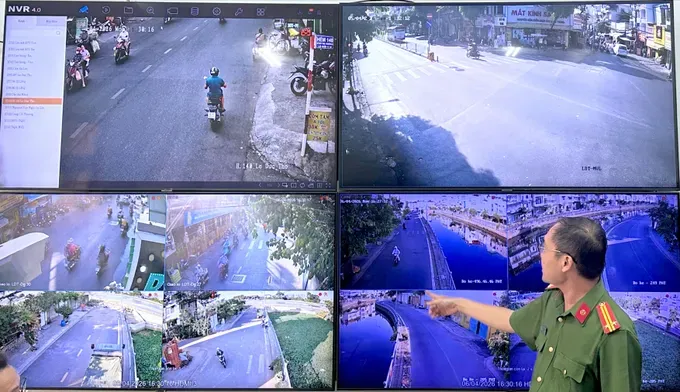
Similarly, An Nhon Ward has deployed 67 cameras to monitor security and detect illegal dumping. Mr. Duong Van Kim, Vice Chairman of the ward People’s Committee, noted that these cameras are connected to the ward police headquarters, with high-quality transmission and monitoring at all times.
Once violations are detected, police can extract footage and cross-reference data to identify offenders. In cases where violators come from other areas, authorities coordinate with vehicle registration databases to trace vehicle owners.
Since adopting the two-tier local government model, the ward has fined over 20 illegal dumping cases using its camera system and required offenders to commit to not repeating the violations, he added.