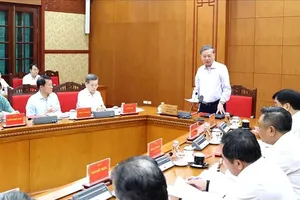
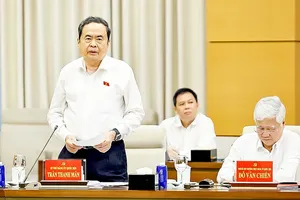
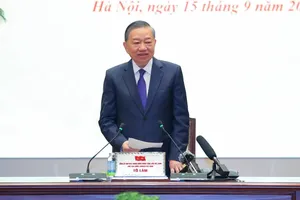
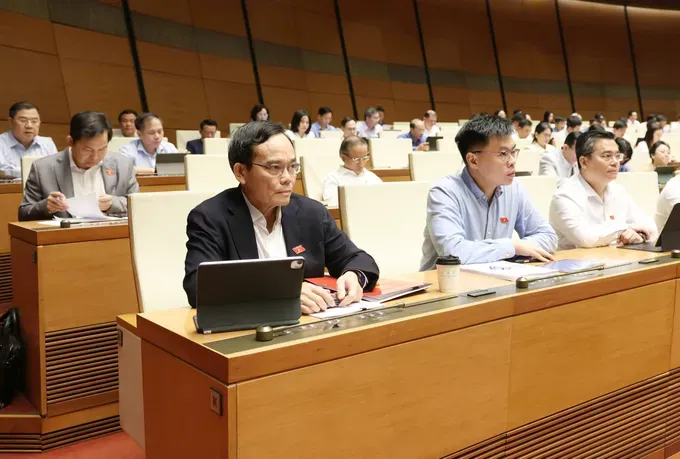
The National Assembly on the morning of April 20 entered the second phase of its first session of the 16th tenure, during which a draft resolution on piloting a public lawyer mechanism was presented.
According to the draft National Assembly resolution on piloting the public lawyer mechanism, presented by Minister of Justice Hoang Thanh Tung during the session, the pilot aims to institutionalize the Party’s policy of improving non-court dispute resolution mechanisms, particularly in line with Conclusion No. 23-KL/TW dated April 7, 2026 of the Politburo on piloting public lawyers in selected ministries, sectors and localities.
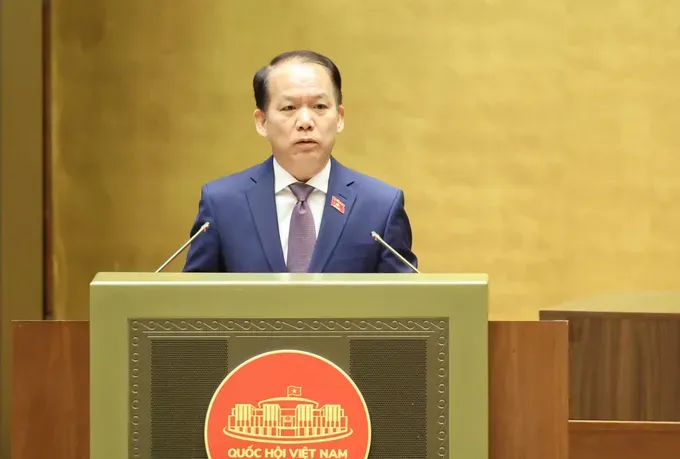
He noted that the public sector faces challenges such as low administrative case resolution rates, more complex international disputes, and a shortage of specialized lawyers, increasing legal risks. A professional corps of public lawyers is therefore needed to protect state interests and enhance law enforcement.
Under the draft resolution, the pilot will be implemented in eight ministries and ten centrally governed provinces and cities, including Hanoi, Ho Chi Minh City, Da Nang and Dong Nai, from October 1, 2026 to September 30, 2028.
Public lawyers will be officials, civil servants, public employees, or officers in the armed forces, as well as employees of state-owned enterprises, who hold a lawyer’s practicing certificate. They must meet both the standards applicable to public officials and those required for legal practice, with at least five years of experience in the legal field.
These lawyers will provide legal advice, represent the state in domestic and international litigation, advise on socio-economic projects, and handle complex complaints and denunciations.

Regarding rights and obligations, public lawyers will enjoy the rights of both public servants or officers and practicing lawyers. They will be exempt from liability if they act in accordance with regulations and without personal gain, even if damage occurs. However, they are prohibited from providing legal services to clients outside the state sector.
In addition to salaries, they will receive monthly allowances and case-based remuneration, equivalent to half the base salary per working session. The draft assigns the Minister of Justice the authority to issue practicing certificates.
Chairman of the National Assembly’s Committee on Legal and Judicial Affairs Phan Chi Hieu said the reviewing body largely agrees with the draft but suggested decentralizing authority to provincial-level People’s Committee chairpersons for appointing local public lawyers, in order to enhance delegation of powers.
Regarding the hiring of external legal services, most reviewers recommended removing provisions on contractor selection in special cases, arguing that such matters fall outside the scope of the resolution. They also proposed not applying monthly allowances and case-based remuneration to public lawyers working in state-owned enterprises.
Concerning the pilot duration, although the draft specifies an end date of September 2028, some opinions recommended extending it to the end of 2028 or prolonging the pilot period to three to five years to ensure adequate grounds for evaluating its effectiveness.