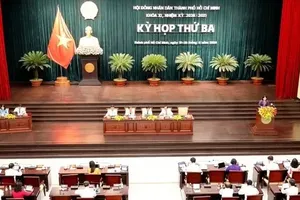
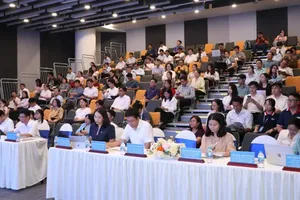
That was heard at the expanded conference of the Ho Chi Minh City Party Executive Committee this morning. Members of discussion Group No. 6 recorded many candid opinions focusing on the bottlenecks in urban planning. They offered candid assessments of persistent obstacles in urban planning.
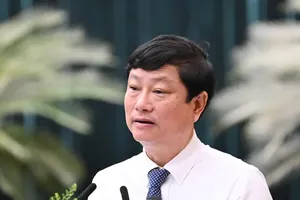
Vice Chairman of the Ho Chi Minh City People’s Council Huynh Thanh Nhan noted that the city has yet to complete its 1/2000-scale zoning plan, causing delays in public investment projects and affecting educational infrastructure. While schools in central areas generally meet local demand, many outlying communes face severe shortages of educational facilities. In some locations, students must travel up to 15 kilometers to attend high school, limiting access to quality education and opportunities for advancement.

Nguyen Van Duc, Party Secretary of Tan Thoi Hiep Ward, emphasized that the city’s expanded boundaries following administrative mergers require synchronized and modernized planning. He urged authorities to extend planning beyond traditional ground-level infrastructure to include elevated and underground spaces, warning that a lack of comprehensive vision could exacerbate flooding, overpopulation, and structural imbalance.
He also pointed out that the creation of new administrative units requires redrawing many planning boundaries, calling for timely guidance from the city to stabilize urban and socio-economic development. He highlighted the need to review public land resources, as numerous projects proposed by state-owned enterprises have remained idle for years, leading to waste and management difficulties at the local level.
Sharing this view, Nguyen Quyet Thang, Party Secretary of Tan An Hoi Commune, stressed the urgency of finalizing the city’s master plan, which serves as the foundation for commune-level development. Using the example of the Northwest Urban Area, he noted that outdated, unimplemented plans have hindered residents’ ability to build and use their land, creating prolonged hardship.
Regarding the two-tier local government model, Mr. Nguyen Quyet Thang acknowledged ongoing shortcomings during the transition period but underscored that effective decentralization and delegation of authority are key to improving administrative efficiency.
He also pointed to staffing imbalances: while some areas have surplus personnel, others face acute shortages particularly in specialized roles supporting digital transformation.
In addition, the ward's leader highlighted issues with office infrastructure, noting that many facilities are unsuitable for the new organizational structure. He proposed conducting surveys and developing investment plans to ensure government offices are appropriately scaled and located to enhance coordination.
Do Thi Minh Quan, Party Secretary of Binh Quoi Ward, added that personnel restructuring within the two-tier system has created additional challenges. Officials now handle more direct interactions with citizens, increasing workloads. She recommended implementing staff reductions gradually over five years to ensure organizational stability and prevent disruption at wards and communes.
Ho Chi Minh City People’s Committee Vice Chairman Tran Van Bay emphasized that streamlining the institutional framework is no longer a matter of “waiting for the Central Government.” Significant authority has already been delegated to the city, yet a backlog of legal documents continues to hinder progress. Even minor delays in policy issuance can disrupt the entire system. He stressed that the city’s leadership must assume direct responsibility and act with greater decisiveness. Notably, following the National Assembly’s adoption of amended Resolution 98, Ho Chi Minh City promptly convened meetings and began implementation. Sustaining this proactive spirit, he noted, would markedly enhance governance effectiveness.
In addition to institutional reforms, unlocking resources demands stronger determination—not only for new initiatives but also for long-standing, stalled projects. The Vice Chairman suggested that a specialized resolution from the City Party Committee may be necessary to address this challenge and confront the persistent issue of shirking responsibility. Without such a foundational resolution, many officials remain hesitant to act, despite clear directives from the Politburo.
Concluding the discussion, Deputy Secretary of the City Party Committee Dang Minh Thong underscored that “a directive is only one thing, but solutions must be ten.” He cautioned that directives without concrete measures risk leaving the system stagnant. To overcome this, the city must continue refining institutions and policies, advancing decentralization, and ensuring effective implementation of Resolution 98. Planning, he stressed, must stay ahead of development needs, particularly as 127 communes and wards still lack approved plans. The municipal People’s Committee should pursue parallel implementation, categorize projects clearly, and construct a comprehensive growth scenario aimed at achieving double-digit targets with a unified and efficient operational apparatus.










)




