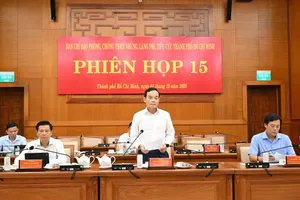
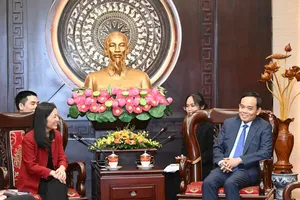
In a meeting with voters in Ho Chi Minh City held on May 4, Chairman of the National Assembly (NA) Tran Thanh Man emphasized the requirement to develop a Law on Special Urban Areas tailored to the city. He expressed his expectation that this legal framework would serve as an important institutional foundation to remove obstacles and constraints, thereby creating favorable conditions for the city to achieve strong and sustainable growth.
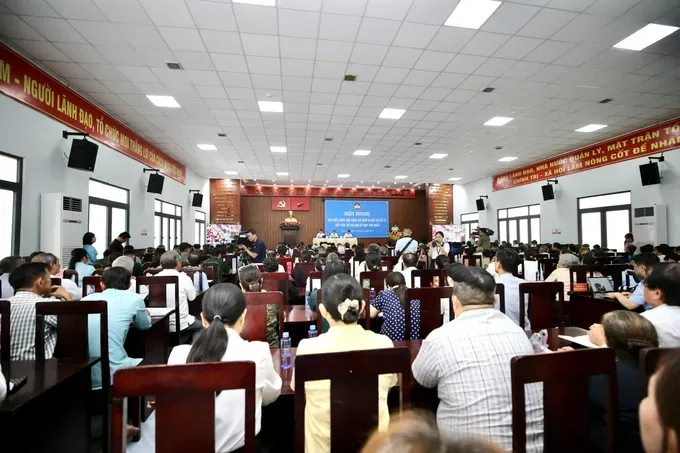
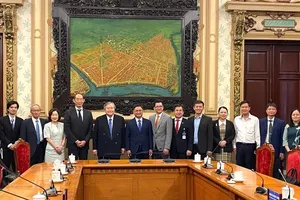
On May 4, Chairman of the National Assembly Tran Thanh Man, together with deputies from Unit No. 12 of the National Assembly Delegation of Ho Chi Minh City, held a voter meeting in the city.
Unit No. 12 comprises the following deputies, including Chairman of the National Assembly Tran Thanh Man; Lieutenant General Duong Van Thang, Deputy Chief Justice of the Supreme People’s Court and Chief Justice of the Central Military Court; and Nguyen Thanh Tung, Chairman of the Board of Directors of the Joint Stock Commercial Bank for Foreign Trade of Vietnam (Vietcombank).
The delegation met with voters from the communes of Hoc Mon, Xuan Thoi Son, Ba Diem, Phu Hoa Dong, Dong Thanh, Binh My, An Nhon Tay, Nhuan Duc Thai My, Tan An Hoi, and Cu Chi. The voter meeting was held in person in Hoc Mon Commune and connected online to the remaining localities.
Also in attendance were Secretary of the Ho Chi Minh City Party Committee Tran Luu Quang; Secretary General of the National Assembly and Chief of the NA Office Le Quang Manh; Vice Secretary of the Ho Chi Minh City Party Committee Dang Minh Thong; Vice Chairman of the Ho Chi Minh City People’s Council, Nguyen Van Dung; Vice Chairman of the Ho Chi Minh City People’s Committee, Tran Van Bay; full-time Deputy Head of the Ho Chi Minh City National Assembly Delegation, Tran Thi Dieu Thuy, among others.
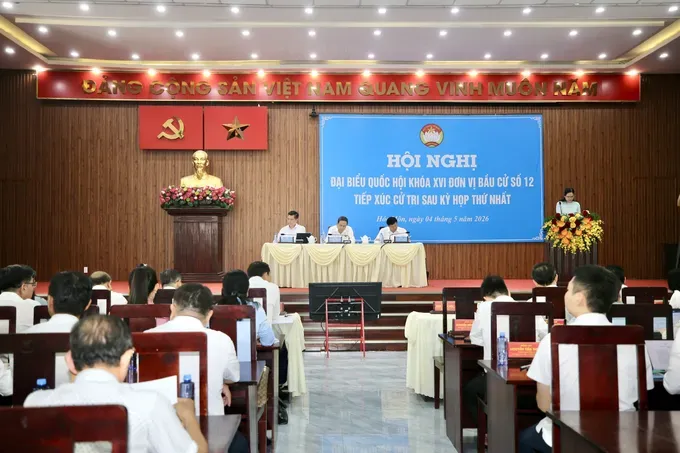
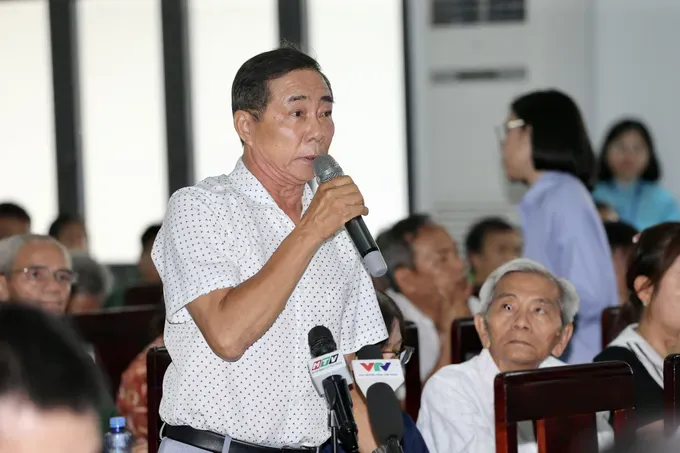
At the conference, voters raised a wide range of issues concerning key areas of socio-economic governance. Specifically, voters put forward numerous opinions and recommendations related to planning, land management, social security, employment, healthcare, transport infrastructure, and the organization of the two-tier local government system.
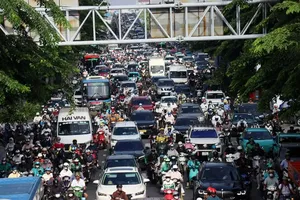
According to voter Lam Tien Dung from Phu Hoa Dong Commune, Ho Chi Minh City is currently confronting multiple challenges, including traffic infrastructure constraints, urban flooding, environmental pollution, rapid population growth, and a lack of synchronized planning.
He recommended that the National Assembly study and promulgate a Law on Special Urban Areas to establish a stable and long-term legal framework for the city. This framework would facilitate greater decentralization and delegation of authority, enhance resource mobilization, and enable fundamental and comprehensive solutions to urban issues.
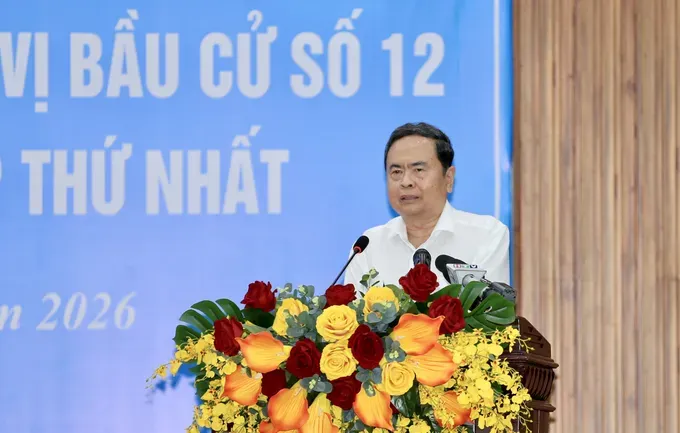
Addressing the meeting, Chairman of the National Assembly Tran Thanh Man stated that the Party Central Committee has agreed to revise the Politburo’s resolution on Ho Chi Minh City and to formulate a Law on Special Urban Areas for the city.
The Chairman of the National Assembly expressed confidence that, from now until the second session of the 16th National Assembly, Ho Chi Minh City will complete the necessary steps to prepare for the drafting of the Law on Special Urban Areas. The law is expected to accurately reflect the city’s stature, role, and mission as a leading socio-economic hub.
According to him, the special and specific mechanisms for Ho Chi Minh City may also be designed in a manner similar to the revised Law on the Capital.
Chairman of the National Assembly Tran Thanh Man underscored the pivotal role of a prospective Law on Special Urban Areas for Ho Chi Minh City.
“If Ho Chi Minh City is granted a Law on Special Urban Areas, I expect this will serve as an important institutional foundation to remove difficulties and bottlenecks, thereby creating favorable conditions for the city to achieve robust development in economic, cultural, and social spheres while ensuring national defense and security and further strengthening the political system,” the Chairman of the National Assembly emphasized.
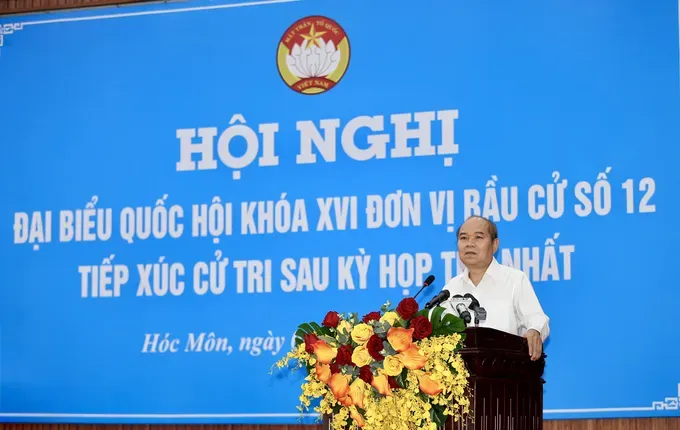
Chairman of the National Assembly Tran Thanh Man acknowledged voters’ opinions, describing them as thoughtful, responsible, and grounded in grassroots realities.
The Chairman of the National Assembly requested that communes and the city authorities proactively address issues falling within their jurisdiction. Additionally, Unit No. 12's deputies of the National Assembly Delegation of Ho Chi Minh City will consolidate voters’ feedback, forward it to competent central agencies, and continue to closely monitor and supervise the settlement of legitimate petitions.
Regarding land, planning, housing, and citizens’ assets, the Chairman stated that the National Assembly has issued a resolution outlining several specific policies aimed at removing difficulties and obstacles in the implementation of the Land Law. The Government is currently expediting the issuance of decrees, while ministries are preparing circulars to operationalize the National Assembly’s resolution. The Ministry of Agriculture and Environment is collecting feedback from ministries, agencies, and localities on the implementation process and will subsequently submit to the Government a proposal for comprehensive amendments to the Land Law.
Chairman of the National Assembly Tran Thanh Man emphasized that many concerns highlighted at the conference—particularly those related to land management, planning, delayed projects, and prolonged “suspended” planning—require thorough review and resolution during the revision of the Land Law.
In addition, the National Assembly and its Standing Committee will step up oversight of the handling of delayed projects and prolonged planning schemes, while also studying flexible mechanisms to address specific cases. Once the National Assembly issues relevant resolutions and the Government provides guiding regulations, Ho Chi Minh City is expected to promptly implement them, as these constitute a significant resource for both the city and the country as a whole.
Regarding the organization of the local government system, the Chairman noted that the Ministry of Home Affairs is continuing to advise on the restructuring and streamlining of internal organizational structures within ministries, central agencies, and local departments to address operational challenges arising from the two-tier local government model. The Party Central Committee will conduct a review and preliminary assessment of one year of implementation of this model by the end of June 2026.
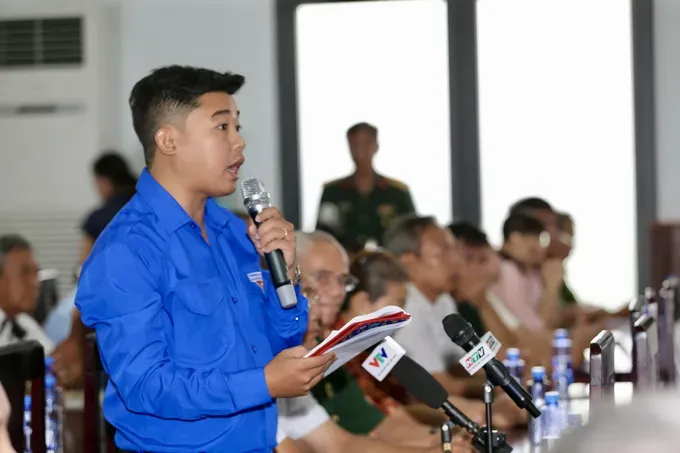
According to the Chairman, as the two-tier local government model has been in operation for nearly a year, it cannot be expected to be fully perfected at this stage and requires additional time for further refinement. Nonetheless, practical experience has shown that the model has effectively addressed a number of major national issues.
He also urged localities to continue organizing training and providing detailed guidance for officials, particularly in key areas such as land management, civil status and household registration, and business registration. At the same time, greater emphasis should be placed on the application of databases, digital transformation, and digitization in grassroots governance, moving beyond traditional administrative methods.
He noted that the Government has issued eight resolutions, abolishing 184 administrative procedures and 890 business conditions, thereby reducing implementation time and compliance costs by 50 percent compared to 2024. The Government has also amended and supplemented 163 legal documents, decentralizing authority to localities to handle 134 administrative procedures; the proportion of procedures handled at the central level has now been reduced to 27 percent. In the coming time, further decentralization and delegation of authority to local governments will be promoted in line with the principle of “localities decide, localities implement, and localities take responsibility.”
The Chairman added that the National Assembly has revised tax laws to help ease the tax burden, raise the revenue threshold exempt from taxation, and extend tax incentives for certain sectors and industries. The National Assembly will also step up oversight and request the Government to review and adjust the social security system to better reflect the characteristics of large urban areas, including informal workers, low-income groups, and elderly people without pensions.
He acknowledged that Ho Chi Minh City has pioneered several policies to ensure that residents benefit more effectively from socio-economic development.
He emphasized that Ho Chi Minh City is a major national center in terms of economy, culture, society, national defense, and security. Therefore, the living standards of its residents must be continuously enhanced.
Alongside the attention and support from central authorities and the city administration, he highlighted that the spirit of self-reliance and striving for progress among each locality, each family, and every citizen plays a particularly important role.
Chairman of the National Assembly Tran Thanh Man commended Ho Chi Minh City for its strong reforms in governance and the effective implementation of breakthrough policies.
He noted that the city has made significant strides in innovating governance and streamlining administrative operations, while effectively leveraging specific mechanisms and policies under National Assembly resolutions. These efforts have helped shorten timelines and procedures related to project investment and land use.
Ho Chi Minh City has also rolled out a range of new policies, well-received by the public, including housing rental support for cadres, civil servants, public employees, and workers. In addition, the city has increased allowances for elderly citizens, provided free health insurance cards for the elderly and students, and fully subsidized health insurance premiums for members of more than 15,000 poor and near-poor households.
The Chairman observed that Ho Chi Minh City is at the forefront of piloting innovative policies, demonstrating boldness in experimentation, and gaining recognition and high evaluation from central authorities.




)