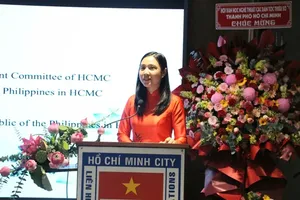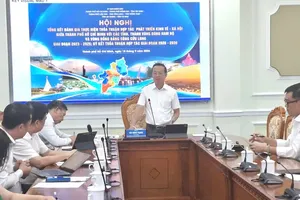
Director Hoang Vu Thanh first reported the cooperation between the HCMC Department of Finance and related state bodies in comprehensively reviewing and reorganizing the city’s public assets following the merger up to this point.
By July 1, 2025, the Finance Departments of Binh Duong, Ba Ria – Vung Tau, and HCMC had actively advised their respective People’s Committees to direct the preparation of strategic plans for rearranging and allocating working headquarters. This effectively aimed to maximize the utilization of existing facilities, ensuring optimal convenience for citizens and administrative agencies accessing public services.
Following administrative unit rearrangements and government guidance, the HCMC Department of Finance advised the municipal People’s Committee to direct respective agencies to thoroughly review currently used land and facilities. This ensures strict compliance with standard norms and practical needs.
To date, reviewing land and housing, alongside formulating highly effective utilization plans for specific addresses, is now fundamentally complete. Upon final approval by competent authorities, these strategic plans will be publicly announced. The reorganization and processing of real estate remains a constant mandate. Moving forward, facilities and agencies will persistently process their real estate to align harmoniously with practical circumstances and strictly comply with laws.
Director Hoang Vu Thanh discussed feasible guidance provided by his department to effectively process and utilize public land and building facilities to serve citizens. If administrative units necessitate supplementary headquarters or real estate facilities, they must meticulously devise a concrete utilization plan. Based on these proposals, the HCMC Department of Finance will intelligently advise the municipal committee for their final decision.
Surplus real estate will be rigorously evaluated for functional conversion or the construction of new medical facilities, educational institutions, and cultural amenities serving the public. In instances where requirements for functional conversion cannot be met, properties will be handed over to organizations equipped with housing business management functions for commercial exploitation under strict legal frameworks, generating vital revenue for the state budget.
Currently, legislation prohibits the direct sale of public assets encompassing land and properties. Consequently, the municipal People’s Committee assigned the Land Fund Development Center to review surplus land, successfully implementing Build-Transfer (BT) projects and conduct public auctions to generate crucial financial resources for investment expenditures.
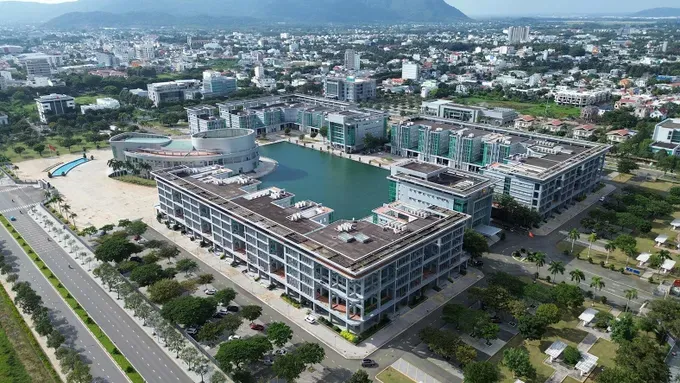
One of the most concerned issues is the use of major headquarters, such as the former Ba Ria – Vung Tau Province Administrative and Political Center and the former Binh Duong Province Administrative Center. Regarding this matter, Director Hoang Vu Thanh informed that after the implementation of the new two-tier local governance structure, the overwhelming majority of personnel from various departments and branches have concentrated in downtown HCMC.
A designated segment of personnel continues to operate at these two centralized administrative hubs to seamlessly serve the public during this initial transitional phase. This strategic move also serves to maintain basic operations, thereby preventing the architectural degradation of these monumental structures.
The city has strategically oriented the functional conversion of the former Ba Ria – Vung Tau Province Administrative and Political Center into a premier regional-level medical and educational facility. Concurrently, the former Binh Duong Administrative Center will be dynamically transformed into a Multi-functional Science and Technology Center, strictly adhering to the Northern HCMC Science and Technology Urban Development Scheme.
Presently, the municipality has instructed specialized agencies to urgently coordinate with prospective recipient units to submit comprehensive proposals to competent authorities as per regulations, facilitating the prompt operationalization of these two critical structures.
Finally, Director Hoang Vu Thanh mentioned the official construction commencement of the HCMC Administrative and Political Center.
During the second session of the 11th HCMC People’s Council, the municipal People’s Council unanimously approved the investment policy for the City Central Square as well as the Administrative and Political Center project utilizing the Public-Private Partnership (PPP) model and Build-Transfer (BT) contracts.
The Administrative and Political Center is meticulously planned with a vast total floor area of approximately 272,000m2, adequately accommodating the complex operational needs of roughly 8,000 cadres, civil servants, public employees, and regular laborers. The centralized administrative center is expected to seamlessly serve between 1,500 and 2,000 citizens and enterprises daily through an exceptionally modern and synchronized “one-stop shop” system.
The ambitious project intricately integrates a state-of-the-art conference and performing arts center boasting a capacity of about 2,000 seats, perfectly satisfying the rigorous requirements for hosting large-scale political, economic, and cultural events.
Meanwhile, the sprawling City Central Square will prominently function as a massive open space, serving as the premier venue for momentous civic events while simultaneously catering to the vibrant cultural and recreational needs of the citizens.
)