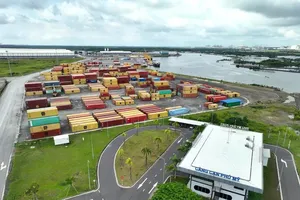
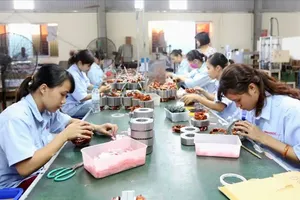
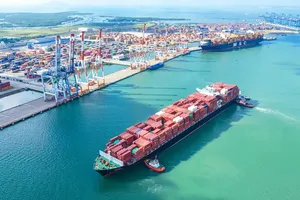
The conflict in the Middle East that erupted last weekend is impacting and increasing instability in supply chains, production costs, and logistics in many of Vietnam's important export sectors, as well as affecting fuel reserves.
Wood industry eyes green transformation amid global trade volatility
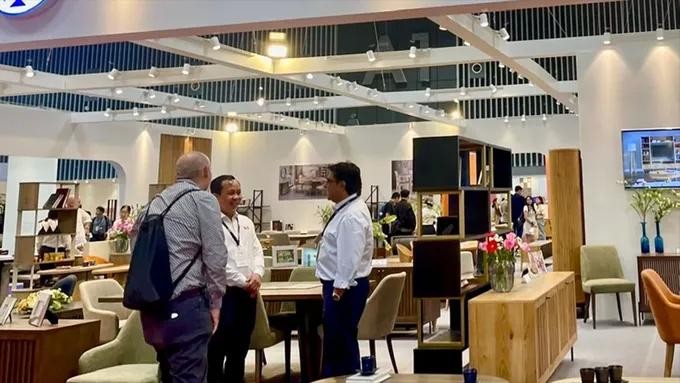
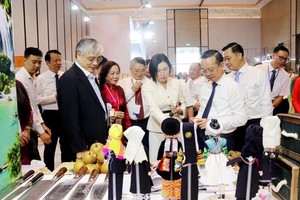
Yesterday, the 2026 Furniture Forum, themed "Asia Rises - Design Leads," took place within the framework of the Ho Chi Minh City Furniture and Wood Export Fair (HawaExpo 2026), organized by the Vietnam Wood and Forest Products Association (VIFOREST) in collaboration with several relevant agencies amidst volatile global trade.
According to Vu Ba Phu, Director of the Trade Promotion Department, the Ministry of Industry and Trade, in 2025, Vietnam's export turnover of wood and wood products will reach approximately US$17.2 billion, maintaining its position as one of the key export sectors. In January this year, the export turnover of wood and wood products was estimated at approximately US$1.6 billion.
Vietnamese wood and furniture products are present in more than 160 countries and territories. The United States continues to be the market accounting for more than half of the industry's total export turnover.
Anne Benjaminson, Deputy Consul General of the United States in Ho Chi Minh City, noted that last year exports of round timber and sawn timber from the United States to Vietnam reached approximately US$745 million, highlighting the increasingly strong integration of the wood industry value chains between the two countries.
However, according to Mr. Vu Ba Phu, conflicts in the Middle East are increasing instability in the supply chain, production costs, and logistics. Therefore, wood industry businesses should proactively adjust their market strategies.
Speaking at the forum, Chairman of the Ho Chi Minh City People's Committee Nguyen Van Duoc shared that by 2025, the total export turnover of Ho Chi Minh City will reach approximately US$92.7 billion, with the wood industry accounting for 10 percent.
In the context of volatile global trade, the wood industry needs to shift towards a sustainable development model with higher added value. First and foremost, it is necessary to promote green transformation, increase the percentage of products meeting traceability and sustainable development standards, considering this a crucial condition for maintaining and expanding export markets, especially in the EU and the United States. Businesses should proactively diversify markets and expand into other potential areas to avoid the fluctuations of global geopolitics.
“The city leadership recognizes that the success and brand of businesses are also the success and brand of the city. Therefore, Ho Chi Minh City will continue to support businesses and strongly reform the investment environment to create favorable conditions for business development,” he emphasized.
Vietnam moves to safeguard fuel supply amid middle east uncertainty
Amid complex developments in the Middle East conflict, representatives of the Vietnam National Petroleum Group (Petrolimex) said the company has reported the supply situation to the Ministry of Industry and Trade and proposed measures to proactively secure domestic supply. At the beginning of March, total system inventories were sufficient to meet distribution demand.
During the month, Petrolimex sourced fuel from two domestic refineries and carried out imports as planned. In the first 10 days alone, nearly 50 percent of the month’s planned import volume had already been completed.
Vietnam Oil Corporation (PVOIL) also stated that approximately 80 percent of its supply comes from Binh Son Refining and Petrochemical Joint Stock Company and Nghi Son Refining and Petrochemical Company Limited, with the remaining 20 percent imported from Singapore and South Korea, under long-term contracts to ensure supply in March.
However, the ability to meet demand in the coming months will continue to depend on developments in the Middle East. PVOIL has proposed a more flexible pricing mechanism to ensure full recovery of incurred costs. Meanwhile, Binh Son Refining and Petrochemical Joint Stock Company (BSR) stated that the Dung Quat Refinery sources 30 percent–35 percent of its crude oil imports from West Africa, the Mediterranean, the United States, and part of the Middle East. BSR also recommended limiting exports during high-risk periods to mitigate the risk of raw material shortages.
The Ministry of Industry and Trade has requested key traders to proactively develop plans to respond to market fluctuations, expand domestic and imported supply sources, maintain reserve levels as regulated, and ensure uninterrupted supply. The Ministry will coordinate with Vietnam National Industry - Energy Group to direct refineries to operate stably and diversify alternative crude oil sources beyond the Middle East. The goal is to maintain a stable supply of petroleum products for domestic production, business, and consumption, ensuring energy security.
At the same time, the ministry also requested relevant agencies to strengthen inspections of reserves and circulation, strictly handle hoarding, and ensure the continuous operation of the distribution system.