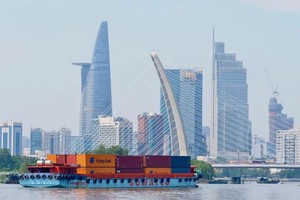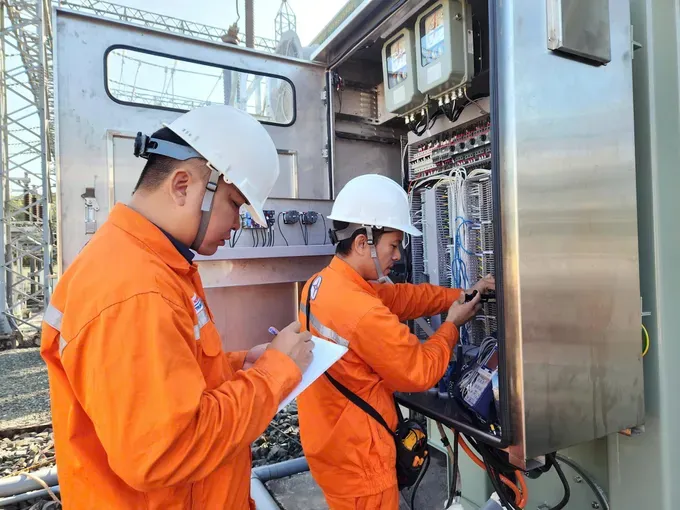
Economists, experts, policymakers, and representatives from businesses and management agencies gathered in Ho Chi Minh City on May 4 to discuss practical and actionable solutions for securing a sufficient energy supply to support the city’s double-digit growth ambitions while advancing its green transition.
The discussion focused on how electricity, seen as a core growth enabler, must expand in both scale and quality to keep pace with the city’s ambitious economic trajectory.
According to Pham Binh An, Deputy Director of the Ho Chi Minh City Institute for Development Studies (HIDS), the southern metropolis’s GRDP could grow by an average of 10.2 percent annually in 2026–2030, driven by industry, construction, and services. This will shift electricity demand toward high-tech manufacturing, logistics, digital infrastructure, and the green economy.
Electricity is foundational infrastructure, An said, stressing that shortages would constrain growth and deter foreign investment attraction. He also noted Vietnam’s commitment to a green transition following COP26.
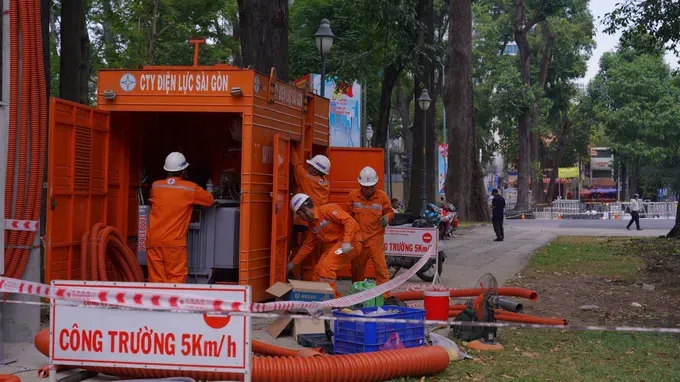
While electricity intensity per unit of growth is expected to decline under the National Power Development Plan VIII, overall demand will continue to rise, especially for digital transformation, semiconductor production, transport electrification, and data centers.
Ho Chi Minh City’s power consumption is forecast to grow 3–5 percent annually, with new demand driven by high-tech industries, data centers, and green transition, Mr. An stressed.
To meet both growth and low-emission targets, HIDS recommends synchronous development of multiple energy sources, including rooftop solar power, LNG-fired power, waste-to-energy (biomass), wind power, and battery energy storage systems (BESS).
However, experts warned that risks remain as the city relies on the national grid for over 70 percent of its electricity supply, while many 110–220kV substations in urban areas are already operating at full capacity; while limited land availability, prolonged investment procedures, and incomplete pricing mechanisms and legal frameworks for rooftop and direct power purchase agreements (DPPA) mechanisms. In addition, there is a shortage of high-quality human resources needed for smart grid development and the integration of renewable energy sources.
It was noted that power infrastructure must be developed 3–5 years ahead of demand to prevent shortages from constraining growth. Priorities include diversifying energy sources, expanding renewables in line with the Net Zero 2050 target, and mobilizing private and FDI capital through PPP and DPPA mechanisms while the State focuses on grid development and planning. He also suggested demand-side management (DSM) and green buildings to reduce load pressure.
From an operational perspective, Bui Trung Kien, Deputy General Director of Ho Chi Minh City Power Corporation (EVNHCMC), said the sector has prepared multiple supply scenarios for 2026 as electricity demand is projected to grow around 5 percent.
He stressed that the industrial and construction sectors will continue to dominate consumption, accounting for over 52 percent, driven by industrial parks, logistics, ports, data centers, and electric transport.
Beyond supply security, delegates highlighted rising requirements for greener and more reliable energy.
Deputy head of Ho Chi Minh City's Export Processing and Industrial Zones Authority (HEPZA) Tran Viet Ha noted that high-tech and green industrial zones demand near-perfect power stability, as even brief outages can cause major losses.
Electricity demand is expected to surge further, particularly from AI-driven data centers that could consume up to 1,000 MW each by 2030, while investors increasingly require certified and renewable energy.
Sharing Ha’s view, Assoc. Prof. Dr. Le Quoc Cuong, deputy head of the Management Board of the Saigon High-Tech Park (SHTP), described electricity as the lifeblood of the high-tech ecosystem, calling for scalable and stable systems with strong redundancy.
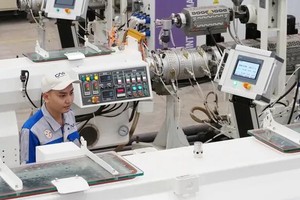
From the business perspective, TCL Smart Electronics Vietnam said it is deploying energy-saving solutions and rooftop solar with storage, targeting at least 3 percent annual electricity savings.
Regarding policy orientations, Nguyen Thi Kim Ngoc, Deputy Director of the municipal Department of Industry and Trade, said the city will implement an action program to ensure energy security, concentrating on developing supply scenarios through 2030; building a national energy industrial hub integrating gas, power, refining, and renewable energy; and prioritizing large-scale, high-efficiency, environmentally friendly power projects.
With this coordinated approach across planning, infrastructure, policy, and consumption, the city aims to build a power system that is “sufficient, clean, and reliable,” laying a solid base for its rapid and sustainable growth target in the coming years.