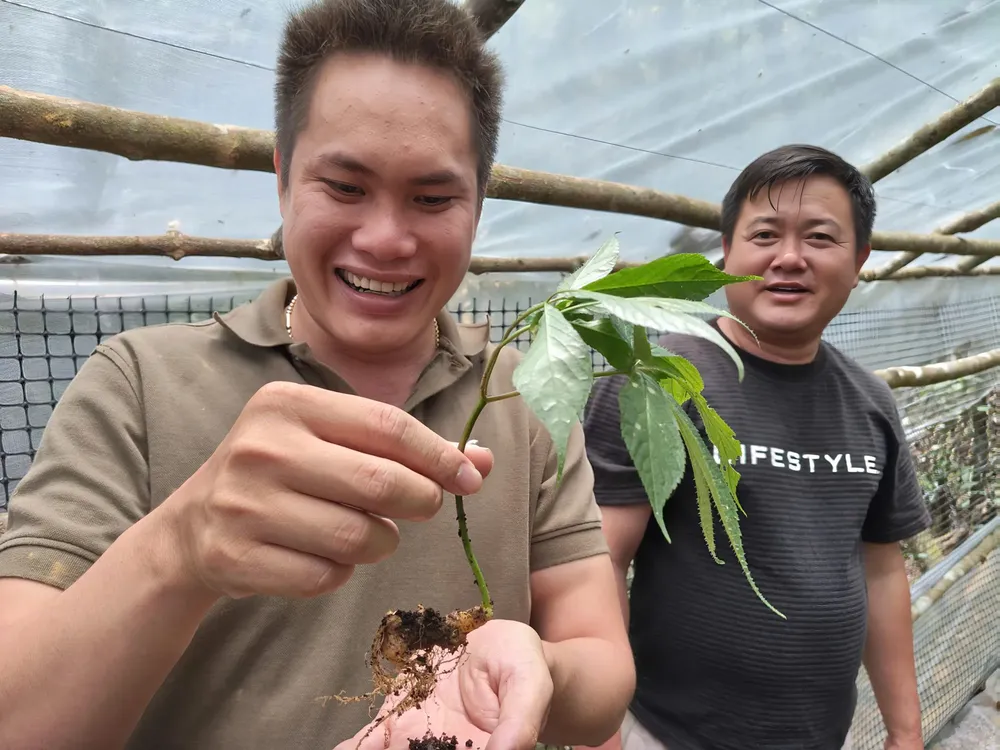
Amidst the vast primeval forests of Tra Linh, where Ngoc Linh ginseng roots quietly flourish under the canopy at altitudes ranging from 1,200 to 2,598 meters, a new development strategy for Vietnam’s “national treasure” is taking shape through expansive collaborations between businesses, scientists, and local authorities.
In bygone eras, when dangerous terrain and rudimentary healthcare isolated Ngoc Linh’s mountain hamlets, ginseng was revered as a “miraculous elixir.” The Xe Dang people dubbed it the “secret herbal remedy,” typically harvesting roots to store on stilt house roofs for emergencies. During resistance years, locals utilized this plant to resuscitate wounded soldiers.
As scientists validated its potency, Ngoc Linh ginseng emerged from the wilderness, evolving into a high-value “national treasure.” While previously focused on conservation, the herb’s now entering a sophisticated developmental phase, prioritizing industrial-scale growth, high-tech integration, and aggressive global market penetration through a closed value chain.
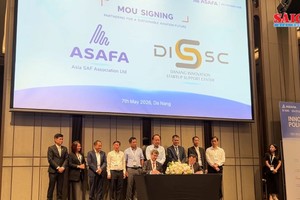
In early May 2026, in Hamlet No.2 of Tra Linh Commune, Sam Sam Co. Ltd. (SAMSAM Group) and PDA Group JSC (PDA Group) signed an investment cooperation agreement for a project to plant, care for, and protect Ngoc Linh ginseng, with an estimated total investment of approximately VND200 billion (US$7.87 million).
According to Chairman Nguyen Duc Luc of SAMSAM Group’s Board cum Chairman of the Quang Nam Ngoc Linh Ginseng Association, the project’s initial phase is being implemented on over 1ha with roughly 60,000 seedlings; subsequently, it’ll expand by 2 to 3 hectares annually to gradually form a large-scale raw material zone.
PDA Group has committed to a guaranteed buy-back scheme to serve the research and processing of health-care products derived from Ngoc Linh ginseng. From a strategic perspective, this is a signal that the corporate sector has begun to enter the “big game” with a medicinal plant regarded as the quintessence of Vietnam’s mountains and forests.
This collaboration doesn’t merely stop at capital infusion or geographical expansion, but instead effectively completes the missing links within the value chain. SAMSAM Group currently stands as a leader in mastering breeding technology, possessing genetic-standard raw material areas and operating a 2.5-hectare processing plant. Meanwhile, PDA Group leverages its expertise in researching specialized products alongside experts from the Republic of Korea to enhance medicinal properties.
Looking ahead, this partnership is incrementally forging a closed development model spanning conservation, quality control, and market expansion, which is a path previously pursued by nations like Japan. Ultimately, Vietnam’s advantage lies in exceptional biological value like high concentration of saponin rather than quantity. To transform this into economic success via a national brand, the city’s realizing a collaborative model that links enterprises, scientists, and the government to move beyond small-scale farming.
If corporate partnerships represent market signals, the vigorous involvement of Da Nang City authorities demonstrates a broader vision to transform the western mountainous region into a national medicinal hub.
In late April, Chairman Nguyen Manh Hung of the Da Nang People's Committee chaired a session with THACO regarding large-scale Ngoc Linh ginseng and medicinal herb investments. THACO proposed developing industrial-style cultivation zones using high technology under forest canopies in Tra Linh and Tra Tap, spanning 4,600ha between 2026 and 2031. Additionally, a 2,800-hectare project in Duc Phu aims to provide raw materials for deep processing and export. Consequently, city leaders urged the enterprise to finalize all necessary documentation to materialize these projects.
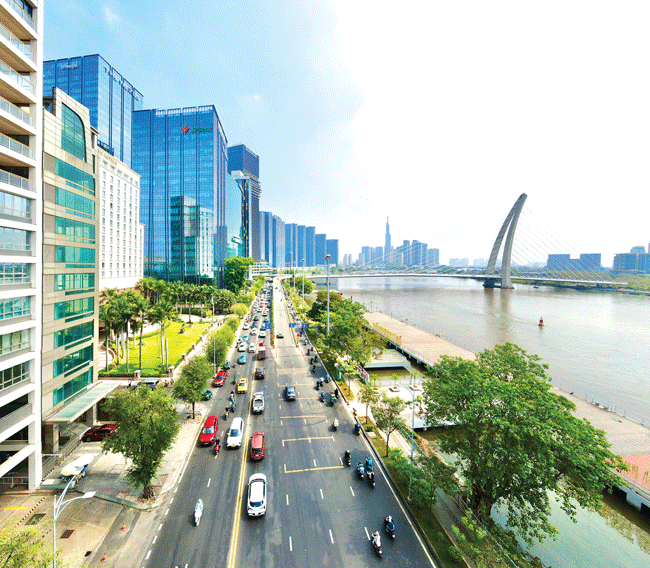
This move indicates that Da Nang City doesn’t merely view Ngoc Linh ginseng as an agricultural product but is positioning it as a strategic economic sector within a new developmental space. If the East is defined by the sea, ports, logistics, finance, and tourism, the West, with its primeval forests, ideal altitudes, and diverse ecosystems, is being shaped into the “medicinal valley” of the Central region.
That vision perfectly aligns with the national strategy for medicinal industry development. Based on the Government’s policy to build a medicinal industry center with Ngoc Linh ginseng as the flagship plant Da Nang City isn’t just inheriting natural advantages but is proactively elevating them by mobilizing social resources, attracting major corporations, and promoting high-tech scientific research to form a national branch for this item.
If today’s plans are realized, the western mountains of Da Nang City in the coming years won’t just be a place for precious gene conservation, but could become the largest production, research, processing, and trading hub for medicinal herbs in the country. At the end of the day, Ngoc Linh ginseng won’t only be the pride of the Tra Linh mountains, but could also become a new symbol of the green economy, bio-economy, and the Vietnamese medicinal industry on the global map.
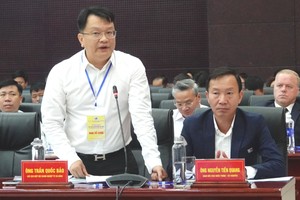
Vice Chairman Ho Quang Buu of the Da Nang City People’s Committee commented that the development of Ngoc Linh ginseng and medicinal herbs isn’t simply the exploitation of a local resource advantage, but an opportunity for the city to participate more deeply in the national strategy for bio-economy and the green economy.
After expanding its developmental space, Da Nang City possesses a high-altitude ecological zone, primeval forest systems, and extremely precious endemic medicinal genetic resources. This serves as the foundation for the city to build a complete medicinal ecosystem, where Ngoc Linh ginseng must become the flagship, acting as the nucleus to form a national medicinal center in the Central region.
Da Nang City is going to prioritize attracting major corporations and high-tech enterprises to create links between the State, scientists, businesses, and citizens, ensuring that this “national treasure” will be both preserved for future generations and transformed into an economic driver to improve the lives of highland ethnic communities.