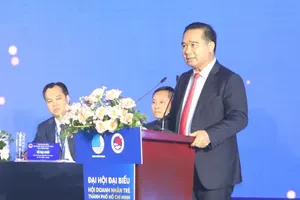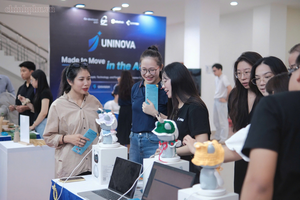
"Red carpet for talent" and "floral mats for investors" were the unique, breakthrough policies that paved the way for Song Be, a province still deeply scarred by war a decade after national reunification, to transform powerfully into a phenomenon in attracting human resources and investment capital. The Party committee, government, and citizens of Song Be, subsequently known as Binh Duong and currently part of Ho Chi Minh City, embarked on a path of significant advancements, demonstrating bold thinking and a commitment to seeing their vision realized.
Infrastructure sparks industrial boom
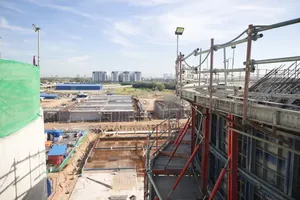
In 1986, Song Be Province moved quickly to harness the momentum of Doi Moi (Renovation), placing infrastructure at the center of its development strategy. Provincial leaders launched an ambitious upgrade of National Highway 13 under the Build-Operate-Transfer model, viewing the project as vital to regional connectivity and a foundation for industrial growth.
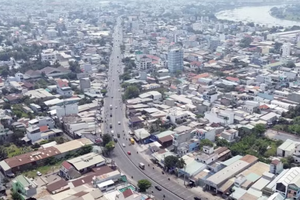
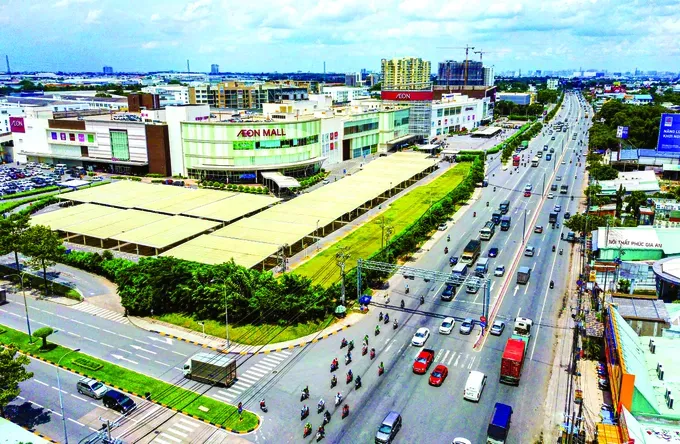
Over time, various mechanisms and challenges were addressed. National Highway 13 underwent an upgrade to become a Grade I road featuring six lanes, with funding and labor provided by a local state-owned enterprise. The newly modernized roadway was designated as Binh Duong Boulevard. On the day of its inauguration, the happiness of the citizens was profound, and the pride of the leaders was even more significant, particularly for those who had previously fought on this very highway during the conflicts at Bau Bang, Lai Khe, Chon Thanh, and Tau O.
From this moment onward, the province's "red carpet" and "floral mats" extended to the borders of the nation's "economic locomotive," Ho Chi Minh City. This development served as both a lever and a magnet, effectively drawing in a highly skilled workforce. As a result, numerous agricultural areas such as Tan Uyen, Ben Cat, and Thu Dau Mot were progressively transformed into towns and cities amidst a wave of rapid industrialization and urbanization.
Alongside roads, Binh Duong focused all its efforts on technical infrastructure, which in turn drew in numerous investing businesses.The investment in basic construction also served as a catalyst to attract and mobilize corporate resources. A prominent role was played by Ben Cat General Trading Company (later Song Be Investment and Development Corporation - Becamex), contributing to a model where a state-owned enterprise serves as the main force driving economic growth.
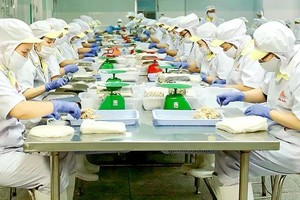
Thanks to this leadership, the industrial sector which accounted for a modest share in 1986 jumped to 25 percent of the province's GRDP by 1995. By 1996, there were 845 enterprises with a total investment of VND8.9 trillion. Old factories adapted to the new mechanism, and efficient livestock farms emerged (over 1,000 by 1996), sketching a new face for the region. In addition to the rapid growth of domestic businesses, 52 foreign FDI projects were established with a total registered capital of US$498 million.
Industrial parks ignite Song Be’s boom
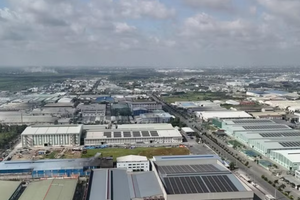
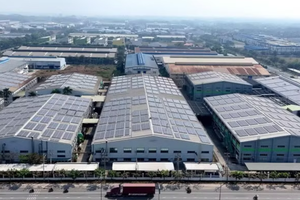
The period from 1994 to 1996 marked an era of "economic earthquakes" for Song Be, driven by the emergence of industrial parks (IPs). Binh Duong IP, established in 1994, is still remembered as a "small but mighty" pioneer. Despite its modest 24-hectare area, its precise alignment with development trends allowed it to reach full occupancy almost immediately upon launch. Following this success, larger scale hubs like Song Than I IP (180.3 hectares) and Song Than II IP (nearly 309 hectares) emerged, becoming strategic destinations for heavy industry, mechanics, and processing.
In 1996, Viet Huong I IP was developed, introducing a joint-stock model where a corporation managed the infrastructure to attract investment projects. In a short time, Viet Huong I secured 32 projects, including 31 foreign-invested ventures with a registered capital of US$60 million. However, the most significant milestone was the birth of the Vietnam - Singapore Industrial Park (VSIP I) in the same year, which paved the way for massive Foreign Direct Investment (FDI).
This high-profile joint venture between the prestigious Becamex IDC and Sembcorp (Singapore) was the successful result of a formula: "Government clears the path, the local authority facilitates, and enterprises lead."
This iconic park not only brought in billions of dollars in capital but also transformed Song Be into the "most dynamic innovative province in the country."
Within just a decade (1986–1996), Song Be underwent a spectacular transformation. Mobilizing various economic sectors to build infrastructure not only created jobs for tens of thousands of people but also provided invaluable experience for the future management and operation of modern industrial enterprises.
Red carpet strategy pays off
Upon the provincial re-establishment in 1997, Binh Duong's economic scale reached VND3,919 billion, with the economic structure divided among agriculture, industry, and services at 22.8 percent, 50.4 percent, and 26.8 percent, respectively. At that time, the province hosted six industrial parks (IPs) covering 800 hectares, generated an annual budget revenue of VND817 billion, and recorded an average per capita income of VND5.8 million per year.
Once again, provincial leaders deliberated and reached a consensus on a renewal policy that prioritized the development of concentrated industrial parks and promoted a transparent environment with the "red carpet" strategy to rapidly attract capital. The provincial Party Standing Committee emphasized focusing on specific parks while gradually integrating science and technology applications and strengthening human resources for the industrial sector.
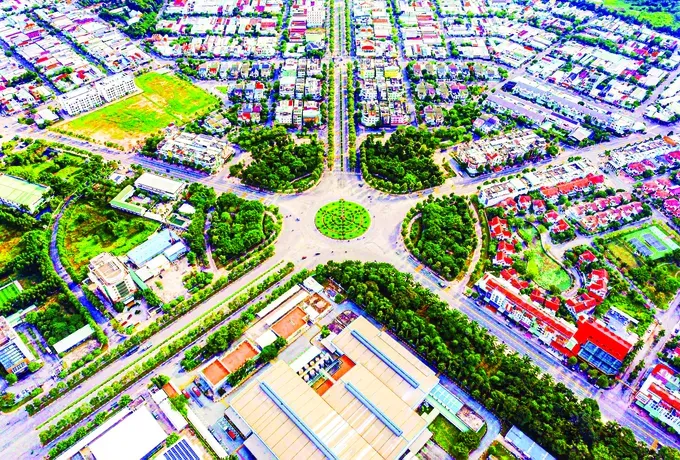
Agriculture, which accounted for over 28 percent of the economic structure at the time of re-establishment, plummeted to just 2.7 percent by 2024. Interestingly, while the agricultural land area has shrunk, it yields high economic value due to the development of urban and high-tech agriculture. The production value of the industry and construction sectors in 2024 has increased nearly 100-fold compared to 1997. From a starting point of fragmented industry and low production capacity, Binh Duong by 2024 boasts nearly 30 IPs, attracts approximately US$4.5 billion in FDI, and has become a leading industrial city nationwide.
The leadership resolutions of the Binh Duong Provincial Party Committee across various congresses have consistently selected industrial development as the breakthrough stage, driving growth in services and agriculture while improving the people's standard of living. By choosing industry as the catalyst for economic restructuring, Binh Duong mobilized resources between 2001 and 2021 to develop additional industrial parks and clusters. By 2023, Binh Duong's GRDP scale had increased more than 117-fold compared to 1997, achieving the highest average per capita income in the country.
Since 2017, Binh Duong has stood out as the first province in Vietnam to officially eliminate poverty under national standards. It also became the country’s first locality recognized by the Intelligent Community Forum (ICF) as the world’s leading intelligent community, thanks to its smart city strategy. Investor-friendly policies and a commitment to attracting talent, combined with bold leadership during the Renovation era, transformed once barren land into a thriving industrial–urban–service model that has since spread nationwide.
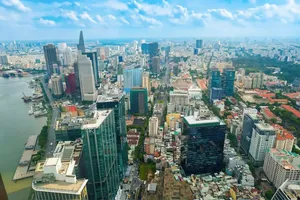
On July 1, 2025, Binh Duong joined Ho Chi Minh City and Ba Ria–Vung Tau to form Vietnam’s largest economic powerhouse. Looking ahead, within a multipolar and hyper-connected development space, Ho Chi Minh City is expected to evolve into a high-value industrial hub producing “Made by Vietnam” electronic chips.