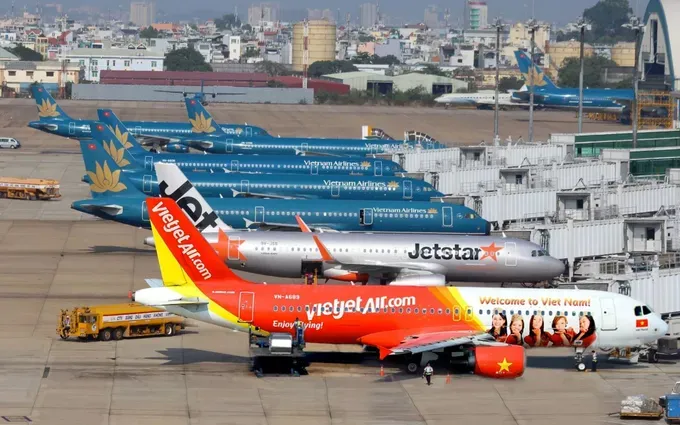
For domestic airlines, although there are currently no direct routes to the Middle East, flights from Vietnam to Europe operated by Vietnam Airlines have been required to adjust their flight paths to avoid the airspace of Iran, Iraq, and surrounding areas in response to regional security concerns.
Flights operated by Vietnam Airlines are currently required to use either the northern corridor—passing through Central Asia and China—or the southern corridor via South Asia and the Arabian Peninsula. As a result, flight duration has increased by 10–15 minutes per route, leading to an estimated additional cost of around US$2,000 per flight.
In addition, Vietnam Airlines is facing the risk of higher war-risk insurance premiums, which could rise by approximately 10–15 percent for aircraft operating on intercontinental routes adjacent to conflict-affected areas.
In addition, Vietnam Airlines may be required to pay additional war-risk insurance premiums, estimated at 10–15 percent higher for aircraft operating on intercontinental routes adjacent to conflict-affected areas.
Regarding foreign carriers, three Middle Eastern airlines are currently operating services to Vietnam with an average frequency of about 12 flights per day. However, due to the ongoing hostilities, since February 28, all three carriers have had to cancel several flights, affecting the revenue streams of aviation service providers in Vietnam, including airport operations and ground services.
The Civil Aviation Authority of Vietnam (CAAV) stated that it stands ready to support airlines in minimizing losses caused directly or indirectly by the conflict in the Middle East. The authority is also coordinating with the Airports Corporation of Vietnam (ACV) to consider reducing aircraft parking service charges for airlines affected by the situation.
Should the situation remain prolonged and complex, the CAAV will review relevant policies and propose appropriate adjustments to mitigate adverse impacts on aviation operations.
The CAAV also noted that it will work with Vietnamese carriers to consider proposing a reduction in aviation fuel surcharges if global fuel prices rise sharply as a result of an extended conflict.