Vietnam’s industrial sector maintained strong growth momentum in April, with the Index of Industrial Production (IIP) estimated to increase 3 percent from the previous month and 9.9 percent year-on-year, according to the National Statistics Office (NSO) under the Ministry of Finance.
In the January–April period, the IIP rose 9.2 percent compared to the same period last year, signaling a stable and broad-based recovery across the industrial sector.
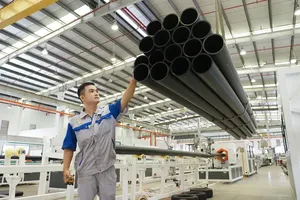
Manufacturing and processing continued to serve as the key growth engine, expanding 9.9 percent and contributing 7.8 percentage points to overall industrial growth. Electricity production and distribution grew 7.5 percent, while water supply and waste treatment services increased 7.4 percent. Mining activity also recorded a 4 percent rise. The data reaffirmed the leading role of manufacturing, while infrastructure-related industries continued to support stable production.
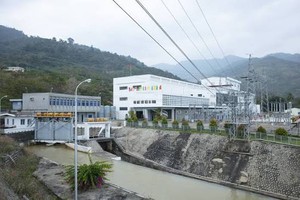
Industrial production posted growth in all 34 provinces and centrally run cities, highlighting the broad recovery of industrial activity nationwide. Strong gains were recorded in localities with advantages in manufacturing and electricity production, including Ninh Binh, Phu Tho, Ha Tinh, Nghe An, and Bac Ninh. Hydropower hubs such as Lai Chau and Son La also saw solid expansion in electricity output, contributing to the sector’s overall growth.
Despite the positive trend, disparities remained among localities. Provinces dependent on slower-growing or declining sectors such as mining and electricity production, including Lang Son, Lao Cai, Quang Ngai, and Tuyen Quang, reported more modest growth. The gap reflected differences in industrial structures and economic transition capacity across regions.
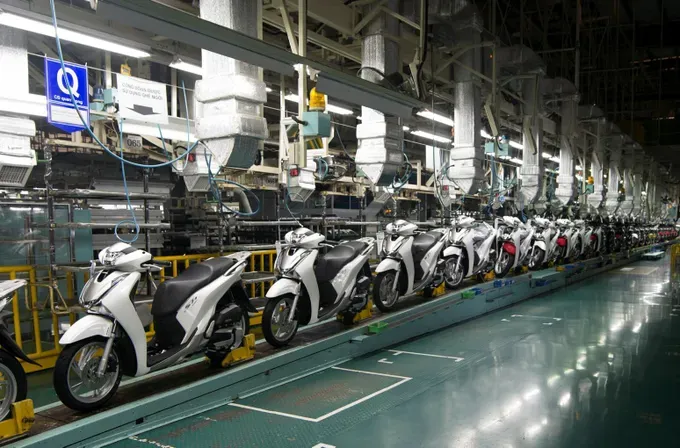
The NSO reported strong output growth in several key industrial products during the first four months of 2026. Motorbike production jumped 33.3 percent year-on-year, while processed seafood rose 22.5 percent, automobile production 22.4 percent, and rolled steel 17 percent.
Meanwhile, the output of several products declined, including clean coal, down 5.4 percent; monosodium glutamate, 4.4 percent; televisions, 4.3 percent; leather footwear, 4.1 percent; and urea fertilizer, 1.1 percent.
The industrial labor market also continued to improve, with employment at industrial enterprises rising 1.1 percent from March and 3.6 percent year-on-year, reflecting ongoing production expansion among businesses.
Employment at State-owned enterprises increased 0.2 percent both month-on-month and year-on-year. The non-State sector saw employment rise 1.1 percent from the previous month but dip 0.1 percent compared to a year earlier. Foreign-invested enterprises posted increases of 1.2 percent month-on-month and 5.1 percent year-on-year.