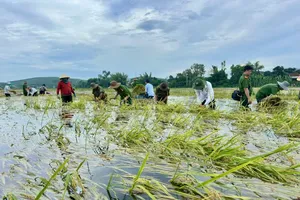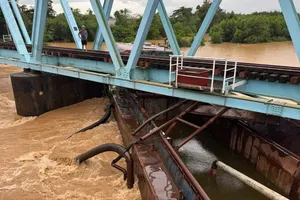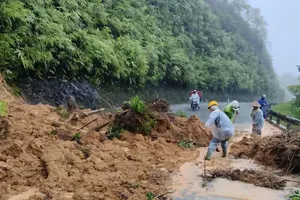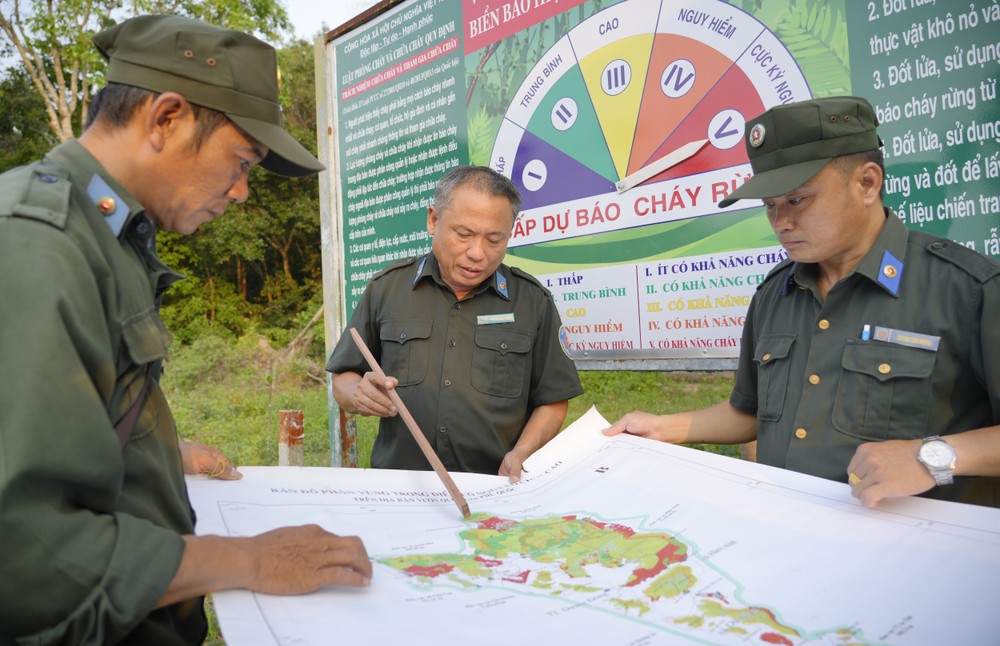
In An Giang Province, authorities have allocated more than VND299.5 billion to implement a comprehensive package of measures to prevent drought, water shortages, saltwater intrusion, and forest fires. Key solutions include constructing saltwater-blocking dams, dredging canal systems, transporting freshwater to island communes, and upgrading water supply pipelines in remote areas.
At a briefing on January 23, leaders of the An Giang People’s Committee said hydrometeorological developments are being closely monitored to ensure proactive responses. According to forecasts from the An Giang Hydrometeorological Station, saltwater intrusion in rivers without protective infrastructure is expected to occur later than the multi-year average. Peak salinity during the 2025–2026 dry season is likely to fall between late March and April 2026, at levels lower than historical norms.
However, officials cautioned that abnormal sea level rises driven by northeast monsoon winds could cause sudden spikes in salinity, allowing saltwater to penetrate deep into inland areas as early as the first months of 2026.
To mitigate these risks, An Giang has tasked its Department of Water Resources Management with flexibly operating coastal sluice gates to block saltwater. The province will also coordinate with neighboring localities to regulate outer dike systems, maximize freshwater storage toward the end of the rainy season, and secure sufficient water reserves for agricultural production, forest fire prevention, and erosion control.
Water supply units have been instructed to ensure safe water storage at reservoirs and prioritize a stable domestic water supply for residents in both mainland and island areas throughout the peak dry season. In agriculture, local authorities are accelerating the dredging of intra-field canals while reinforcing dikes, embankments, and pumping stations to protect the 2025–2026 winter–spring rice crop and prepare water sources for the subsequent summer–autumn season.
Can Tho faces early salinity pressure
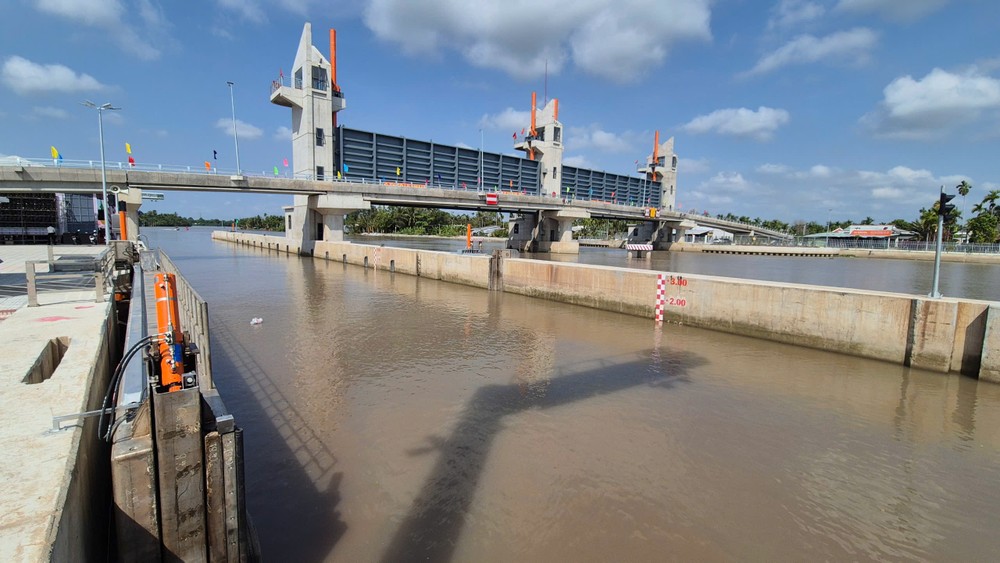
In Can Tho City, saltwater intrusion has already begun to affect key river systems. According to the city’s Department of Water Resources Management, the 4-part-per-thousand salinity boundary has started advancing into river mouths, such as the Hau River and My Thanh River. During the 2026 dry season, saltwater intrusion is forecast to reach levels similar to or higher than the multi-year average, with peak penetration expected toward the end of March.
Specifically, the 4-part-per-thousand salinity line is projected to move 45–55 kilometers upstream along the Hau River and 55–65 kilometers along the My Thanh River, posing significant risks to water intake points and agricultural areas.
Mr. Ngo Thai Chan, Director of the Department of Agriculture and Environment of Can Tho, said the city has prepared a contingency plan to install 37 free clean-water supply stations in rural areas. Each station will be equipped with a 10,000-liter storage tank to provide free water during periods of acute shortage.
Can Tho is also preparing barges and boats to transport freshwater to areas at risk of domestic water shortages, while enhancing the operational capacity of 37 existing rural water supply stations. In addition, four water treatment plants in Vinh Chau, Tran De, and Cu Lao Dung—localities under intense pressure from saltwater intrusion—are set to be put into operation to strengthen freshwater supply during peak dry months.
At the regional level, the Ministry of Agriculture and Environment is accelerating the operation of key hydraulic infrastructure projects across the Mekong Delta.
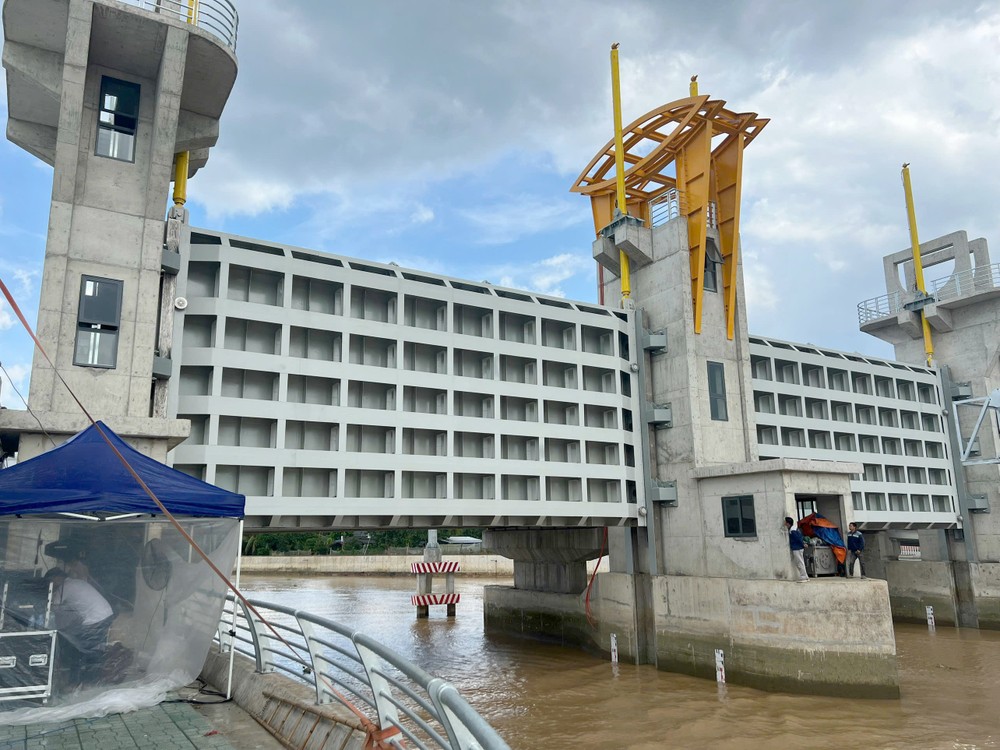
Mr. Kieu Van Cong, Deputy Director of Irrigation Work Investment and Construction Management Board No.10, said several major water control works will be brought online ahead of the 2026 dry season. Among them is the Rach Mop sluice gate, part of the southern Hau River water control project.
The operation of the Rach Mop sluice is expected to play a crucial role in preventing saltwater intrusion along the southern bank of the Hau River, helping protect approximately 19,220 hectares of agricultural land and reducing drought and salinity damage across more than 36,710 hectares.
Vinh Long prepares for worst-case scenarios
Meanwhile, Vinh Long Province has proactively developed two response scenarios based on different levels of disaster risk, adopting a strategy of early preparedness to ensure domestic water security under all circumstances.
The first scenario assumes saltwater intrusion deeper than the multi-year average, beginning in the second half of December 2025 and peaking around March 2026. Under this scenario, the 4-part-per-thousand salinity boundary is forecast to penetrate 50–60 kilometers inland along major rivers such as Ham Luong, Cua Dai, Ba Lai, Co Chien, and the Hau River.
An estimated 83 out of 124 communes and wards would be affected, primarily those along major rivers, with disaster risk assessed at Level 2. In response, irrigation systems will be operated flexibly to maximize freshwater storage and allocate water rationally, prioritizing domestic use, livestock, perennial crops, and agricultural production. Water supply units will support one another when raw water sources are affected, while public communication efforts will promote water-saving practices.
The second scenario addresses an extreme and prolonged saltwater intrusion event comparable to the historic 2019–2020 dry season, with impacts lasting from early March through late May 2026. In this case, the 4-part-per-thousand salinity boundary could advance deeply and remain at high levels, while the 1-part-per-thousand salinity threshold would likely cover almost the entire province.
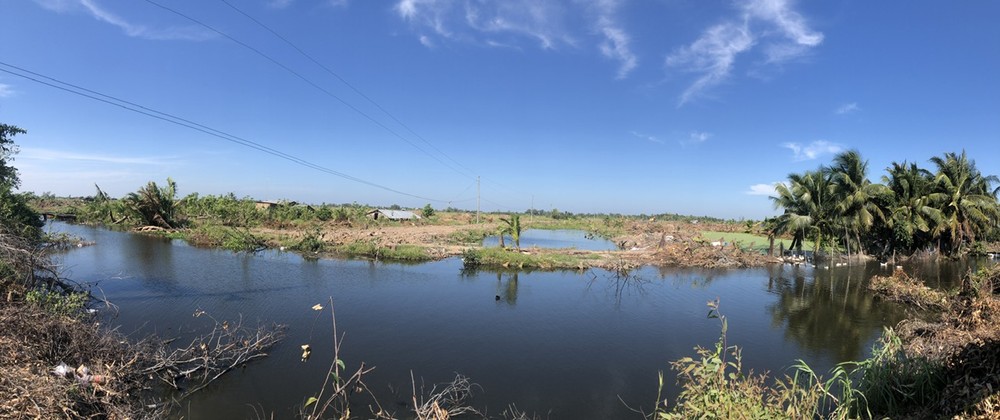
Up to 117 of 124 communes and wards could be affected, leaving only a few areas minimally impacted. Disaster risk would rise to Level 3, indicating severe consequences. Provincial authorities have pledged that under no circumstances will residents be left without domestic water.
Beyond measures outlined in the first scenario, Vinh Long stands ready to mobilize maximum manpower and equipment, operate RO desalination systems, activate raw-water pumping stations, and organize freshwater transport when household reserves are depleted. Absolute priority will be given to domestic water supply, followed by drinking water for livestock and irrigation for high-value perennial crops.
Recent monitoring shows saltwater intrusion in Vinh Long’s main rivers is intensifying rapidly. The 4-part-per-thousand salinity line has already advanced 41.6 kilometers along the Cua Dai River, 23 kilometers on the Ham Luong River, 25.3 kilometers on the Co Chien River, and 16.2 kilometers on the Hau River. In the coming period, salinity is forecast to penetrate 46–59 kilometers inland, at levels comparable to or slightly lower than the 2024–2025 dry season.