The voters included a large number of Khmer ethnic citizens.

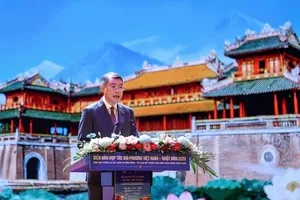
At polling station No. 7 in Phu Loi Ward, Can Tho City, Chairman Lam Van Man of the National Assembly's Committee for Ethnic Affairs attended the opening ceremony of the election and cast his vote there.
Khmer voters place high expectations on their ballots
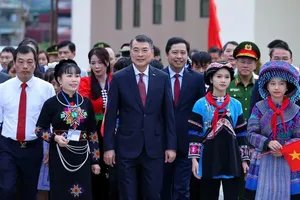
From early morning, hundreds of Khmer ethnic voters in Soc Trang Ward of Can Tho City arrived at polling stations to cast their ballots.
Voters who are students of the Southern Intermediate Pali Cultural Training School were present at polling station No. 1, eagerly awaiting the time to exercise their right to vote.
Can Tho City has 2,597 polling stations, with over 3.1 million voters participating in the election. Of these, more than 543,000 are Khmer ethnic voters (accounting for approximately 17.5 percent of the total number of voters).

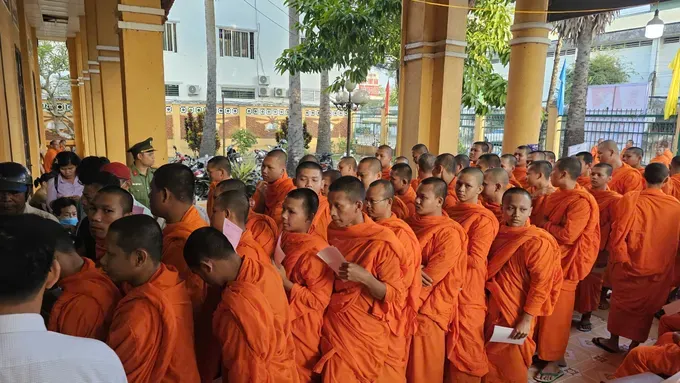
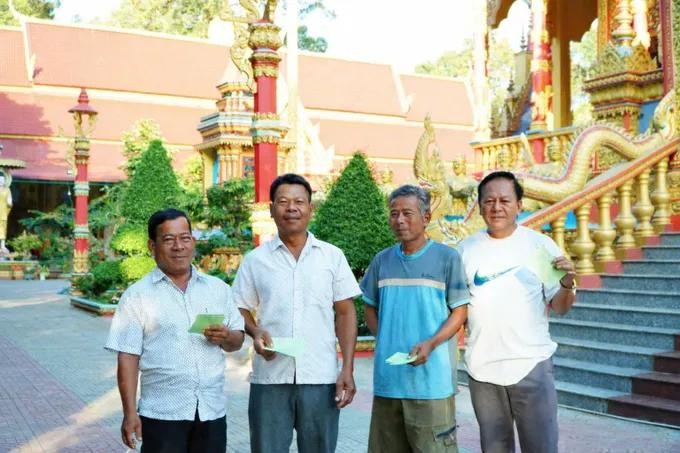
In Vinh Long, nearly 353,000 Khmer voters residing in the area participated in the election.
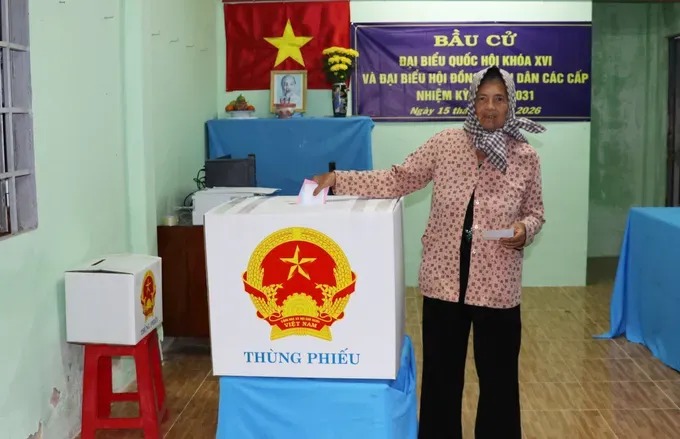
At polling station No. 5 in Chua Giua (Ksach Kandal), voter Thach Sophol expressed: “I believe that the elected ones will perform their roles well as National Assembly and People's Council deputies.”
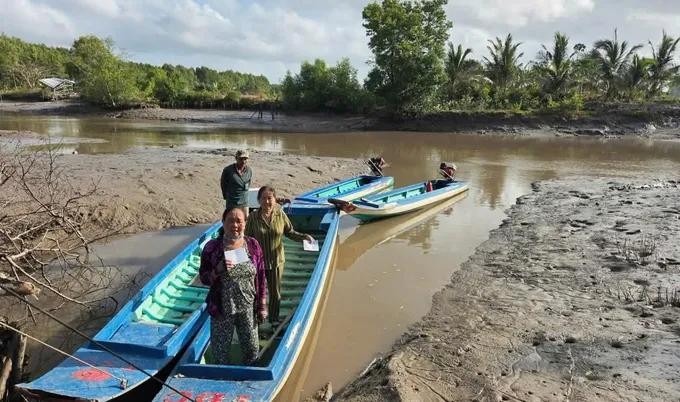
Voters in the southernmost part of the country use speedboat to polling stations
In Ca Mau, people in Dat Mui Commune – the southernmost point of the country – were filled with laughter and conversation as they made plans to vote. Due to the commune's many canals and waterways, voters used speedboats to travel to polling stations.
At polling station No. 9 in Khai Long hamlet, voters lined up in an orderly manner, waiting for their turn to cast their ballots. The Secretary of the Ca Mau Provincial Party Committee, Nguyen Ho Hai, also voted at this polling station.
Tan Phu Dong is an island commune in Dong Thap Province. Immediately after the opening ceremony, 17,671 voters on the island participated in the election at 14 polling stations located in hamlet headquarters and schools in the area.
At polling stations under the An Giang Provincial Military Command, thousands of officers and soldiers in uniform lined up in orderly fashion to cast their votes. For many young service members, participating in an election within a military setting for the first time underscored their sense of responsibility toward the nation’s development and their local communities.
Meanwhile, Tay Ninh Province recorded nearly 2.3 million eligible voters. The province is divided into five constituencies for National Assembly deputies, 27 constituencies for the provincial People’s Council, and 634 constituencies for commune-level People’s Councils.
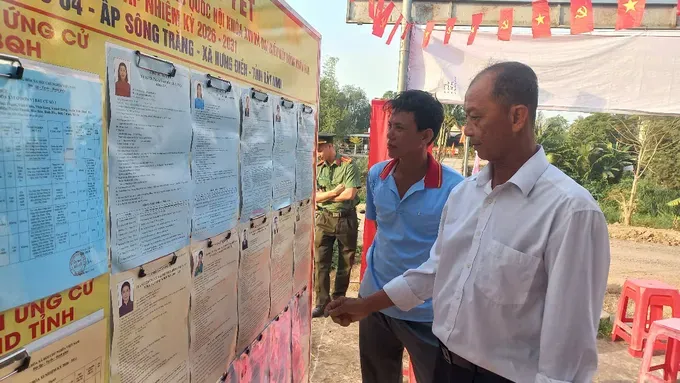
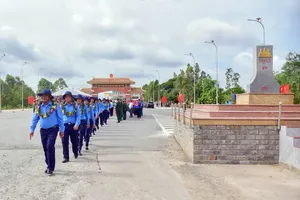
The atmosphere of excitement and solemnity of the election day permeated the border communes of the province. Tay Ninh has a border approximately 369km long, spanning 19 Communes, bordering the provinces of Svay Rieng, Tboung Khmum, and Prey Veng of the Kingdom of Cambodia. In some border communes, despite being in the peak of the winter-spring rice harvest season, a large number of voters still made time to exercise their civic rights. Polling stations were arranged scientifically and conveniently, creating favorable conditions for people to participate in the election.