Amid intensifying international competition, the urgent need to strengthen transport infrastructure connectivity, develop green tourism products, and advance digital transformation is not only a pressing requirement but also a strategic pathway to enhancing the region’s standing on the global tourism map.
Elevating the positioning of the destination
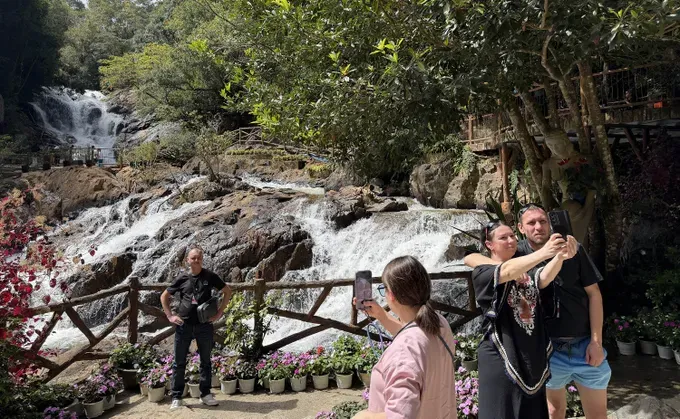
Previously, Ho Chi Minh City, Lam Dong, and Binh Thuan signed a tourism development cooperation program oriented toward “one journey, three destinations,” alongside the promotion of a joint tourism brand: “Saigon market – Da Lat flowers – Mui Ne beach.” However, due to long distances and an underdeveloped transport infrastructure, the program has yet to deliver results commensurate with expectations.
Currently, with an expanded administrative space and the accompanying participation of major enterprises, Khanh Hoa Province is presented with significant opportunities to expand its international markets and aspire to become an international coastal and island tourism hub of Vietnam.
Deputy Director General of the Vietnam National Authority of Tourism Ha Van Sieu suggested that Khanh Hoa should reposition its destination image at the international level while strengthening planning and infrastructure investment and developing tourism products based on the comparative advantages of its bays in a complementary rather than duplicative manner. At the same time, he emphasized the need for internationally resonant communication messages.
Vice Chairman of the Committee for Culture and Social Affairs of the National Assembly, Ta Van Ha, assessed that Khanh Hoa has sufficient conditions to become a national tourism growth pole, thanks to its location along the North–South axis, adjacency to international maritime routes, and strong connectivity via air, sea, and road transport. The province is therefore well-positioned to serve as an international gateway for Vietnam’s tourism and trade exchange activities.
Khanh Hoa Province possesses a diverse tourism resource ecosystem, most notably its bays, beaches, islands, coral reefs, hot mineral springs, and distinctive Cham cultural space—forming a strong foundation for attracting high-spending international visitors.
From the perspective of the business community, after more than 20 years of development, Vinpearl has built a large-scale tourism, hospitality, and entertainment ecosystem in Vietnam. Among its flagship developments, Vinpearl Nha Trang on Hon Tre Island is identified as a pioneering destination for a green, smart, multi-layered tourism model, providing a practical foundation for digital transformation in the tourism industry.
According to the Marketing Director of Vinpearl JSC, Nguyen Thi Hoa, Khanh Hoa Province is also facing multiple challenges, including intensifying competition among regional destinations and increasingly stringent requirements regarding service quality, visitor experience, and destination management in line with international standards. Therefore, Khanh Hoa needs to focus on strengthening four core pillars: infrastructure, technology, human resources, and green tourism. These elements should be developed in a synchronized manner in the coming time.
In addition, the province should formulate a comprehensive strategy for destination development and visitor experience targeting both domestic and international tourists, while developing distinctive tourism products, enhancing digital infrastructure, advancing smart tourism, and establishing a roadmap for high-quality human resource development.
To ensure a stable flow of international visitors in the long term and into the future, Dalattourist has developed a long-term strategy, actively bringing its tourism products to global markets for promotion and introduction.
Mr. Nguyen Nhat Vu, Deputy General Director of Dalattourist, said that in addition to effectively maintaining the company’s existing tourism products, the enterprise regularly organizes delegations to introduce the company's offerings in various countries. International tourists typically have higher expectations compared to domestic visitors; therefore, the company must understand the specific demands of each market in order to attract them successfully.
Developing distinctive tourism products
According to Nguyen Phi Hong Nguyen, Vice Chairman of the Khanh Hoa Tourism Association’s Travel Division and Director of Viet Promotion Travel, the local tourism sector needs to revitalize intra-provincial routes and destinations while also developing short-duration products such as the Nha Trang–Phan Rang route oriented toward cultural tourism and the Khanh Hoa–Buon Ma Thuot–Da Lat route based on regional connectivity.
In addition, thematic tours focusing on culture, traditional craft villages, community-based eco-tourism, green tourism, and responsible tourism are being further promoted. The tourism sector is also strengthening linkages among travel agencies, accommodation providers, food and beverage services, and transportation operators to form integrated service chains, offering packaged products along with flexible promotional incentives for visitors.
To enhance connectivity within the tourism product chain from the coastal area of Nha Trang to the “land of a thousand flowers” of Da Lat–Bao Loc, the Khanh Hoa Tourism Association’s Travel Division recently organized a famtrip survey program along the Nha Trang–Da Lat–Bao Loc route, bringing together 30 tourism enterprises and service providers.
The famtrip provided a comprehensive perspective on destinations and emerging tourism products, notably highlighting a chain of resorts and tea experiences in the Da Lat–Lam Dong area. The program focused on exploring the depth of high-quality tourism offerings, laying the groundwork for connecting coastal–highland tours between Nha Trang and Da Lat/Bao Loc while also opening up prospects for future collaborative tourism programs.
Meanwhile, Mui Ne in Lam Dong Province has also been planned as a key national tourism area, with the objective of becoming a leading tourism hub in the Asia–Pacific region. It is expected to welcome 14–25 million visitors per year by the 2030–2040 period, with a steady increase in international arrivals, thereby creating new momentum for tourism development in the South Central Coast region.
According to Mr. Tran Van Binh, Vice Chairman of the Lam Dong Tourism Association, in order to extend the length of stay of international visitors, the tourism sector needs to develop product chains offering diverse travel itineraries, ranging from beach experiences and local culture to nightlife activities, arts programs, water sports, and community-based tourism. He emphasized that the training of high-quality human resources, particularly in foreign language proficiency and customer service skills, is an urgent requirement to enhance the destination’s international reputation and encourage repeat visitation.
Mr. Tran Ngoc Dung, Director of Seagull Co., Ltd. and Vice Chairman of the Lam Dong Tourism Association, said that if Phan Thiet Airport is soon commenced and its civil aviation facilities put into operation, together with inter-regional transport systems such as expressways and National Highway 28B being upgraded and expanded, Mui Ne’s tourism sector will make a breakthrough in the coming period.
In addition, the development of green and sustainable tourism, combined with nighttime entertainment services, is considered a key factor in extending the length of stay and increasing spending by international visitors in Phan Thiet–Mui Ne.
From a strategic perspective, many experts assess that the greatest challenge remains the completion of transport infrastructure and the transition of the tourism growth model toward a green direction. In this context, the appeal of Da Lat–Lam Dong is built on three core value layers, including unique natural landscapes, diverse cultural heritage, and distinctive experiential offerings. This further enhances Da Lat’s uniqueness, as few destinations in Southeast Asian countries possess a temperate climate year-round or a spatial setting of “forests within the city and city within the forest” like Da Lat.
According to Associate Professor Dr. Pham Trung Luong, former Deputy Director of the Institute for Tourism Development Research under the Vietnam National Authority of Tourism, Khanh Hoa, following administrative consolidation, has acquired new strengths and momentum, sufficient to lead tourism development across the South Central Coast region.
However, he noted that service infrastructure remains insufficiently synchronized, interregional connectivity is still weak, the night-time economy and large-scale entertainment products have yet to match potential, and the role of a regional “gateway and destination” has not been clearly defined.
To realize its development objectives, Khanh Hoa needs to complete long-term strategic planning, invest in synchronized infrastructure development, restructure tourism products and markets, strengthen regional linkages, improve institutional frameworks and policies, and develop the night-time economy to enhance competitiveness and reinforce its role as a leading tourism hub in the coming period.







)