The project marks a notable milestone in the growing wave of international collaboration in Vietnamese cinema.
Positive signal
The plan for a co-production film about Grand Duke and Supreme Commander Tran Hung Dao was originally announced in Vietnam in 2025. However, its official launch event in South Korea at the end of April 2026 marked the formal commencement of the project.
The film will recreate the life and career of the renowned military commander Tran Hung Dao, who led the forces and people of Dai Viet to victory against the Mongol–Yuan invasions in the 13th century. According to the plan, filming is scheduled to begin in May, with close cooperation between the two countries throughout the entire production process—from directing and cinematography to production management—aiming to meet international standards.
The project is expected to serve as a model for future collaborations, combining South Korea’s advanced production technologies with Vietnam’s rich historical heritage and profound cultural identity.
In recent years, Vietnam–Republic of Korea cooperation in the film industry has recorded numerous positive developments, marked by a series of notable projects such as “Mang me đi bo” (Leaving Mom) directed by Mo Hong-jin; “Dieu uoc cuoi cung” (The Last Wish) directed by Doan Si Nguyen, adapted from the South Korean film The Last Ride; and “Tay anh giu mot sao” (Hold Your Star) directed by Kim Sung-hoon, among others.
In particular, the film “Mang me đi bo” (Leaving Mom) made a strong impact, achieving nearly VND172 billion (US$6.5 million) in box office revenue in the Vietnamese market alone.
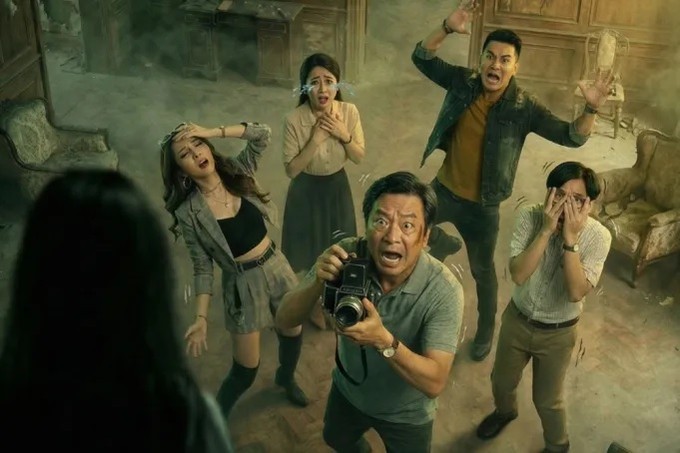
RUNUP Vietnam, a film production and copyright trading company operating between Vietnam and the Republic of Korea, is currently developing two cinematic projects, including “Tham my vien am phu” (Demonic Plastic Surgery) directed by Nguyen Huu Hoang and “Lau chu Hoa” (Uncle Hoa’s mansion) directed by Hung Tran.
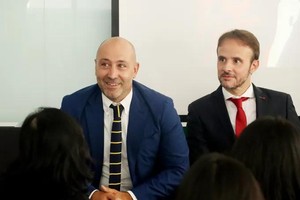
Mr. Lee Jin Sung, representative of RUNUP Vietnam, said that following the success of previous examples, many foreign producers are now contacting the company to inquire about co-production opportunities or filming in Vietnam.
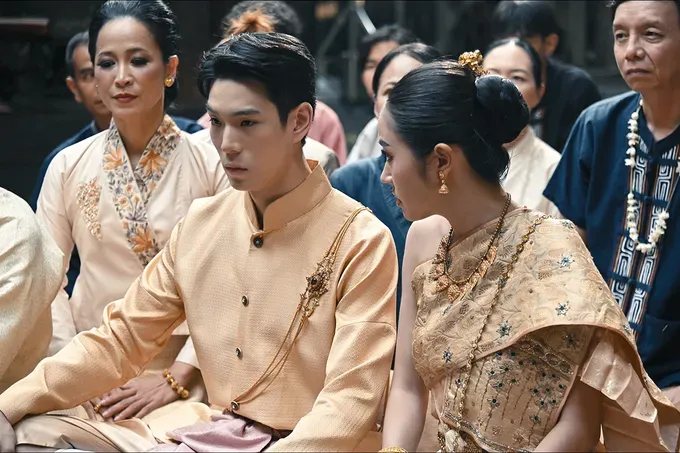
Beyond the Republic of Korea, film co-production between Vietnam and Thailand has also flourished. Most recently, “Co dau ma” (The Bride), directed by Lee Thongkham, marked the first horror co-production project between the two countries.
At the end of March, Benetone Films and Thai distributor Fearfolks announced a collaboration with Vietnam’s ProductionQ on the horror-comedy project Roll & LOL, set in Bangkok and featuring a Vietnamese cast.
“This collaboration enables us to combine the creative strengths of both industries, with the aim of reaching audiences across Southeast Asia,” said Hoang Quan, CEO of ProductionQ.
In addition, the first-ever Vietnam-India film collaboration titled “Love in Vietnam” further demonstrates the expanding scope of Vietnam’s international film partnerships.
Promoting co-creation
A notable feature of the current wave of international cooperation is that Vietnam is no longer merely providing locations, resources, or outsourcing services but is increasingly engaging deeply in the entire project development process—from scriptwriting to production.
Producer Phan Gia Nhat Linh noted that “Mang me đi bo” (Leaving mom) is among the rare co-production projects in which the Vietnamese side was involved from the scripting and creative stages through production. Similarly, in “Dieu uoc cuoi cung” (The last wish), the production team chose to retain the core essence of the original South Korean story while making adjustments to better align with the Vietnamese context and cultural identity.
A notable trend in recent co-production projects is the increasingly natural and well-coordinated collaboration between casts from the two countries. In Cô dâu ma, a balanced 50/50 production model—spanning the creative team, filming locations, and both lead and supporting actors—has contributed to promoting local cultural values to international markets.
In addition, many co-production projects have expanded their distribution scope. “Co dau ma” (The Bride) has been released in Australia, New Zealand, the United States, Canada, Latin America, and across Asia. “Mang me đi bo” (Leaving mom) has reached similar markets, while Love in Vietnam has participated in various international film festivals in countries such as the Republic of Korea and France.
Recent developments indicate that, with the support of breakthrough policies and long-term development strategies, this wave of international cooperation could position Vietnam as an attractive destination for global film projects, thereby creating momentum for deeper integration and sustainable growth of the domestic film industry.