Immediately following the nation’s reunification, the HCMC stage swiftly returned to a state of vibrant and bustling activity, particularly in Cai Luong (Vietnamese reformed opera) and spoken drama. Theaters reportedly had to remain lit throughout the week to satisfy the entertainment demands within the cultural and spiritual lives of urban dwellers.
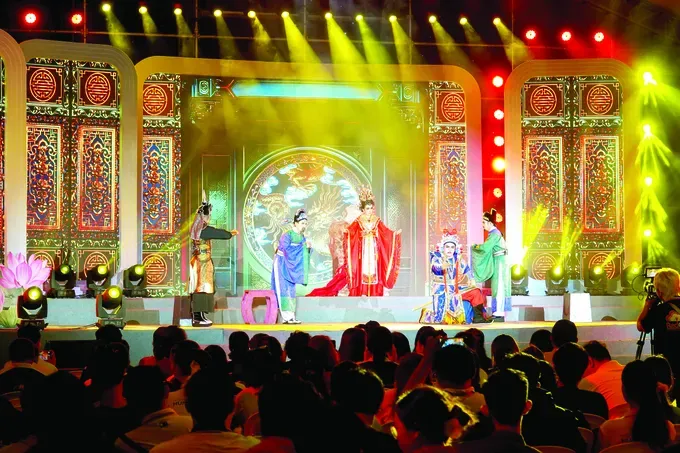
Cai Luong during this period truly entered its golden age, possessing a profound and widespread influence across all social groups. From classic masterpieces such as ‘To Anh Nguyet’, ‘Nua Doi Huong Phan’ (Half a Life of a Delicate Beauty), ‘Ao Cuoi Cong Chua’ (The Wedding Gown in front of the Pagoda Gate), ‘Lan va Diep’ (Lan and Diep), ‘Tieng Trong Me Linh’ (Me Linh Drum Sound), ‘Ben Cau Det Lua’ (Silk Weaving by the Bridge), ‘Thai Hau Duong Van Nga’ (Empress Dowager Duong Van Nga), ‘Tim Lai Cuoc Doi’ (Reclaiming Life), ‘Nguoi Ven Do’ (The Suburban Resident), and ‘Cay Sau Rieng Tro Bong’ (The Durian Tree in Bloom) to Vong Co verses, these works became an integral part of the city’s cultural memory.
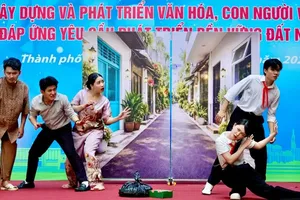
Simultaneously, the field of spoken drama made a formidable impression with plays that were more “earthy” and realistic, focusing on post-war themes, social conflicts, emerging moral values, and the friction between old and new mindsets. Through these narratives, the stage mirrored the authentic context of a society in transition.
The stage witnessed a fusion between Western theatrical performance techniques and Vietnamese culture, representing the integration of Northern and Southern theater alongside the emergence of a “golden generation.” Productions like ‘La Sau Rieng’ (The Durian Leaf), ‘Tra Hoa Nu’ (The Lady of the Camellias), ‘Bong Hong Cai Ao’ (A Rose for Your Lapel), ‘Huyen Thoai Me’ (Legend of a Mother), ‘Duoi Hai Mau Ao’ (Life of a Double Agent), ‘Chuong Dong Ho Dien Kremlin’ (The Kremlin Chimes), and ‘Hon Dao Than Ve Nu’ (The Island of Aphrodite) by troupes such as Kim Cuong, Bong Hong, and Cuu Long Giang were consistently packed with spectators.
As time marched on, and when state-owned theaters somewhat stagnated, numerous privatized and experimental stages began to appear sequentially. This era also marked the debut of new artists who left a lasting mark of talent, including Thanh Loc, Hong Van, Hong Dao, Viet Anh, Le Vu Cau, Huu Chau, Cong Ninh, Mai Thanh Dung, Thanh Thuy, Minh Hoang, Thanh Hoang, Thanh Hoi, and Ai Nhu.
Following that was the successive birth of private drama stages like Idecaf, Phu Nhuan, and Saigon, later followed by Hoang Thai Thanh, The Gioi Tre, and Nu Cuoi Moi. Each theater brought a distinct strength in staging style, performance, and diverse genres, ranging from socio-psychological scripts, literature, history, and revolutionary war to folklore, children’s plays, and comedy. These venues catered to the entertainment needs of a new generation of audiences, creating a magnetic pull and becoming a “bright spot” in the city’s cultural and artistic life.
The art of Hat Boi (Vietnamese classical opera) also forged its own identity in performance organization. Even during periods without a fixed stage, Hat Boi continued to live within the community through performances serving the people at communal houses and temples, creating a characteristic and distinct artistic signature.
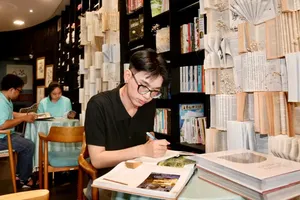
If the stage is where emotions are directly revealed, then literature, especially children’s one, is the current that nourishes spiritual life from its roots. A significant milestone occurred in 1976 when the HCMC branch of Kim Dong Publishing House was established, becoming a gathering point for Southern creative forces.
From this point, Southern children’s literature joined the fray, quickly asserting its position within the national literary current. Authors like Nguyen Nhat Anh and Ly Lan, along with famous series such as ‘Kinh Van Hoa’ (The Kaleidoscope) and ‘Chuyen Xu So Langbiang’ (Tales of Langbiang), have accompanied many generations of readers.
Southern children’s literature doesn’t just tell stories; it contributes to forming a healthy cultural reading space where young people can find themselves, nourish their imagination, and develop their character. As noted by writer Le Phuong Lien, former Head of the Children’s Literature Board of the Vietnam Writers’ Association, this specific literary stream played a vital role in creating a unified national children’s literature that transcends regional differences.
While theater and children’s literature differ in expression, both follow a shared trajectory of adaptation, innovation, and privatization. As state-owned models reached their limits, private stages emerged, introducing fresh themes and expanding the audience base.
From socio-psychological dramas to comedies and historical plays, each stage has established a unique brand, diversifying artistic life. Similarly, children’s literature has pushed creative boundaries. Writing competitions and the influx of young authors have fostered a modern face that resonates with contemporary readers. It also embraces global trends like fantasy and sci-fi.
Even as entertainment migrates online, HCMC’s stage maintains its characteristic internal strength. Audiences still crave authentic emotional experiences. Every year, hundreds of new productions debut, with Cai Luong, Hat Boi and spoken drama evolving to stay deeply connected to reality.
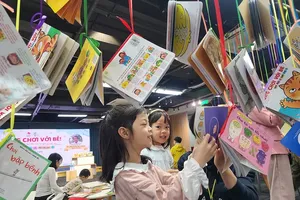
Many productions now utilize high-tech tools like 3D holograms and advanced lighting in plays such as ‘Cuoc Hanh Trinh Tim Buc Chan Dung’ (The Quest for the Portrait). These innovations create multi-sensory visual spaces with significant entertainment value. Meanwhile, children’s literature is expanding into e-books and interactive formats.
Ultimately, HCMC’s artistic current proves that regardless of formal shifts, the core remains steadfast. It’s the ability to touch public emotions through a cultural ecosystem deeply imbued with Southern urban identity.