Amid the pulse of a dynamic city, Ganh (shoulder pole) show adopts a restrained yet resonant storytelling approach by bringing site-specific performance into the heritage setting of the Ho Chi Minh City Museum of Fine Arts. The result is an emotionally layered encounter between cultural memory and contemporary life.
Heritage space as part of the artwork
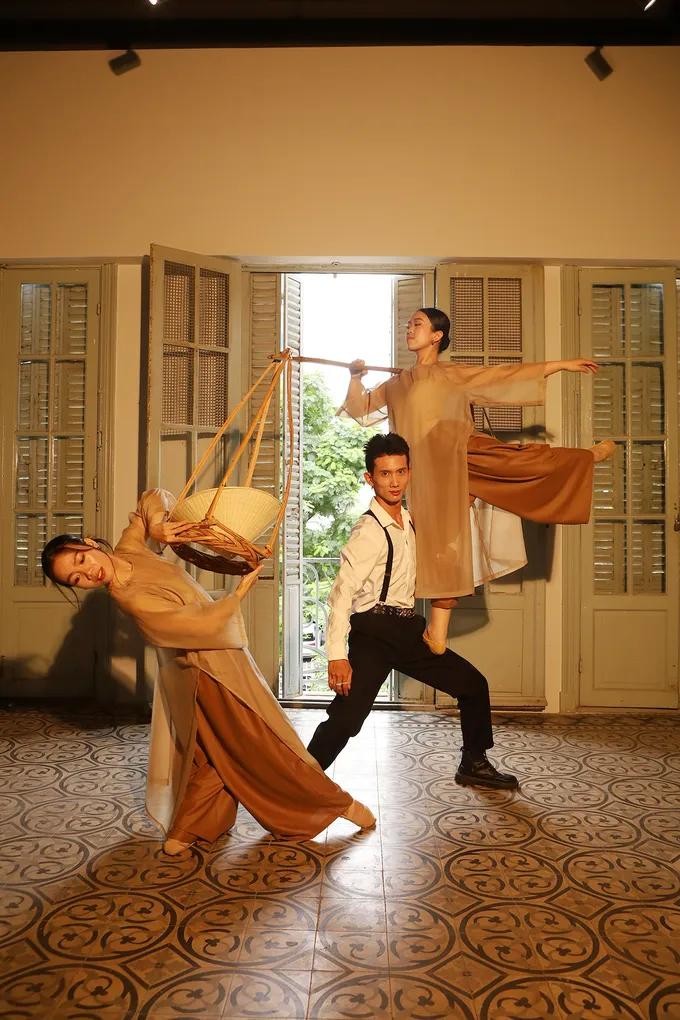
Choosing the Ho Chi Minh City Museum of Fine Arts as the “stage” for the show reflects a deliberate artistic concept. Playwright Pham Thien Vu noted that the creative team did not seek a venue to host a stage; instead, they treated the museum itself as an integral component of the work.
Located at 97 Pho Duc Chinh Street in Ben Thanh Ward, the Ho Chi Minh City Museum of Fine Arts stands as a landmark of heritage architecture, preserving layers of history while serving as a vibrant space for contemporary artistic expression. This interplay of past and present resonates with the spirit of the show, where the image of the show symbolizes the dynamic movement between memory and modern life.
From this perspective, the production avoids constructing a separate stage. Instead, performance elements emerge organically from the museum space. Visual, sonic, and choreographic experiments are designed to interact with the architecture, natural light, and existing artworks. Audiences are thus not merely spectators of a performance, but participants in a multi-layered artistic environment where the boundary between exhibition and performance dissolves.
Introducing site-specific performance into a museum, a space traditionally associated with stillness and contemplation, presents its own challenges. The creative team approached the task with restraint, avoiding intrusive interventions. Rather than imposing a constructed environment, the production engages in a subtle dialogue with the existing space. The experience extends beyond the visual.
Audiences can also “hear” the space through a minimalist live musical score. Sound does not overpower the visual field; instead, it opens an additional sensory channel, deepening engagement with both the artworks and the musical narrative. The result is an experience that is at once understated and intentional, in keeping with the contemplative nature of museum-going.
Across its 75-minute runtime, the image of the show serves as the central axis, yet moves beyond a simple depiction of a familiar element of southern Vietnamese life. Director and artist Thinh Tieu describes the show as a state of being where what one carries is not only livelihood, but also memory, pressure, and aspiration.
This concept is translated into movement language. The tilt of the shoulders, the rhythm of steps, and the imbalance between the two ends of a carrying pole become recurring choreographic motifs. Even in the absence of a literal visual of the show, its essence is conveyed through the performers’ physical expression.
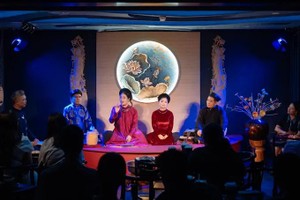
Structurally, the show is an intersection of multiple art forms, including live music, folk dance, and contemporary dance. Music director Cao Ba Hung explained that traditional instruments such as the dan tranh (Vietnamese 16-string zither), dan tu (Vietnamese square box lute), bamboo flute, and Scalloped fretboard guitar are placed in dialogue with modern rhythms and electronic elements, creating a soundscape that is distinctly Vietnamese yet infused with urban sensibility.
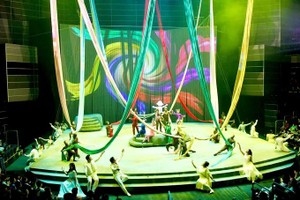
In addition, the grace of southern folk dance, the discipline of ballet, the narrative quality of contemporary dance, and the dynamic energy of street dance are woven together not in opposition, but in complement to tell a shared story of Ho Chi Minh City, where tradition and modernity continuously intersect.
Experiments such as the show demonstrate the potential to reinterpret heritage through contemporary artistic language. When heritage is no longer static but becomes part of a living experience, the distance between past and present narrows, allowing culture not only to be preserved but to continue evolving within everyday life.



)