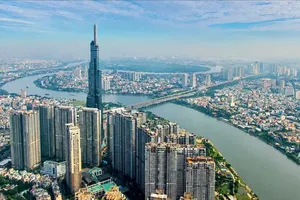
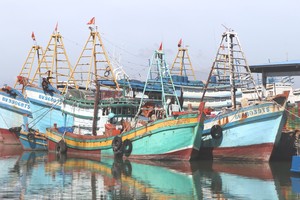
Since the 78-kilometer-long Vung Tau–Binh Chau coastal road was completed in 2005, the eastern coastal area of Ho Chi Minh City has been transformed from pristine beaches and fishing villages into a dynamic chain of coastal cities, including Vung Tau, Long Hai, Dat Do, Ho Tram and Binh Chau. Improved connectivity has attracted major international resort brands, turning the corridor into one of the region’s fastest-growing tourism hubs and a backbone of coastal urban development.
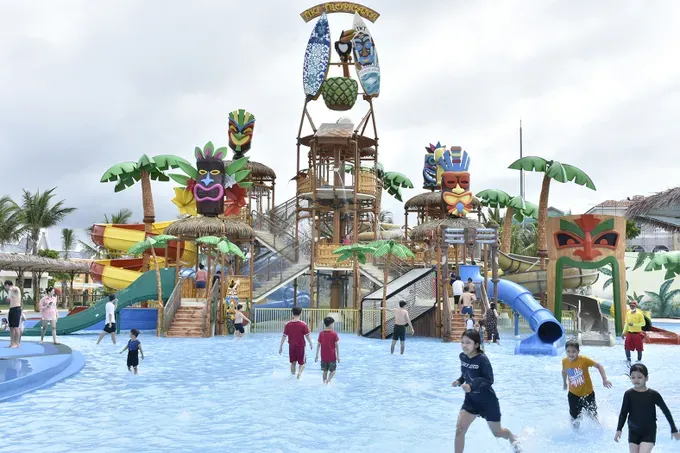
Further upgrades, such as the DT994 coastal road linking the Cai Mep–Thi Vai deep-water port system and a connector to the Bien Hoa–Vung Tau Expressway, are strengthening regional links and investment appeal. Along this coastal corridor, a series of international resort brands such as Melia, Novaworld, Charm, Sanctuary, Carmelia Beach and Ho Tram Trip have emerged, turning the area into one of Ho Chi Minh City’s fastest-growing tourism regions and shaping it as the backbone of eastern coastal urban development.
Local leaders say transport infrastructure has fueled rapid tourism growth and will continue to drive sustainable, green-oriented urban and tourism development along the eastern coast.
According to Vice Chairman of the Ho Tram Commune People’s Committee Nguyen Tuc, the locality has benefited significantly from the coastal road, with tourism emerging as a key growth driver. Since the road opened, major tourism projects have flowed into Ho Tram, transforming once-pristine white-sand beaches into vibrant coastal towns featuring four- and five-star resorts, seaside viewing bridges, parks and night food markets. All local tourism projects are concentrated along the Vung Tau–Binh Chau coastal axis. The local authorities have also proposed accelerating major infrastructure projects, especially the Bien Hoa–Vung Tau Expressway, Ring Roads No. 3 and No. 4, the DT994 coastal road and the Long Thanh–Ho Tram Expressway to further boost tourism development.
Meanwhile, Vung Tau Ward is already well connected to Ho Chi Minh City via the Ho Chi Minh City–Long Thanh–Dau Giay Expressway and Ben Luc–Long Thanh Expressway while a Can Gio–Vung Tau sea-crossing route planned for the future.
Mr. Vu Hong Thuan, Chairman of the Vung Tau Ward People’s Committee, said that the new urban plan focuses on expanding coastal public spaces, developing seasonal beach, marine sports and festival events, and pursuing green tourism-oriented urban development aligned with Ho Chi Minh City’s Net Zero goals.
Zoning along the marine economic corridor
According to the Ho Chi Minh City Department of Planning and Architecture, the eastern urban system is being developed based on marine economic corridor zoning, with cities such as Vung Tau, Tan Phuoc, Phu My, Long Hai and Ho Tram emerging as highly developed hubs.
Three priority zones have been identified, including an industrial, services and seaport zone along the Bien Hoa–Vung Tau Expressway and National Highway 51; a coastal services and tourism zone aimed at making tourism a key economic sector by 2030; and an agricultural economy zone combined with industrial clusters and raw-material belts.
In Con Dao Special Zone, transport development is oriented toward green, smart and carbon-neutral solutions. Duong Thao Hien, Deputy Director of the Department of Planning and Architecture, said that all cities have had their master plans approved, with main functional zones planned at a 1:2,000 scale and detailed 1:500 plans gradually completed to support effective urban management.
From an economic perspective, Associate Professor Dr. Nguyen Ngoc Vinh, Deputy Director of the Institute for Regional Development Research and Consulting at the University of Economics Ho Chi Minh City, noted that the Cai Mep–Thi Vai port cluster currently operates 51 shipping services, including 37 international routes connecting major markets such as the US, Asia and Europe. Alongside regional transport planning, including the Bien Hoa–Vung Tau Expressway, Ring Roads 3 and 4, and notably Phuoc An Bridge linking the port directly to the Ben Luc–Long Thanh Expressway. This network will integrate Cai Mep–Thi Vai into the multimodal transport arteries of a future megacity.
)