The Ho Chi Minh City People’s Committee Office announced on the afternoon of February 4 that Vice Chairman of the municipal People’s Committee Bui Xuan Cuong had signed a decision promulgating the public passenger transport price for the city’s Urban Railway Line No. 1 (Ben Thanh – Suoi Tien Metro Line).
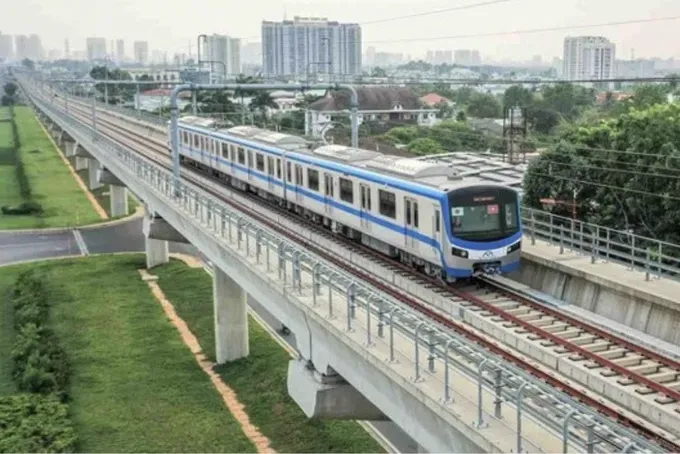
The decision was issued in accordance with current legal regulations on railways, pricing, and public service management, and based on proposals from Ho Chi Minh City Urban Railway Company No. 1 Company Limited, along with appraisal reports and submissions from the Ho Chi Minh City Department of Construction.
Under the decision, the passenger transport price for urban rail services on Metro Line 1 has been set at VND341,910 (US$13.2) per kilometer, excluding property insurance costs (fire and explosion) or electricity costs for operating machinery and equipment at the depot, stations, and the Operations Control Center (OCC). These costs will be settled based on actual expenditures incurred, upon request from the unit assigned by the Ho Chi Minh City People’s Committee to manage the urban railway infrastructure assets.
The approved transport price already includes labor costs for maintaining the urban railway infrastructure and will apply until the city officially issues procedures, norms, and unit prices for managing and operating the metro line.
The Ho Chi Minh City People’s Committee assigned the Public Transport Management Center to coordinate with the Urban Railway Management Authority and Ho Chi Minh City Urban Railway Company No. 1 to regularly review cost factors such as electricity prices, wages and related expenses, and to promptly propose adjustments when necessary.
At the same time, the Urban Railway Management Authority is required to urgently develop procedures, norms, and unit prices for management, operation, and maintenance of the system and submit them to the Ho Chi Minh City People’s Committee for review and issuance.
The decision takes effect from the date of signing. Relevant departments, agencies and units are responsible for organizing the implementation.