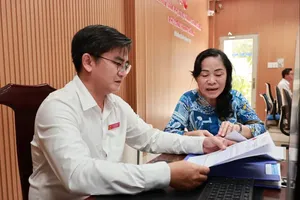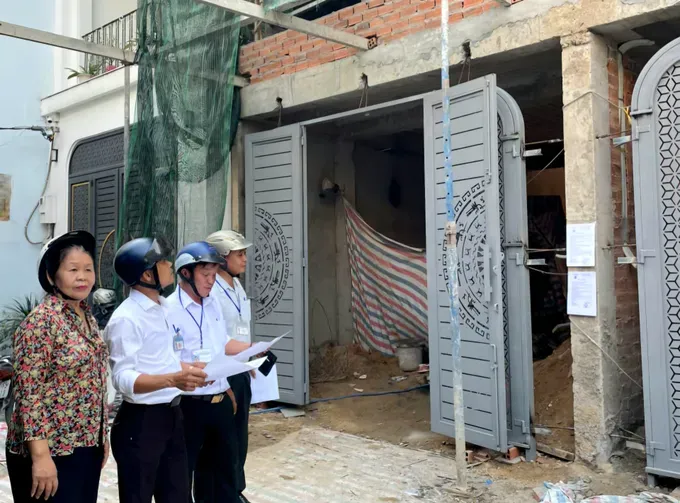
On a Monday morning, Nguyen Van Ly, a resident of An Phu Dong Ward, visited the local Public Administration Service Center to submit an application for a temporary construction permit. He’s looking to build on a plot in front of his house that was earmarked for alley expansion years ago but remains untouched.
After verifying his land use rights certificate and the current site map, clearly delineating the planned expansion zone, ward officials provided detailed advice on the necessary paperwork and guided him through the online submission process.
Mr. Ly left with a smile, relieved that the local government can now grant temporary building permits on land slated for future planning. Like him, many HCMC residents are breathing a sigh of relief now that Decision 29/2025 by the HCMC People’s Committee has taken effect as of January 1, 2026.
This policy empowers ward-level authorities to directly issue temporary construction permits for individual houses in areas with existing zonal or detailed plans that haven’t been implemented yet. These structures can reach a maximum of three floors (in zonal planning areas) with a lifespan of up to five years.
Local leaders view this decentralization as a breakthrough that benefits both the public and grassroots authorities. According to Acting Chairman Nguyen Chi Thien of the An Phu Dong Ward People’s Committee, the move provides a legal framework to untangle long-standing bottlenecks in approved but dormant planning projects.
Specifically, it addresses the legitimate, pressing needs of hundreds of households living on “frozen” plots. By clearly defining the scale and lifespan of these structures, the policy lets residents feel secure about improving their living conditions while protecting the State’s rights when land recovery is eventually required for projects.
Chairman of the Long Phuoc Ward People’s Committee Luu Trong Nghia added that to support residents and businesses, the ward is striving to process construction permit procedures as quickly as possible. At the end of the day, solving housing needs is a vital component of local socio-economic development.
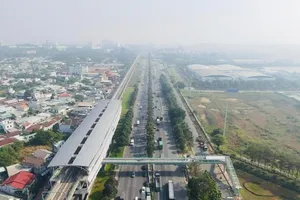
Alongside Decision 29/2025, since January 1, 2026, ward authorities have also been tasked with managing urban roads with a width of 13m or less under Decision 36/2025. Leaders from the Long Truong Ward People’s Committee noted that, in the past, road maintenance and upgrades were difficult because management authority was scattered, which frequently hindered local travel. The issuance of this decentralization decree is a vital legal milestone, allowing localities to be more proactive in management and quick to fix damages as they arise.
Vice Chairman of the Dong Thanh Commune People’s Committee Nguyen Le Trong Tam evaluated that this shift makes it much easier for the commune to take the lead in annual operations and infrastructure maintenance. Currently, the commune is reviewing its maintenance volumes and budgets. It has also assigned a public service unit under its jurisdiction to act as the investor for maintenance and infrastructure development, ensuring traffic systems remain in good condition to meet transport demands and safety standards.
Meanwhile, Deputy Head of the Economic and Urban Infrastructure Office of Tam Binh Ward Pham Ngoc Luong voiced that the ward has collaborated with the Department of Construction to advise the HCMC People’s Committee on handing over 83 roads and over 450 alleys and sidewalks to the ward for management.
He pointed out that most of these routes have degraded, posing safety risks. Once the handover is complete, the ward will survey and prioritize upgrading the most damaged roads to improve the urban landscape.
Similarly, Chairwoman of the Tang Nhon Phu Ward People’s Committee Cao Thi Ngoc Chau stated that her ward would assess the current state of its road network to build an annual maintenance plan based on actual needs and financial capacity.
Leaders from various wards and communes consistently affirm that HCMC’s decisions on construction permits and road management have boosted both the initiative and responsibility of grassroots governments. Having this authority allows ward-level committees to be more proactive in administrative procedures, cutting down wait times for the public. Localities now have the power to maintain roads and adjust, extend, or revoke permits they’ve issued, creating a management mechanism that’s seamless, flexible, and grounded in local reality.
However, the Long Truong Ward People’s Committee has urged HCMC to ensure appropriate funding allocations and issue specific guidelines on the investment sequences for ward-managed roads. They also called for enhanced professional support and budgets that match the actual volume of infrastructure now under their care to ensure these new responsibilities are handled effectively.






)