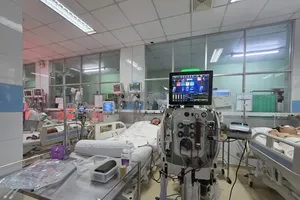
In recent years, major Vietnamese cities have seen a surge of private medical facilities branded with words like “international”. Yet, the service quality, staffing, and professional standards at many of these institutions fall far short of what their names suggest.
The label was selected purely to sound prestigious
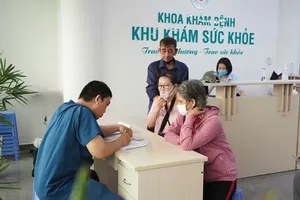
Holding a medical bill of over VND46 million (US$1,750) for gynecological treatment, a 32-year-old woman from Ho Chi Minh City’s Phu Nhuan Ward was left in shock. Drawn in by ads for a so-called “international hospital” on Cach Mang Thang Tam Street in Tan Son Nhat Ward, promising foreign doctors and advanced technology, she had expected modern and attentive care. However, she recounted that after undergoing just a few basic procedures, she was charged nearly ten times the fee of a public hospital visit, yet her health showed no improvement.
However, current Vietnamese law sets no official standards or criteria for recognizing a facility as an international hospital. The title often exists solely in a business registration file or on a signboard, without reflecting the true level of investment, expertise, or safety compliance. In many cases, “international” is little more than a marketing gimmick.
According to the Ho Chi Minh City Department of Health, the city currently manages 90 non-public hospitals, more than 10,600 specialized clinics, and 471 private general clinics, many carrying names that include “international”, “global” or “world”. As demand for high-quality healthcare rises, particularly among higher-income groups, the term “international” has become a marketing shortcut to build trust and justify higher service fees.
A media officer at one so-called international hospital acknowledged that the label was selected purely to sound prestigious, despite the facility lacking foreign investment, foreign doctors, or international accreditation. The representative admitted that adding the word ‘international’ had become a trend, used to attract patients by suggesting higher standards.”
Minister of Health Dao Hong Lan has just issued Directive No. 07/CT-BYT on strengthening management and improving the quality of medical examination and treatment. The Minister of Health requires provincial and city health departments to publicly disclose the list of licensed facilities, their scope of operation, and information on practitioners on their websites for public access.
In particular, service prices must be transparent, preventing situations where prices are different upon entry. Violations must be strictly dealt with, applying all forms of penalties from administrative fines to revocation of professional certificates and operating licenses. Cases of violations must be publicized in the media for public monitoring and community warning.
Minister Dao Hong Lan informed that in the coming time, the Ministry of Health will research and develop a set of enhanced hospital quality standards which are based on inheriting existing results, ensuring suitability to Vietnam's specific characteristics and harmonization with international practices; designed according to different levels, with a clear implementation roadmap so that hospitals can proactively implement and sustainably improve their quality, approaching international quality. This will be the most accurate measure to define what constitutes a high-quality medical facility, helping people avoid getting lost in the ‘maze’ of self-proclaimed titles.
A legal grey zone
Online advertising has further blurred the line. On social media, images of “foreign doctors”, “international certificates”, and claims of “U.S.–European standard treatment” flood the internet, most unverifiable and misleading.
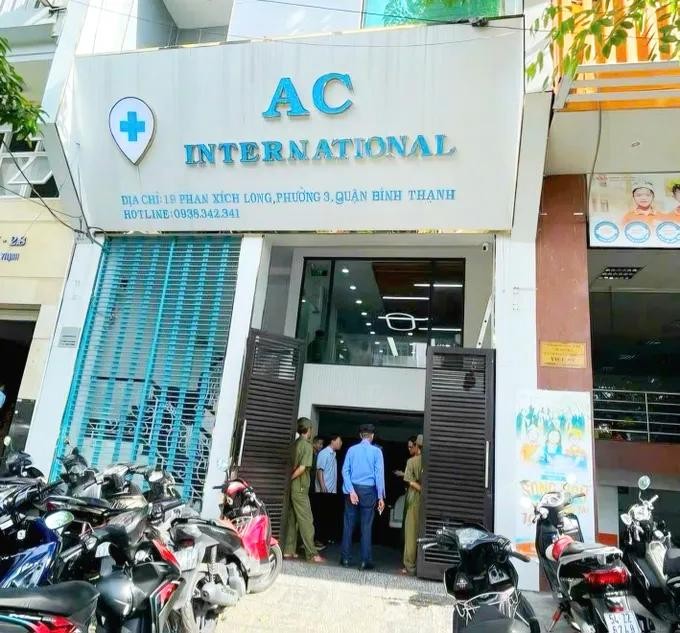
Recently, Ho Chi Minh City’s Investigation Security Agency arrested four individuals linked to AC International, a fraudulent clinic operating on Phan Xich Long Street. Employees there had no medical qualifications, one had only a veterinary diploma but posed as “doctors” and “specialists” wearing white coats to deceive clients.
Authorities have also uncovered networks of fake social media pages impersonating clinics, using misleading labels like “Dr.” or “international standard.” These pages post doctored videos and glossy images of modern equipment, promising painless, surgery-free, drug-free “high-tech treatments” for chronic illnesses, all to lure unsuspecting patients.
The Department of Health has since penalized several “international” clinics for serious violations, including Korea International Aesthetic Institute, Grand World International Hospital, DNA International General Hospital, Helio International Clinic, and Khang Thinh International General Clinic. Offenses ranged from practicing beyond licensed scope and using unqualified staff to inflating diagnoses to extract money from patients.
Missing standards for private clinics
Medical experts note that Vietnam’s Circular No. 35/2024/TT-BYT defines five key quality benchmarks for hospitals, such as covering infrastructure, organizational scale, staffing, medical equipment, and professional capability. Yet, these standards apply only to licensed hospitals, not to private clinics, leaving a regulatory vacuum in the use of labels like international.
Many small clinics merely purchase a few modern machines, hire translators, and adopt English names to appear globally accredited. This legal loophole misleads patients into believing they will receive care comparable to that in developed countries.
According to Assoc. Prof. Tang Chi Thuong, Director of the Ho Chi Minh City Department of Health, the chaos surrounding self-proclaimed international hospitals and clinics is not just about inflated prices or false advertising. The real danger lies in unqualified personnel providing medical services beyond their permitted scope - all in pursuit of profit.
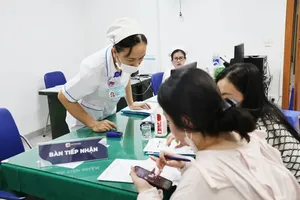
On December 28, the Ho Chi Minh City Department of Health announced that within the first three days of implementing the system for receiving and handling citizens’ feedback and petitions in the healthcare sector, the department had received and processed 16 reports and reflections from the public.
Citizens can send their feedback via the hotlines 0967771010 or 0989401155, through the “Online Healthcare” application, or by submitting letters and petitions directly to the Ho Chi Minh City Department of Health for reception and handling in accordance with regulations.