The word international has become a popular label for many schools and institutions in Ho Chi Minh City appearing to promise global standards, yet often masking modest quality and weak management oversight.
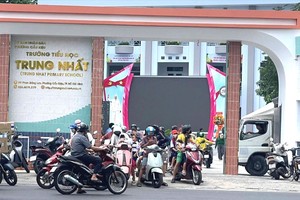
The use of the term international in school names has become widespread across all educational levels, from preschools and general education to universities. However, in many cases, the quality of education fails to live up to the international label. Several incidents involving so-called international schools have also eroded public trust among parents and students.
According to statistics from the Ho Chi Minh City Department of Education and Training for 2024, the city had 31 educational institutions with foreign involvement, including 13 preschools and 18 multi-level schools. Paradoxically, many of these legitimately foreign-linked schools do not use the word international in their names, while numerous domestic schools freely adopt the term despite having no foreign partnership or program.
In 2024, two controversies involving international schools stirred public concern. The Department of Education and Training suspended operations at the American International School (formerly in Nha Be District), while the Saigon Pearl International School (formerly in Binh Thanh District) announced its dissolution leaving thousands of students uncertain about their educational future.
Following administrative boundary adjustments in 2025, the number of schools in Ho Chi Minh City bearing the term international has increased significantly. Yet, despite the growth in numbers, the licensing, management, and supervision of these so-called international institutions remain inconsistent. Some schools, though officially licensed under a different name, still advertise themselves as international on websites and social media to attract enrollment without facing regulatory action.
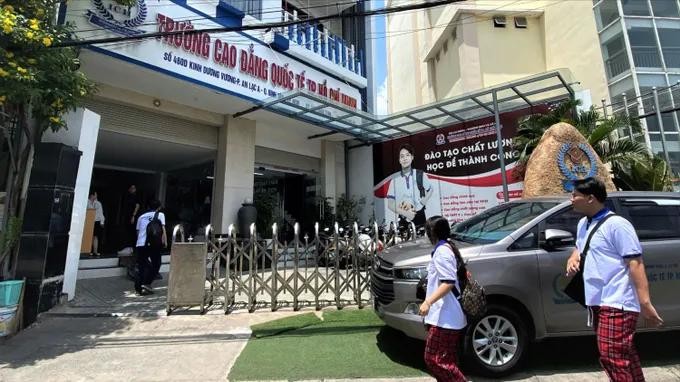
In vocational and higher education, the same trend persists. Many institutions include international in their names, such as H.B. International University, S.G. International University, M.D. International University, CPI International College, and K. International College. These institutions have contributed to expanding educational opportunities, and some maintain commendable training quality. However, the international component in their branding often lacks substance. None of these institutions appear in reputable global university rankings, and some still rent teaching spaces even after a decade of operation in Vietnam.
Back in 2009, the Ministry of Education and Training proposed a plan to establish four world-class universities, aiming for specific international benchmarks such as the proportion of foreign faculty and students, and global rankings, funded by an estimated US$400 million loan. The targets included inviting at least 50 percent foreign lecturers by 2012; creating centers of postgraduate excellence with 4,000 students, 5 percent of whom would be international, by 2016; and achieving top-200 global ranking status by 2020.
This plan, however, was never implemented. To date, only two national universities such as Vietnam National University, Hanoi and Vietnam National University, Ho Chi Minh City, have entered the world’s top 1,000 and Asia’s top 500, yet neither bears the term international in its name.
For general education, according to Tong Phuoc Loc, Head of the Personnel Department at the Ho Chi Minh City Department of Education and Training, the naming of public and non-public schools is governed by Article 5 of Circular No. 32/2020 from the Ministry of Education and Training. School names must include the educational level including lower secondary, upper secondary, or multi-level and a distinctive name. The regulation explicitly states that a school’s name must be clear, transparent, and not misleading regarding its nature or operations, while also aligning with national traditions, ethics, and cultural values.
Thus, there is currently no rule explicitly prohibiting the use of the term international in the names of general education schools. However, the growing misuse of this label underscores the urgent need for clearer regulations to protect parents, uphold educational integrity, and ensure that quality—not marketing—defines the meaning of international.