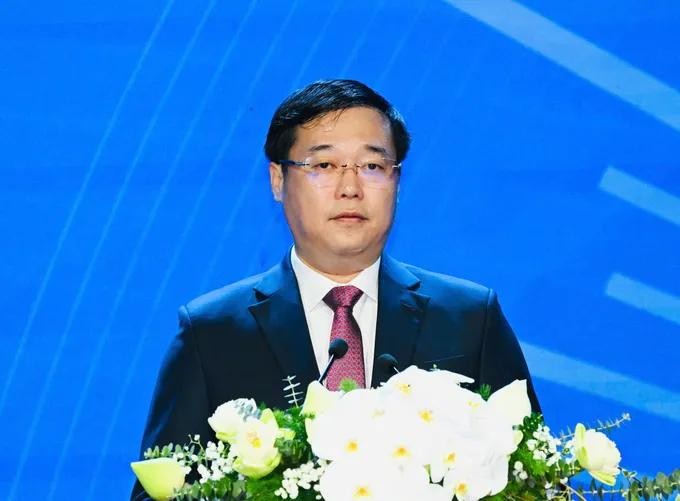
Ho Chi Minh City People’s Committee Chairman Le Quoc Phong emphasized that the 2025–2050 Master Plan anchored by a 100-year vision represents the culmination of collective intelligence, innovation, and breakthrough thinking.
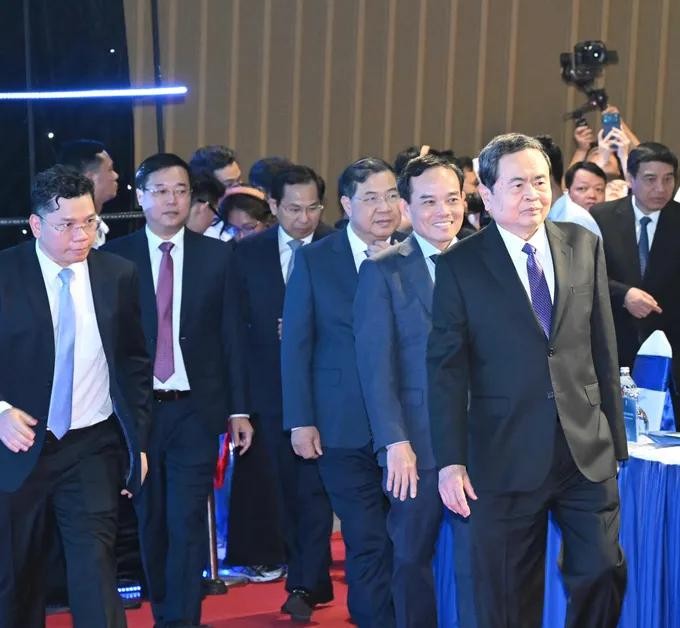
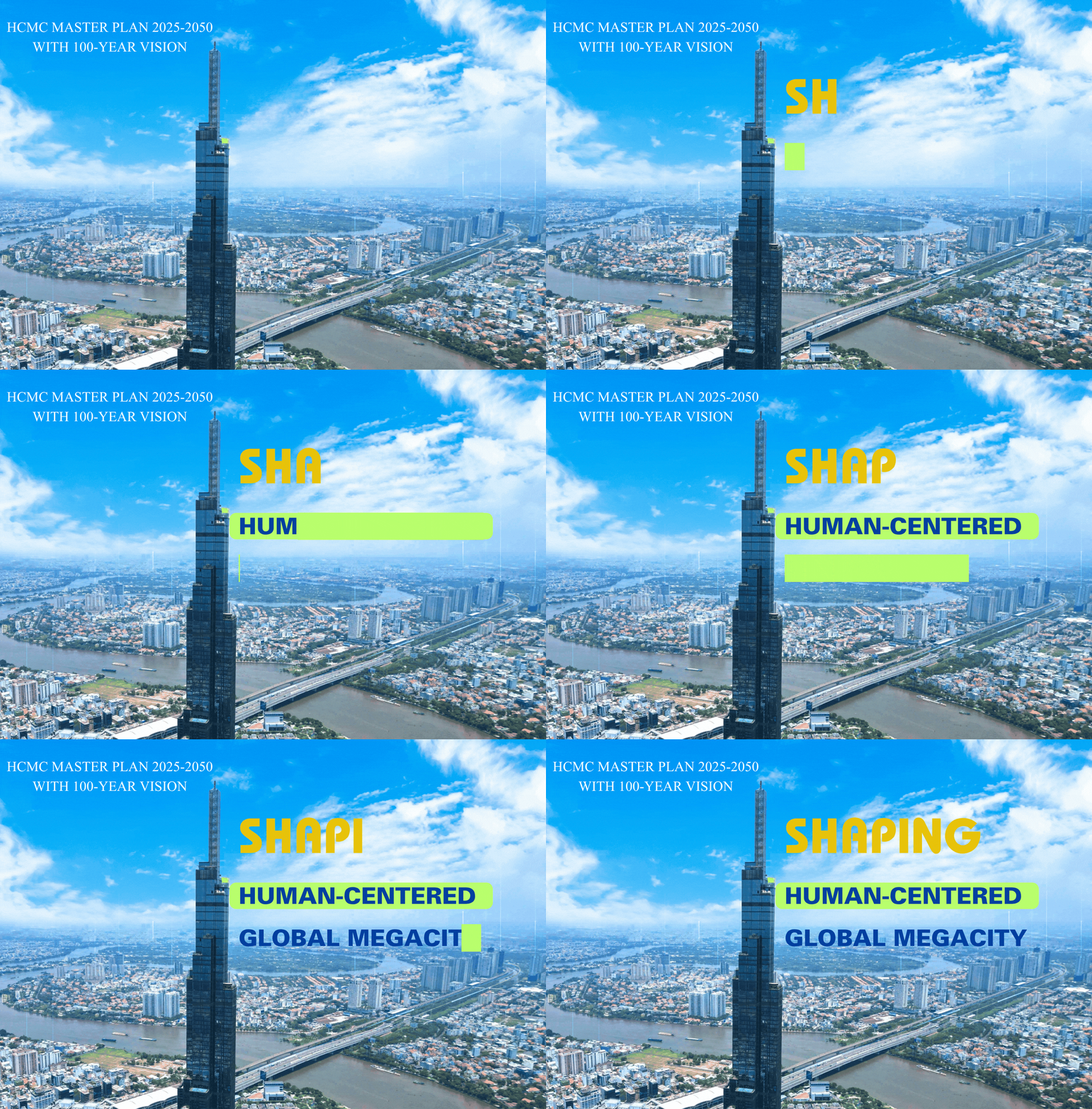
The announcement of this master plan marks a significant milestone, signaling a new phase of development for the city following the reorganization of its administrative units. The Ho Chi Minh City People’s Committee unveiled its 2025–2050 Master Plan, featuring a 100-year strategic vision, during a conference on Monday morning, November 23.
Outlining a three-stage development trajectory, the blueprint aims to elevate the city from a prominent Southeast Asian urban center into a premier Asian hub for finance, economics, culture, science, and innovation. Ultimately, the plan seeks to transform Ho Chi Minh City into a smart, modern metropolis on par with the world’s leading global cities.
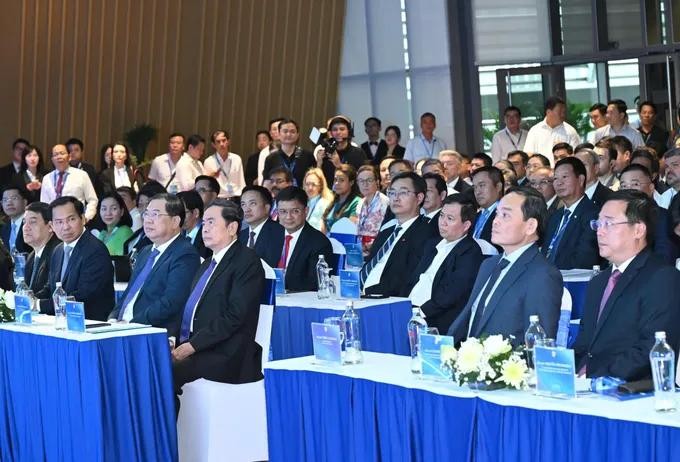
Under this 100-year vision, the city’s spatial structure is defined by five dynamic poles, five satellite centers, five strategic linkage systems, and ten development management zones.
These development management zones are delineated based on natural, economic, and social characteristics, as well as practical development requirements; they do not function as administrative units and do not introduce any additional intermediate tiers of governance.
Speaking at the conference, Chairman of the Ho Chi Minh City People’s Committee Le Quoc Phong emphasized that the announcement of the master plan for Ho Chi Minh City for the 2025–2050 period with a 100-year vision marks a significant milestone and the beginning of a new phase of development for the city following the reorganization and consolidation of its administrative units.
Following the merger, Ho Chi Minh City possesses a broader and more diverse development space that brings together strengths across urban development, industry, services, tourism, the marine economy, and natural ecosystems. This expanded space opens up significant opportunities while demanding breakthrough development thinking and a long-term vision capable of unlocking the full potential and advantages of the city.
Chairman of the Ho Chi Minh City People’s Committee Le Quoc Phong
The Chairman underscored that the development of this master plan is of critical importance; it establishes a foundation for guiding socio-economic development, organizing urban space and infrastructure, ensuring national defense and security, and elevating the role and status of Ho Chi Minh City.
Crucially, the city’s development demands extend beyond mere expansion in scale, requiring a profound qualitative transformation, stronger international competitiveness, and the ambition to stand alongside leading urban centers in Asia and the world.
The master plan for Ho Chi Minh City carries exceptional significance as the culmination of collective intelligence, innovative spirit, and breakthrough thinking guided by a 100-year strategic vision. It establishes a new growth model anchored in science and technology, innovation, and the digital, green, circular, and maritime economies.
Furthermore, the plan outlines a spatial structure for a super-metropolis comprising five dynamic growth poles, five satellite centers, five strategic linkage systems, and ten development management zones, placing people at the center as both the driving force and the ultimate goal of development.
Chairman of the Ho Chi Minh City People’s Committee Le Quoc Phong affirmed that the city recognizes the comprehensive and effective implementation of its master plan as a crucial prerequisite for maximizing its potential and advantages, thereby solidifying its role as a pioneer in the nation’s renewal and development.
The city Chairman pledged that the city will strictly adhere to the strategic guidelines, orientations, and directives set forth by the Government, the Politburo, and the Secretariat. The city will focus on the synchronized execution of tasks and solutions required to realize its established goals.
Specifically, the city will promptly and widely disseminate the master plan through various channels to inform the business community and the general public about its development trajectory. This effort aims to foster broad public consensus, encouraging collective participation in the implementation of the master plan and the various projects currently seeking investment.
Furthermore, the city will review and develop an implementation roadmap for the master plan, while simultaneously updating and adjusting urban, rural, and specialized sectoral plans to ensure they are fully aligned and integrated with the overall master plan. The city will also maximize special mechanisms and policies granted by the National Assembly and the Government to mobilize broad social resources. These efforts will target strategic infrastructure, transport networks, urban development, an international financial center, and previously identified growth engines.
Transforming Ho Chi Minh City into a "global, smart, and modern metropolis developed comprehensively and on par with the world’s leading cities" is the historic mission of the Party organization, the local government, and the people of the city.
The Chairman of the Ho Chi Minh City People’s Committee has called on all agencies, sectors, the business community, and the public to continue upholding the spirit of solidarity, dynamism, and creativity to transform the strategic master plan into tangible and vibrant development achievements.
Under the master plan, Ho Chi Minh City has outlined key development targets across three major milestones.
By 2030: Ho Chi Minh City will be a special, civilized, modern, dynamic, and innovative urban center. It will serve as a hub for the economy, finance, culture and society, science, technology, innovation, logistics, and international integration. Leading the nation’s industrialization and modernization, the city seeks to hold a prominent position in Southeast Asia, rank among the world’s top 100 cities, offer a high quality of life, and establish a globally recognized innovation ecosystem in the high-income group.
By 2045: Ho Chi Minh City will rank among the world’s 100 best cities.
By 2075 and beyond: Ho Chi Minh City will become a global, smart, and modern city with comprehensive development, comparable to the world’s leading developed cities. It will stand as an international center for finance, economics, science, technology, innovation, and global exchange, serving as a premier destination for top talent, businesses, and development resources.


)