Ho Chi Minh City has completed the necessary preparations to launch its venture capital fund in April 2026, according to Lam Dinh Thang, Director of the city’s Department of Science and Technology.
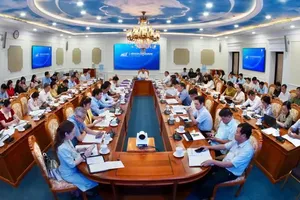
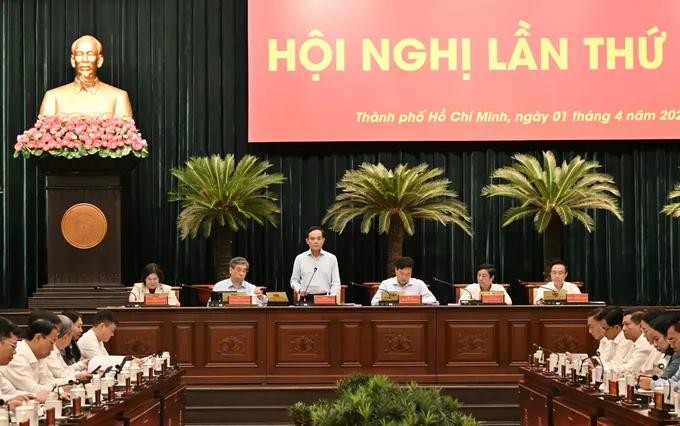
The announcement was made at the fifth conference of the Ho Chi Minh City Party Committee for the 2025–2030 term, held on April 1, which was chaired by Ho Chi Minh City Party Secretary Tran Luu Quang.
At the conference, Director Lam Dinh Thang said the city had finalized key steps to establish the Ho Chi Minh City venture capital fund, which has already secured VND250 billion in committed capital from participating enterprises. Contributors include professional investment funds, major technology corporations, and foreign businesses.
The Director of the Department of Science and Technology of Ho Chi Minh City stated that the fund operates under the model of a joint-stock company, with public-private partnerships and a maximum of 40 percent state capital. The fund functions based on market mechanisms, incorporates risk management, is managed by a team of experts, and has a clear capital increase roadmap upon commencing operations.

In parallel, the city is piloting new models and technologies, including the use of unmanned aerial vehicles (UAVs) for delivery and postal transport, opening initial pathways into the low-altitude economy. Authorities are continuing to refine a long-term implementation framework.
Director Lam Dinh Thang revealed that Ho Chi Minh City has selected 54 products for market launch with a total investment exceeding VND500 billion including nearly VND200 billion in state funding. Corporate products account for 41 percent of the total, while strategic technology products make up more than 50 percent. According to him, these figures demonstrate growing business confidence in the city's latest policy initiatives.

Ho Chi Minh City is also advancing two key models to promote the commercialization of research outcomes and intellectual property through a “triple-helix” collaboration between government, academia, and industry. These include a pilot policy framework for commercialization and a technology exchange platform.
The commercialization initiative, introduced to implement Politburo Resolution 57, will be piloted over three years. It aims to address bottlenecks such as intellectual property valuation, allow for state budget risk-sharing, and provide up to 50 percent funding support to help finalize products.
To attract investment in science and technology, the city has established task forces to support strategic investors and continues to improve the business environment. Plans include the development of a Science and Technology Urban Area in northern Ho Chi Minh City, the zoning of 12 digital technology parks, and the expansion of the Saigon Hi-Tech Park and Quang Trung Software City.
Regarding the upgraded technology exchange platform, Lam Dinh Thang said it serves as a hub connecting government agencies, universities, research institutes, and businesses into a unified technology trading ecosystem.
Since its launch on March 20, the platform has facilitated 14 contracts with a total value of nearly VND20 billion. Notable transactions include strategic technology products such as robots, UAVs, and industrial automation systems.
The Director of the Department of Science and Technology of Ho Chi Minh City stated that the Ho Chi Minh City Venture Capital Fund operates under the model of a joint-stock company, with public-private partnerships and a maximum of 40 percent state capital. The fund functions based on market mechanisms, incorporates risk management, is managed by a team of experts, and has a clear capital increase roadmap upon commencing operations.