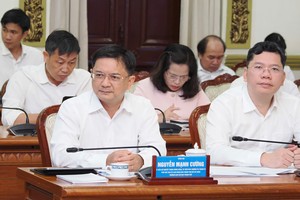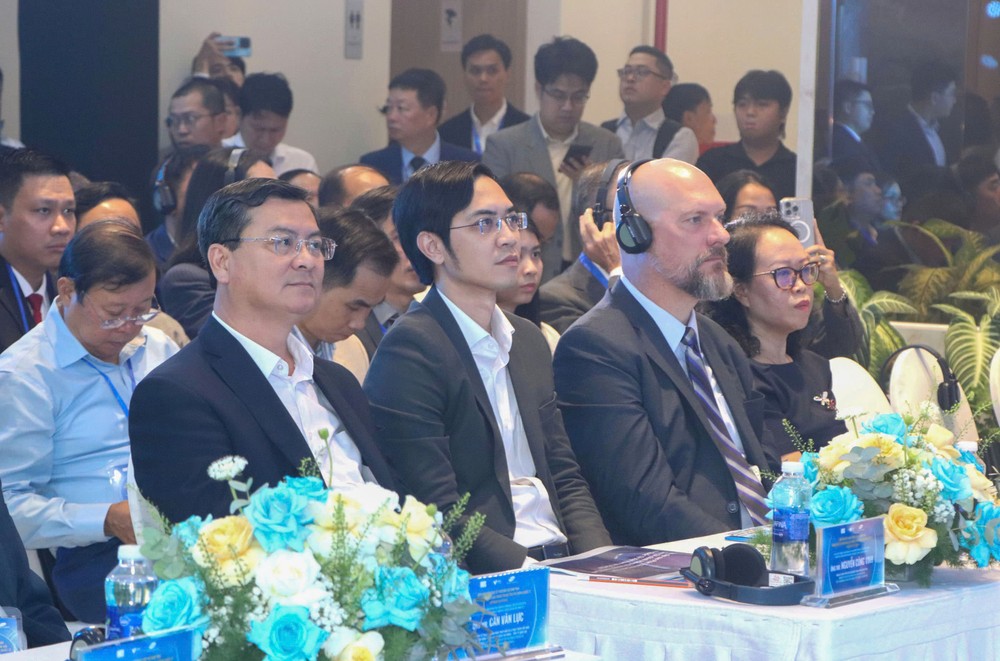
The Executive Board of the Vietnam International Financial Center in HCMC (VIFC-HCMC), in collaboration with Gemadept and the HCMC Institute for Development Studies, held a high-level forum aimed at advancing a maritime financial ecosystem within VIFC-HCMC on the morning of May 21.
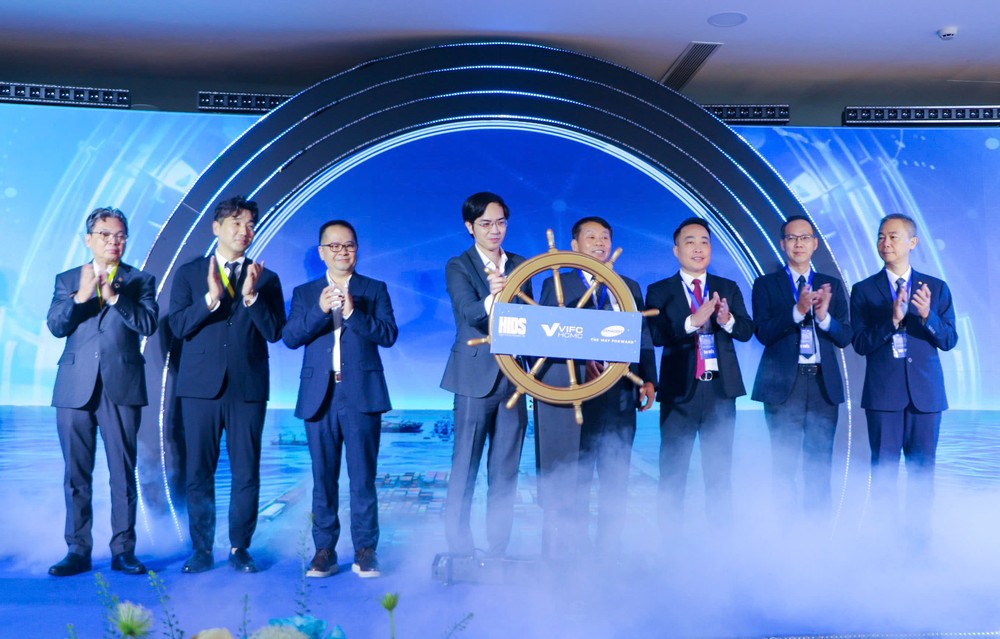
At the event, the International Maritime Financial Ecosystem initiative, one of the four strategic pillars of VIFC-HCMC, was officially launched.
In his opening remarks, Vice Chairman of the HCMC People's Committee Nguyen Cong Vinh said the forum was not only a professional gathering focused on maritime and financial sectors but also marked the starting point for the development of an international maritime financial ecosystem in Vietnam.
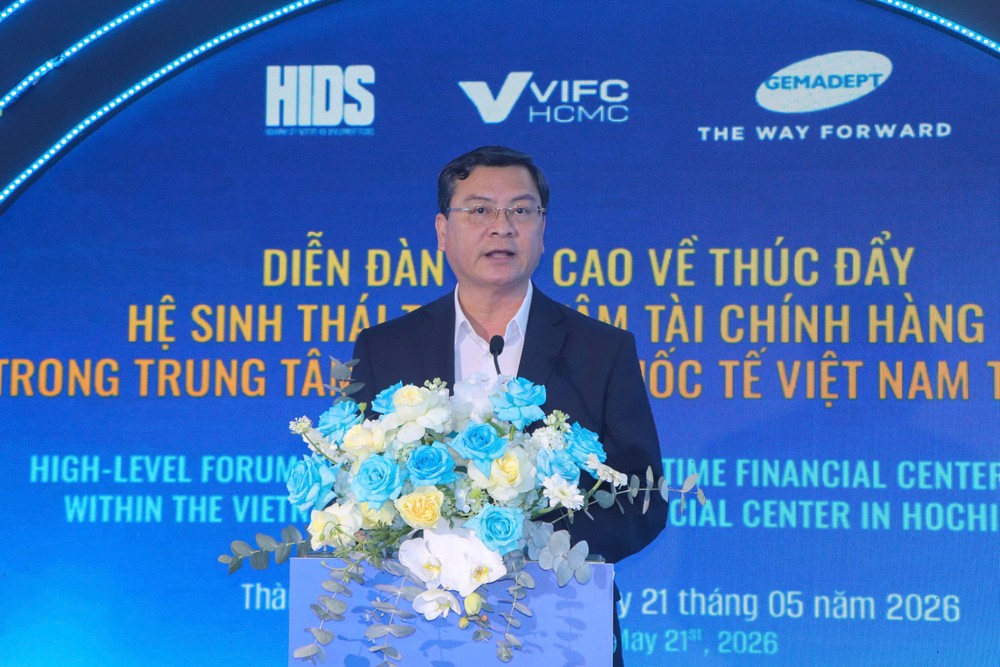
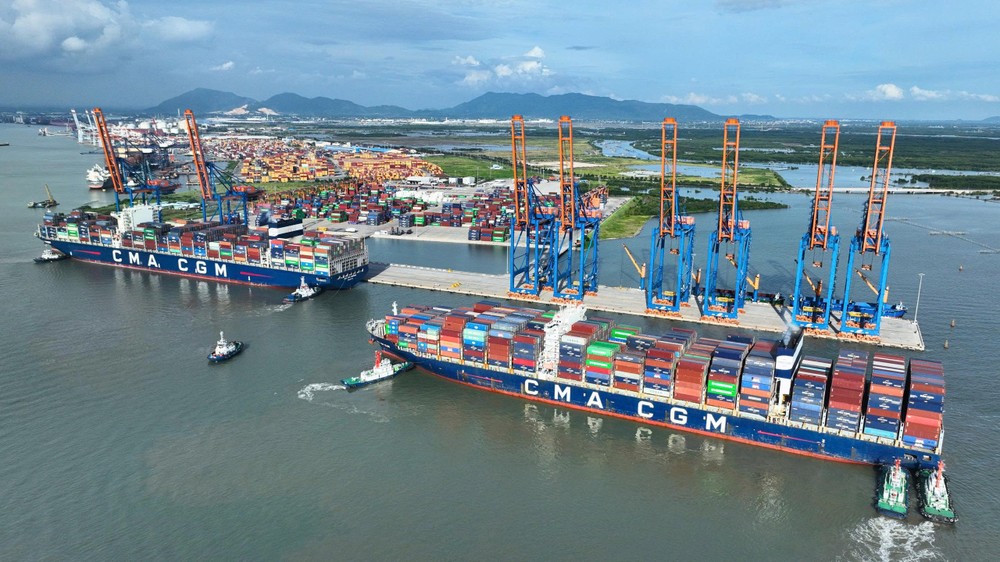
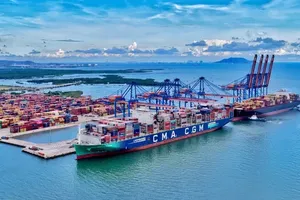
He noted that over the years, Southern Vietnam, particularly HCMC and the Cai Mep-Thi Vai port cluster, had emerged as one of Southeast Asia’s most important logistics and seaport hubs. However, while Vietnam has become deeply integrated into the global flow of goods, the accompanying flow of capital and financial services remains largely concentrated in major international financial centers such as Singapore and Hong Kong.
According to Mr. Nguyen Cong Vinh, this reality underscores the need for Vietnam to gradually build a comprehensive maritime financial ecosystem in order to sustainably develop its marine economy and enhance national competitiveness. HCMC is therefore pursuing a development model that directly links seaport infrastructure and logistics networks with international financial services.
At the forum, Associate Professor and Dr. Nguyen Huu Huan, Vice Chairman of the VIFC-HCMC Executive Board, emphasized that the international maritime financial ecosystem is expected to play a pivotal role in driving the economic restructuring of both HCMC and Vietnam.
Representatives of VIFC-HCMC said that in 2025, HCMC’s port system handled more than 24 million TEUs of cargo, associated with approximately US$200 billion in import-export turnover, accounting for around 20 percent of Vietnam’s total trade value.
A broad range of operational services has developed around the port infrastructure, including cargo handling, warehousing, logistics, customs declaration, supply chain transportation, and export-import support services. The total value of commercial transactions flowing through the region’s seaport network, including goods, logistics services, and related financial demand, is estimated at more than US$1 trillion annually.
Despite this scale, most high-value financial services tied to maritime trade, including trade finance, ship financing, maritime insurance and reinsurance, international payments, and logistics risk management, are still routed through overseas maritime financial centers.
Against this backdrop, the International Maritime Financial Ecosystem initiative was established and launched as a core component of VIFC-HCMC, with Gemadept serving as the founding lead partner.
Mr. Pham Quoc Long, Deputy CEO of Gemadept, proposed a three-phase roadmap for developing the ecosystem. The first phase, spanning one to two years, will focus on building foundational infrastructure. The second phase, expected within the following two to three years, will expand the ecosystem. The third phase, projected over the next three years, aims to elevate the system through the operation of a regional maritime arbitration body and a derivatives trading platform.
In the long term, the ecosystem is expected to support cargo flows exceeding 25 million TEUs and attract an additional US$10-15 billion in new investment capital annually.
Mr. Pham Quoc Long said the international maritime financial ecosystem could generate substantial added value for the city’s GRDP while creating tens of thousands of high-quality jobs in finance, technology, legal services, logistics, insurance, and specialized professional sectors.