On May 15, in Hanoi, the World Bank held a press conference to release its latest Vietnam Economic Update.
Speaking at the press conference, World Bank Division Director for Vietnam, Cambodia, and Lao PDR, Mariam J. Sherman, noted that the slowdown in global economic growth is placing additional pressure on Vietnam’s external environment. Meanwhile, fluctuations in oil prices are increasing downside risks.
In addition, climate shocks, rapid technological changes, demographic shifts, and the growing demand for infrastructure are reshaping the foundations of long-term growth.
Against this backdrop, Vietnam continues to stand out as one of the region’s most dynamic economies, with growth, exports, and investment maintaining positive momentum. According to the World Bank report, Vietnam entered 2026 in a relatively strong position compared to many ASEAN economies, thanks to the continued resilience of exports, investment, and FDI inflows.
Vietnam’s GDP growth reached 8 percent in 2025, the highest rate in ASEAN. The momentum continued into the first quarter of 2026, with growth expanding by 7.8 percent, marking the highest first-quarter growth in the past nine years.
In addition to trade, public investment is also becoming a key driver of the economy. According to the World Bank, Vietnam is implementing an infrastructure investment program worth approximately US$320 billion over the next five years, alongside efforts to streamline the state apparatus and advance large-scale institutional reforms.
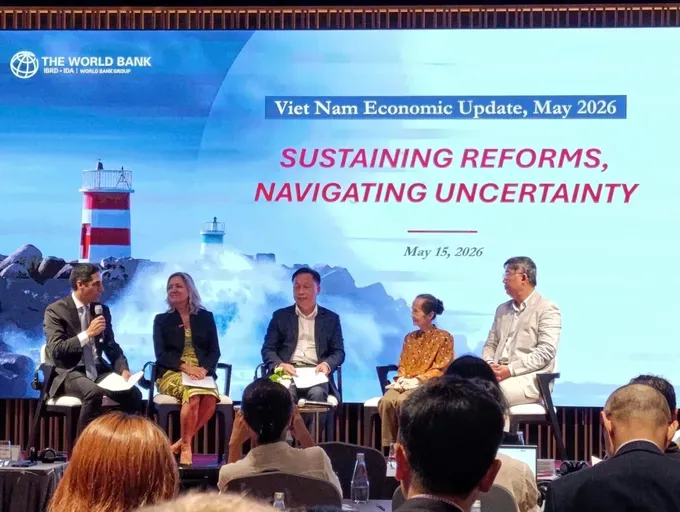
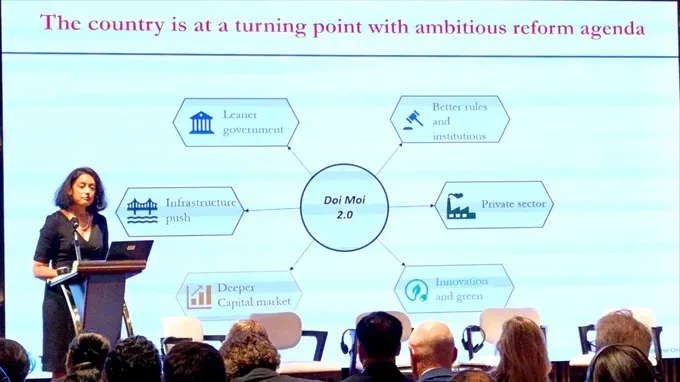
According to Tehmina S. Khan, lead economist for Vietnam, Cambodia, and Lao PDR at the World Bank, based in Hanoi, Vietnam is at a critical juncture that could be regarded as a “Doi Moi 2.0 moment,” as the state apparatus is being streamlined. From 2025 to April 2026, Vietnam issued more than 86 laws and around 300 decrees aimed at removing legal bottlenecks, improving the business environment, and promoting the private sector.
Although the medium-term outlook remains positive, the World Bank noted that the external environment has changed rapidly and become increasingly unpredictable. The conflict in the Middle East has triggered the largest oil shock in decades, causing a sharp decline in global oil supply and pushing energy prices up by more than 50 percent as of the end of April 2026, affecting many economies, including Vietnam.
According to the World Bank, for Vietnam, the oil shock could place pressure on inflation, exchange rates, production costs, and domestic purchasing power.
The World Bank forecasts Vietnam’s economic growth at 6.8 percent in 2026. According to the organization, the key challenge for Vietnam at present is not only to maintain a high growth rate but also to transform its growth model toward greater sustainability and stronger resilience to external shocks.
This means that the economy needs to gradually shift away from a model heavily dependent on credit capital toward growth driven more by productivity, innovation, and the capacity of the domestic private sector.
The World Bank report also emphasized that Vietnam’s reform agenda is moving in the right direction. If effectively implemented, these efforts could help the country build a virtuous cycle of investor confidence, growth, and resilience, while creating substantial progress toward its goal of becoming a high-income country.