Farmers who once struggled with unstable rice incomes are now benefiting from the strong economic value of date palm cultivation.
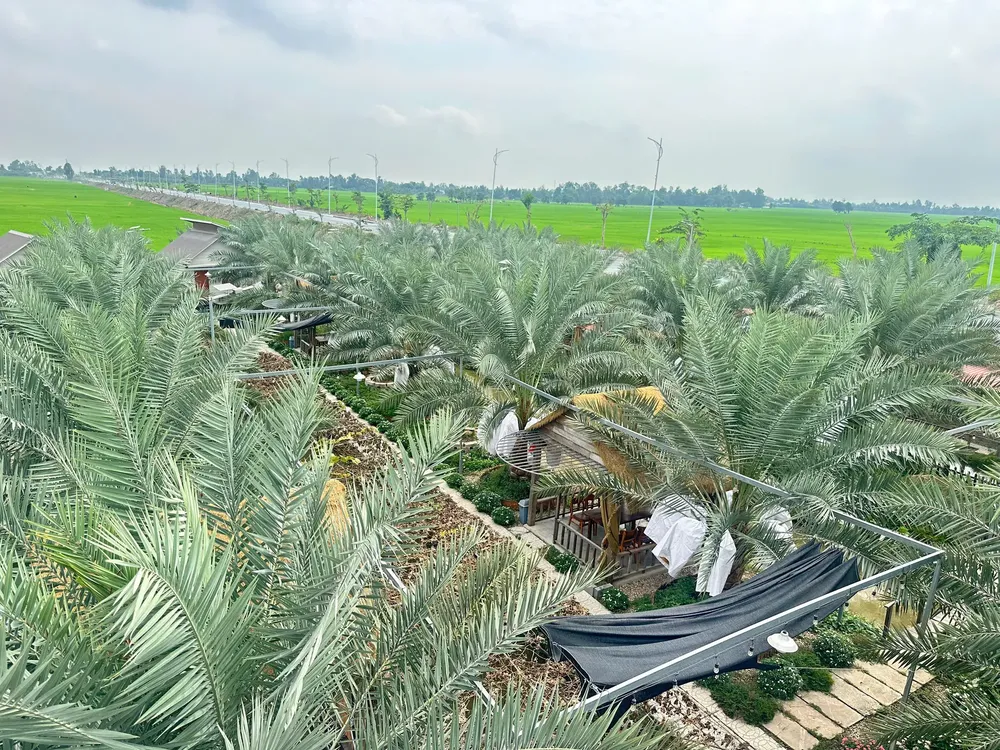
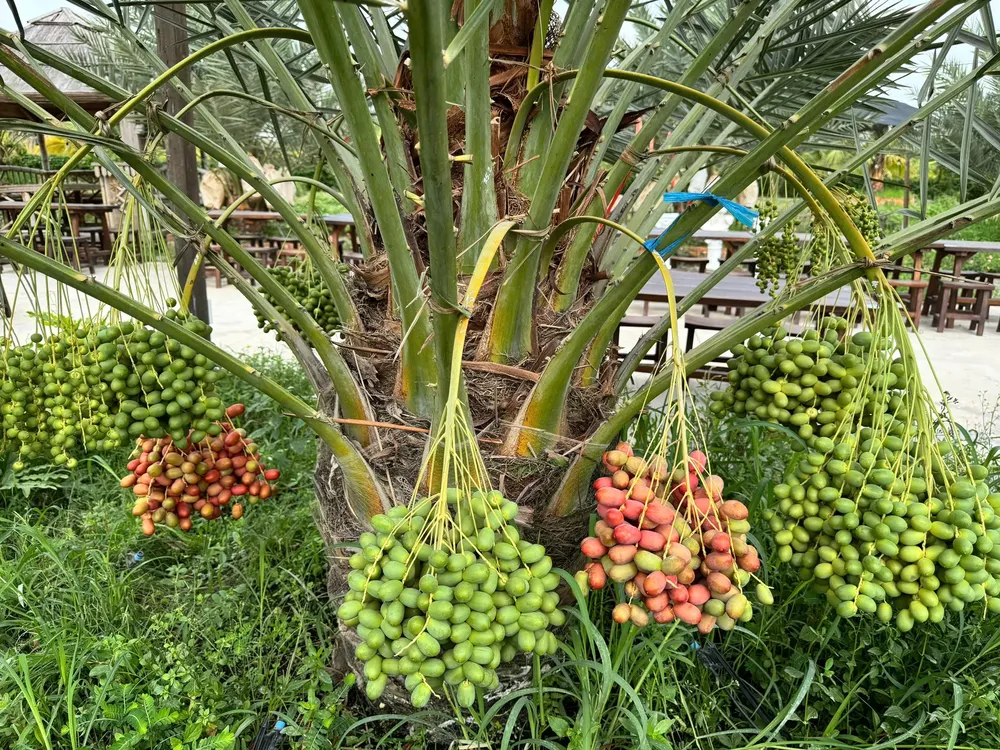
The borderlands of Hong Ngu are now drawing attention for their thriving date palm orchards, where tall green trees laden with ripe fruit stand out across the landscape. The transformation came after farmers decided to abandon less profitable rice cultivation.
For years, the area was dominated by rice cultivation. However, recurring cycles of bumper harvests followed by falling prices, combined with increasingly harsh weather conditions, left farmers struggling with unstable incomes. Determined to escape poverty, many local growers decided to revolutionize their farming practices by replacing inefficient rice crops with date palms.
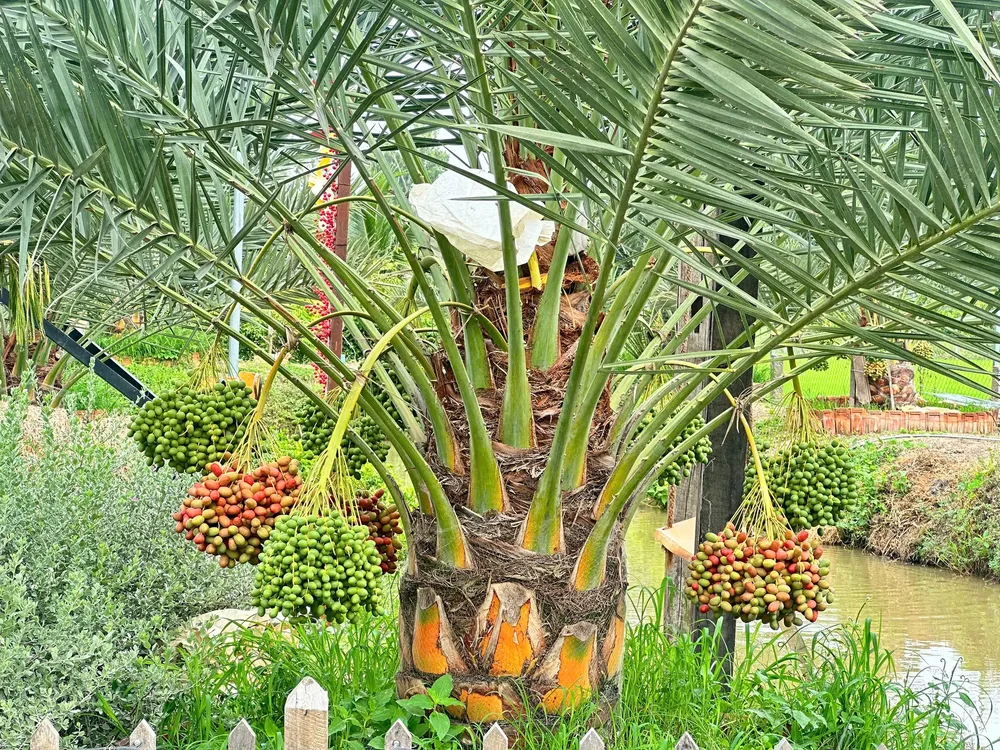
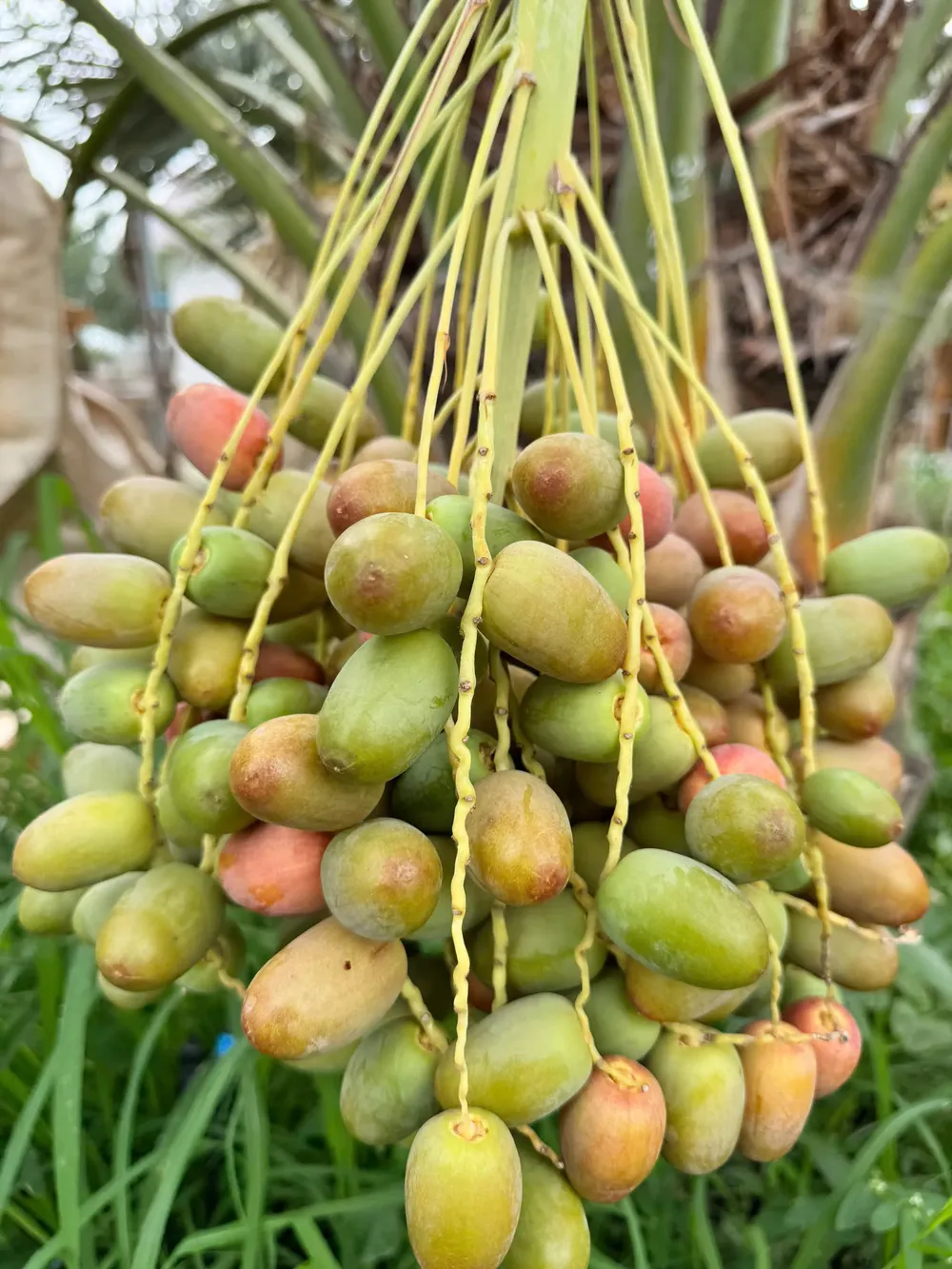
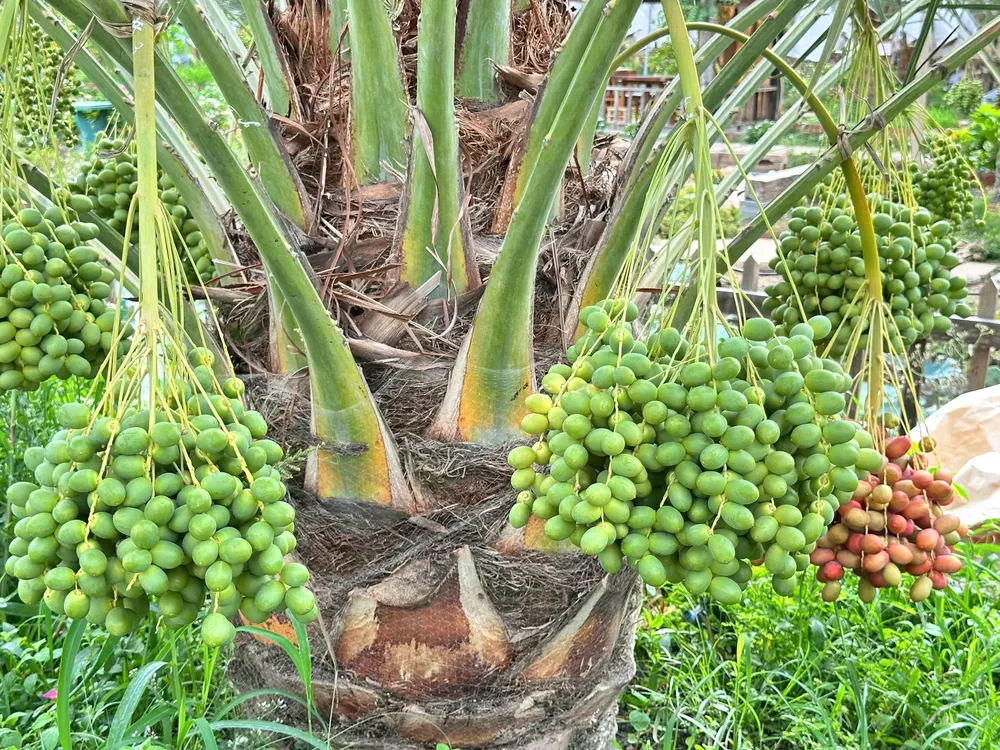
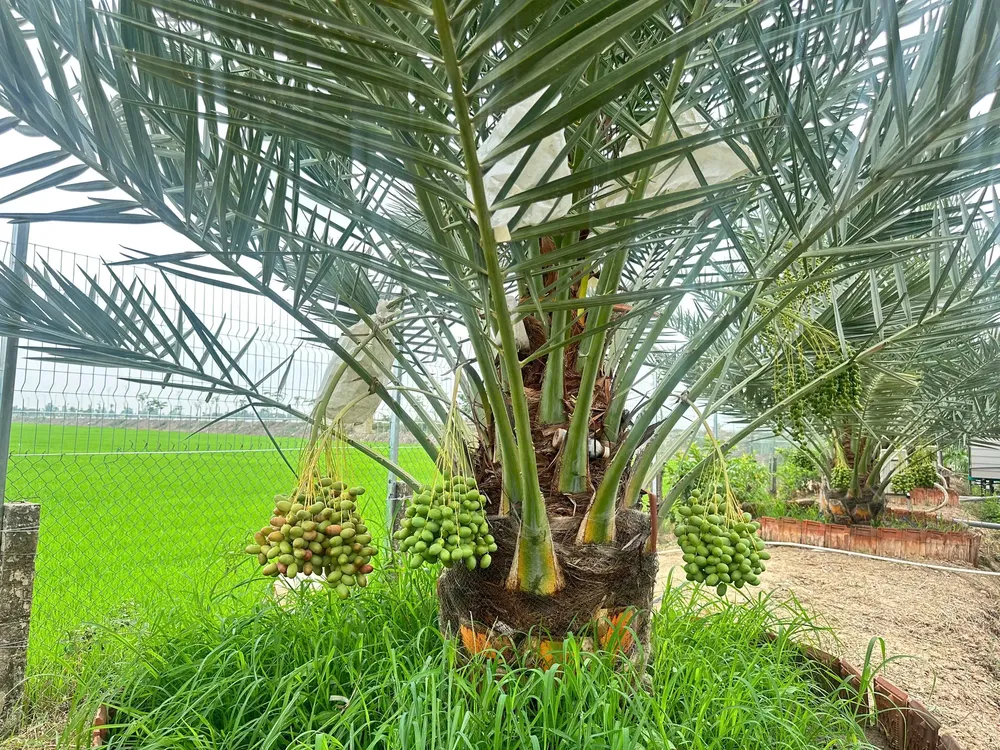
Mr. Dinh Nhut Hoa, one of the pioneers who introduced Middle Eastern date palm varieties to former rice fields, said his seven-hectare farm now has more than 100 Barhi date palm trees bearing yellow fruit, along with Khenaizy red date palms and five male trees grown separately for pollination.
Date palms are prized for their naturally sweet flavor, crisp texture, nutritional value and especially their high market price.
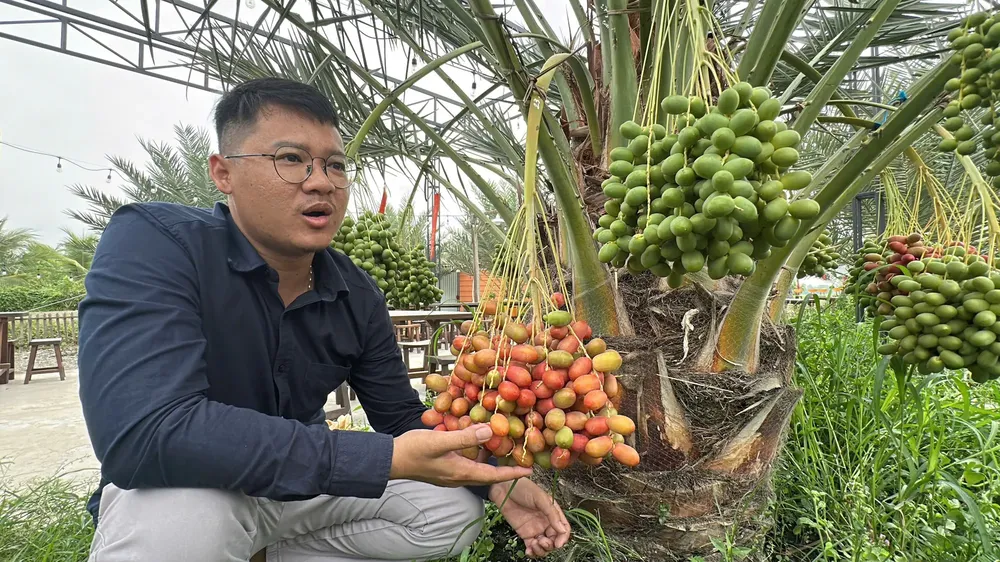
Over the past three years, he and other farmers have invested significant effort into studying cultivation techniques and adapting tissue-cultured date palms to the challenging conditions of the Mekong Delta’s upstream region, where flooding and acidic soil are common. The crop traditionally thrives in sunny, drought-prone climates, making the experiment particularly challenging.
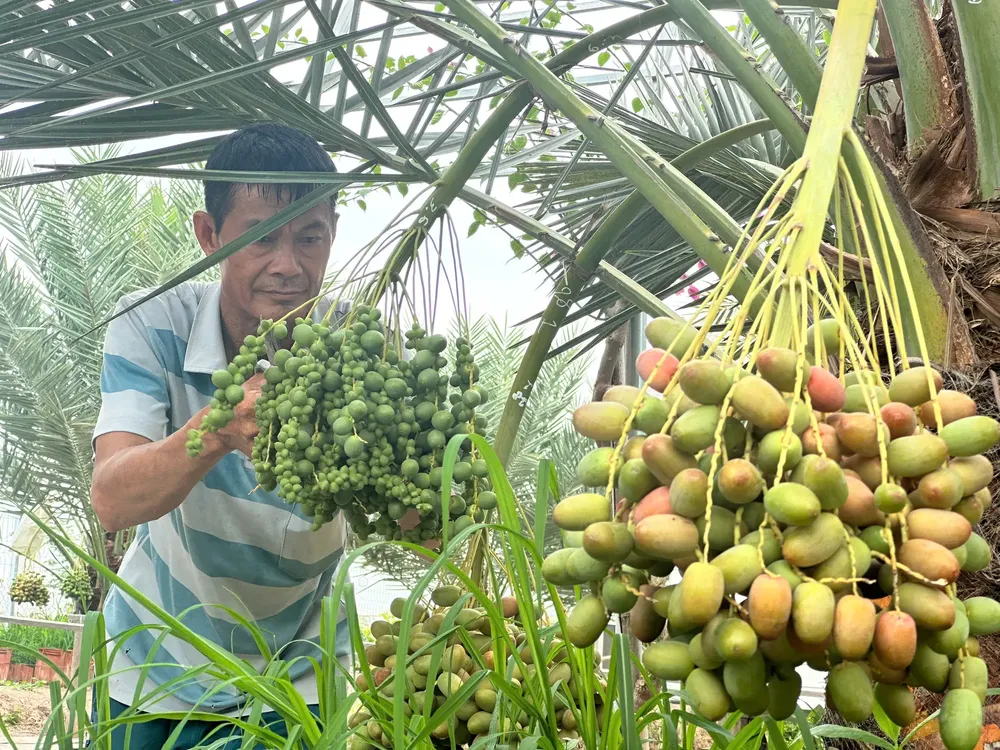
Farmer Do Thanh Song explained that achieving high yields requires careful monitoring and detailed record-keeping throughout every growth stage. Water management, fertilization, pollination and fruit selection are especially important.
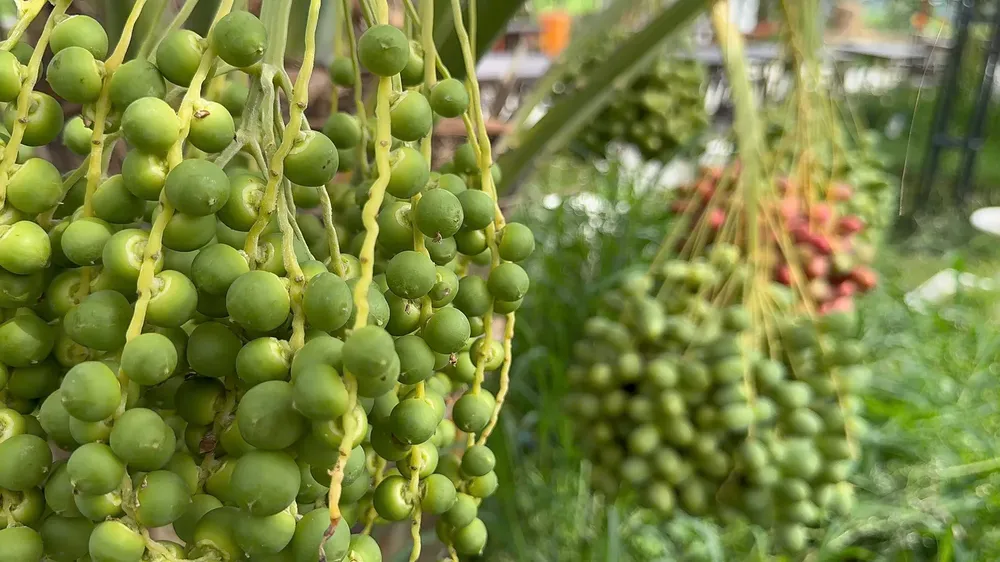
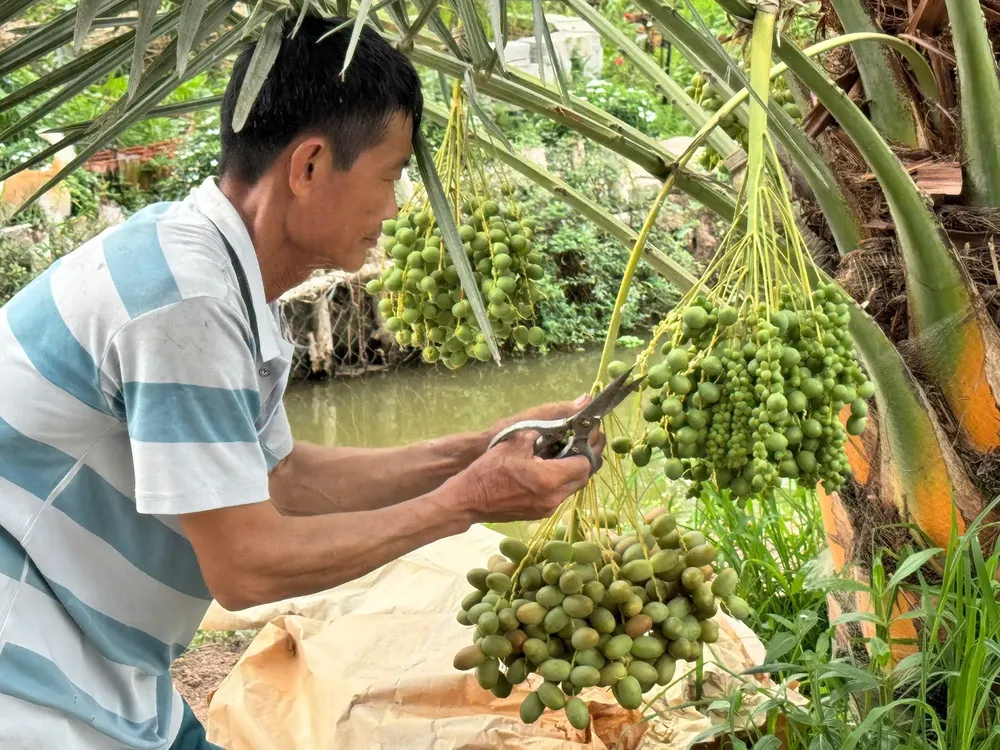
About 45 days after pollination, farmers must remove small or misshapen fruits to preserve only the healthiest ones so the final harvest meets quality standards, he said.
He added that pollination is the most demanding stage because date palm trees have many sharp thorns that must be trimmed beforehand. Pollination must also be carried out during dry, sunny weather to ensure a high fruit-setting rate.
Date palms can be harvested three times a year, with each tree producing eight to ten fruit bunches per season and continuing to bear fruit for up to ten years.
This year, he expects the orchard to produce more than three tons of fruit, Mr. Dinh Nhut Hoa said. Current prices range from VND350,000 (US$13.3) to VND450,000 (US$17.1) per kilogram, depending on quality, so it has truly been a bumper crop with excellent prices.
Farmers’ skillful cultivation methods have gradually transformed the once dry and sun-scorched borderland into thriving green “oases” with remarkably high productivity. Thanks to stable prices and strong market demand, date palm farming is not only helping families escape poverty but also creating jobs for local residents and boosting the border economy.
However, authorities in Dong Thap Province have also urged caution amid the growing popularity of this “golden crop.” Officials warn farmers against expanding cultivation too rapidly in ways that could disrupt agricultural planning. Careful research, technical knowledge, and sustainable development strategies will be essential to minimizing future risks.
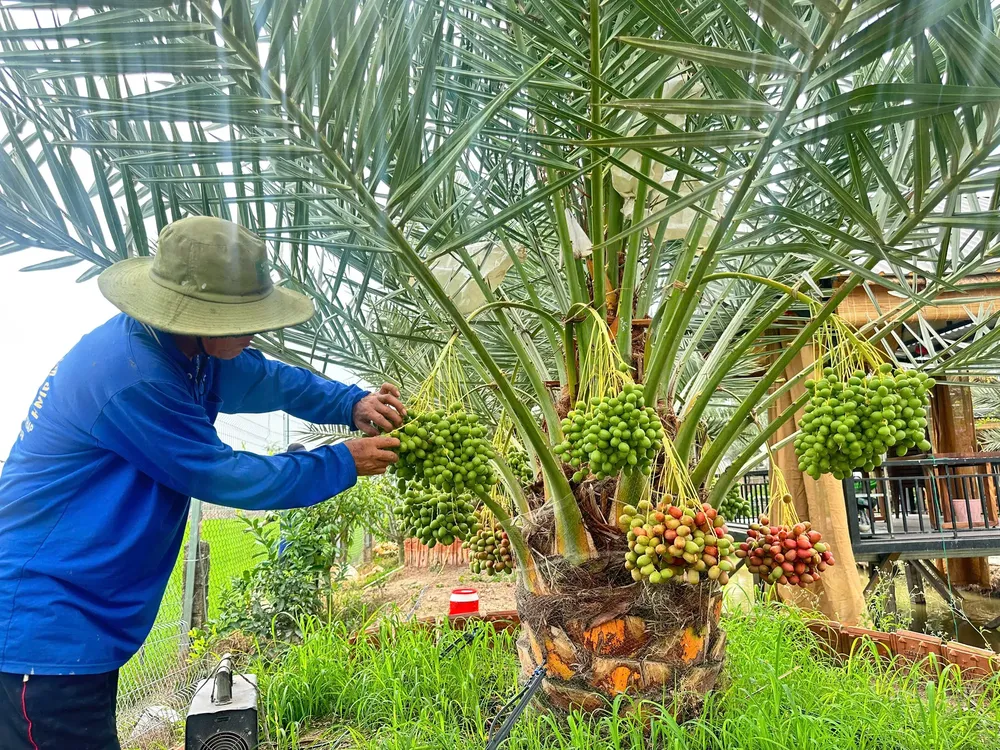
Currently, most of the fruit is sold directly at orchards to tourists and retail customers. In the long term, however, stable supply chains and sustainable market connections will be necessary for date palms to become a lasting pillar of the local economy.
Today’s heavy clusters of golden fruit stand as a symbol of innovation and determination, a promising sign for the future of agricultural development along the country’s borderlands.