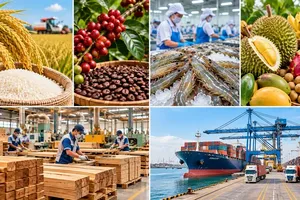
The Ministry of Agriculture and Environment is finalizing emission reduction technical procedures for three key sectors including rice, coffee, and durian, to meet increasingly stringent green standards in import markets and expand export opportunities for Vietnamese agricultural products.
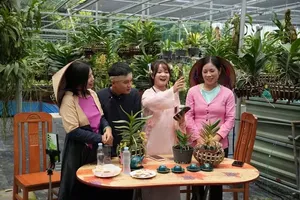
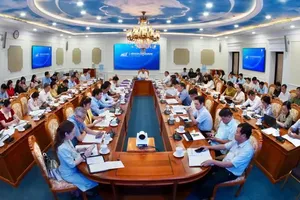
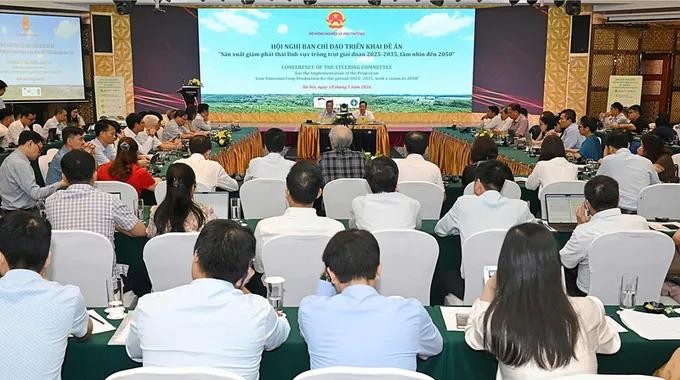
On May 18, the Ministry held the first conference of the Steering Committee for the Deployment of the Low-Emission Crop Production Scheme for the 2025–2035 period, with a vision toward 2050, in Hanoi.
According to Nguyen Thi Thu Huong, Deputy Director of the Department of Crop Production and Plant Protection, 22 provinces and cities have already issued implementation plans for this scheme. Localities are focusing on developing low-emission cultivation processes, building emission database systems, and applying digital transformation to agricultural production.
Deputy Director Nguyen Thi Thu Huong noted that the 2026–2030 period is identified as the pivotal time frame to establish a low-emission agricultural sector, as the Ministry finalizes technical procedures for the three key crops comprising rice, coffee, and durian.
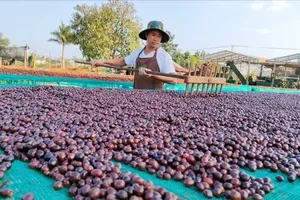
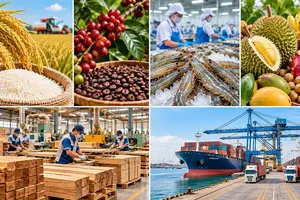
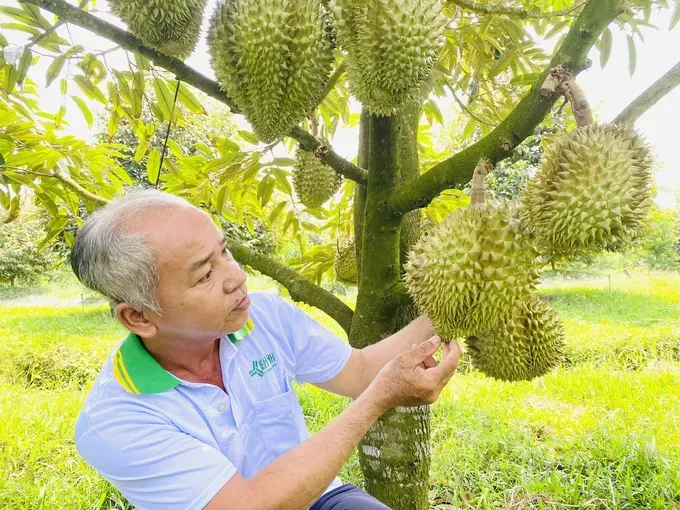
For the rice industry, the agricultural sector will expand the alternate wetting and drying (AWD) irrigation model, improve straw management, and optimize fertilizer use. This will be integrated with the project for 1 million hectares of high-quality, low-emission rice in the Mekong Delta. For coffee, the sector will promote circular models, water-saving irrigation, increased organic fertilizer use, and the recycling of by-products. For durian and fruit trees, efforts will focus on irrigation management, by-product processing, and meeting green standards in export markets.
At the conference, Nguyen Tri Ngoc, Vice President and General Secretary of the Vietnam Fertilizer Association, stated that the recent implementation of the 1-million-hectare high-quality, low-emission rice project in the Mekong Delta region has demonstrated success. Many models helped reduce seed volume, lower fertilizer use, and save irrigation water while maintaining yields. This success will serve as a foundation to expand emission reduction programs to other sectors.
Representatives from several associations and experts warned that major import markets are tightening standards on greenhouse gas emissions, carbon footprints, and product traceability. Without timely transformation, many agricultural products risk losing their competitive advantage. Vietnam needs to swiftly establish "low-emission" labels for rice, coffee, fruits, and vegetables to enhance agricultural value, improve traceability, and secure advantages when entering premium markets.
In his concluding remarks, Deputy Minister of Agriculture and Environment Hoang Trung urged accelerating the implementation of the emission reduction scheme, cutting input costs, and meeting the green standards of export markets to raise farmers' incomes.