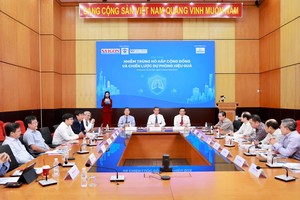
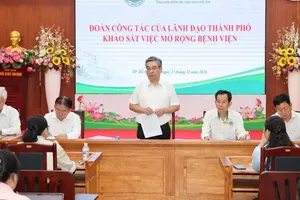
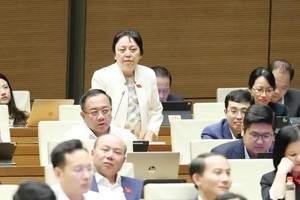
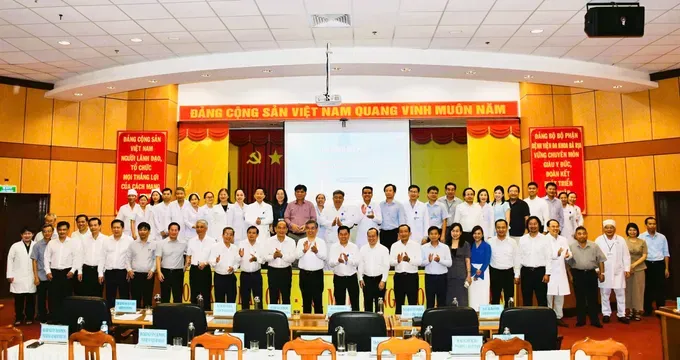
On the afternoon of November 20, Nguyen Phuoc Loc, Deputy Secretary of the Ho Chi Minh City Party Committee and Chairman of the Vietnam Fatherland Front Committee of Ho Chi Minh City, attended a six-month review meeting regarding a program that provides professional support from top-tier hospitals in Ho Chi Minh City to Ba Ria General Hospital.
 "Deputy Secretary Nguyen Phuoc Loc attended the six-month review meeting on the implementation of a professional support program provided by big hospitals in Ho Chi Minh City to Ba Ria General Hospital.")
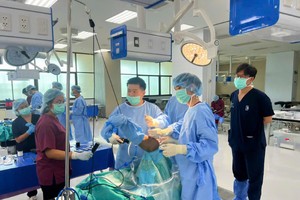
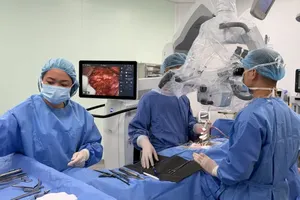
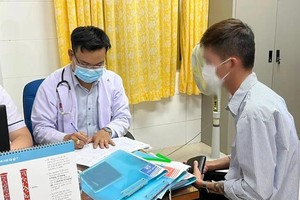
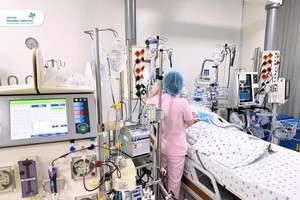
Between May 14 and November 19, with the support of seven top-tier hospitals in Ho Chi Minh City, Ba Ria General Hospital achieved significant progress in both clinical practice and hospital management. Key accomplishments include the successful management of stroke cases within the golden hour (the critical period right after symptoms start when emergency treatment can restore blood flow and save brain tissue), the performance of microsurgical anterolateral thigh (ALT) flap transfers, collaborative surgeries for complex medical conditions and trauma, and the phased implementation of an Electronic Medical Record (EMR) system throughout the hospital.
Beyond clinical care, the partnership has driven substantial advancements in hospital management and healthcare modernization. The hospital has rolled out an EMR system, digitized medical forms, and mandated the use of digital signatures prior to patient discharge. The Nursing Department conducted 1,313 monitoring sessions, which helped increase compliance rates for patient identification protocols to 89 percent and for safe injection practices to 85 percent.
Speaking at the meeting, Deputy Secretary Nguyen Phuoc Loc acknowledged and commended the sense of responsibility, proactiveness, dedication, and determination demonstrated by the healthcare sector and the participating hospitals in carrying out these professional support and development initiatives.
He affirmed: “The results achieved demonstrate that with the right connections, well-directed support, the effective utilization of expert talent, and a proactive approach from the receiving hospitals, regional general hospitals are fully capable of enhancing their professional expertise. This allows them to gradually take on medical procedures that were previously concentrated primarily in top-tier, tertiary-level hospitals.”
To ensure that professional development support becomes substantive, meaningful, and sustainable, Deputy Secretary Nguyen Phuoc Loc requested that the City Party Committee direct the City People’s Committee to conduct a comprehensive review and assessment of each hospital’s professional capacity, operational scale, facilities, equipment, and human resources.
This assessment should define development directions, priority specialties, and core professional strengths for each regional general hospital, serving as a foundation for organizing and structuring the hospital network to meet the healthcare needs of specific localities. Furthermore, coordination mechanisms and operational protocols between big hospitals, regional general hospitals, and local health stations must be refined.
This includes clearly assigning roles identifying which units provide support and which receive it as well as defining specific areas of expertise and responsibilities for post-transfer follow-up. It also entails strengthening clinical consultations and two-way patient referral systems to ensure that patients access the appropriate level of care.
For big hospitals, it is essential to develop tailored support plans for each regional general hospital. This involves assigning specific experts to oversee particular fields or units, while clearly defining the scope, timelines, responsibilities, and expected outcomes of the knowledge and technology transfer. In particular, training methods should be modernized to emphasize hands-on, on-site instruction, team-based training, and the implementation of comprehensive clinical protocols.
The transfer of medical techniques must be linked to the assessment of a hospital’s ability to perform these procedures independently, supported by a structured plan for ongoing monitoring and assistance following the transfer. Concurrently, it is essential to proactively coordinate on clinical consultations, professional guidance, and two-way patient referrals, while supporting regional general hospitals in enhancing their management capacity, quality control, infection control, and human resource development.
For their part, regional general hospitals must take the initiative to assess their current capabilities, identify their specific needs, strengths, and development goals, and formulate plans to receive, implement, and sustain the medical techniques transferred to them.
Mr. Nguyen Phuoc Loc urged the entire healthcare sector to continue fostering a spirit of solidarity, responsibility, and innovation, while maintaining a strong determination in execution. He emphasized the need to overcome siloed mindsets and the fragmentation of resources, calling for greater coordination, knowledge-sharing, and mutual support which havebeen directed toward the shared development goals of the city’s healthcare system.