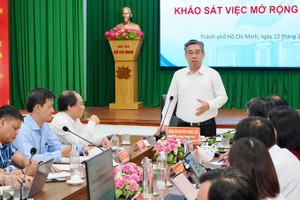
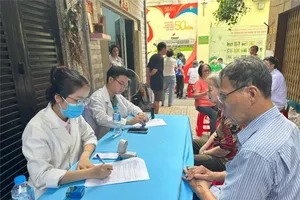
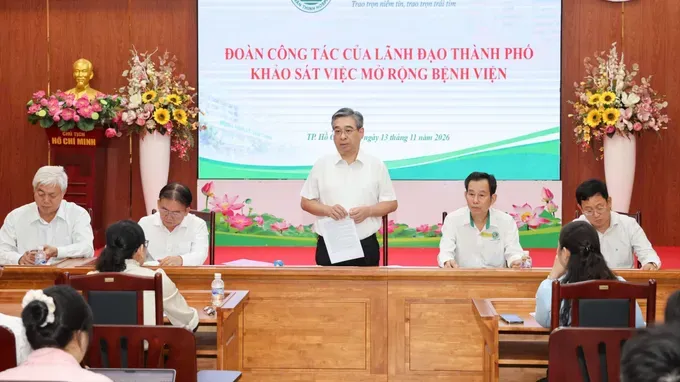
On November 13, Vice Secretary of the Party Committee and President of the Vietnam Fatherland Front Committee of Ho Chi Minh City, Nguyen Phuoc Loc, conducted a site survey and working session with Le Van Thinh and Le Van Viet hospitals on plans to expand the two hospitals.
Proposals to expand two hospitals
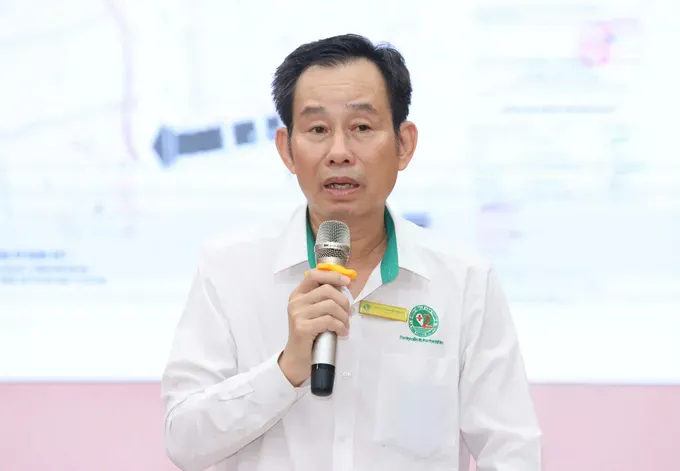
Reporting at the working session, Dr. Tran Van Khanh, Specialist Level II and Director of Le Van Thinh Hospital, said the hospital currently has 500 beds, but its facilities and available floor space are insufficient to meet the growing demand for medical examinations and treatment.
The hospital proposed studying the use of part of the land allocated to Nguyen Huu Canh College, which has a planned area of approximately 3 hectares but currently uses only about 1 hectare, to expand its facilities while integrating medical workforce training.
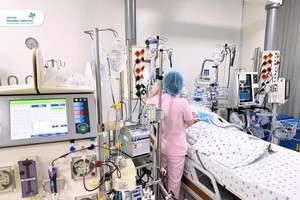
Based on the additional land, the hospital plans to develop a dialysis center, expand emergency services, geriatric care, and medical workforce training. It also proposed considering land plots in Long Binh Ward for the development of medical examination and treatment facilities, rehabilitation services and healthcare services.
At Le Van Viet Hospital, Dr. Nguyen Khoa Ly, Specialist Level II and Director of the hospital, said the facility has a planned capacity of 100 beds but currently operates 146 beds.
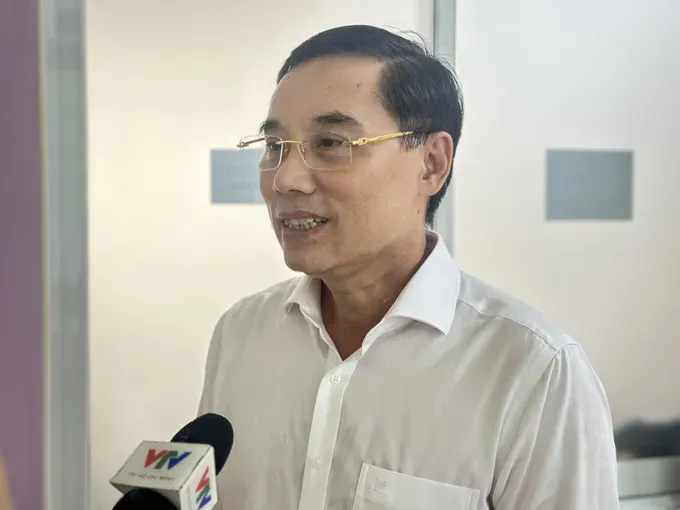
Patient visits have continued to rise, while the hospital's main premises at 387 Le Van Viet Street in Tang Nhon Phu Ward cover more than 6,000 square meters. Built in 2001, the facility has seen several sections deteriorate, while space for medical examinations and treatment has become increasingly cramped.
The hospital is completing investment procedures for a project to renovate its Outpatient Department, with an estimated cost of VND65 billion (US$2.5 million), and a second-campus construction project comprising nine above-ground floors and two basement levels, with a total investment of VND1.574 trillion (US$61.3 million). However, neither project has yet been allocated funding.
The hospital proposed that the city allocate funds soon to repair its existing premises and resolve legal obstacles to putting the facility at 440 Le Van Viet Street into operation. It also called on the city to consider allocating the land plot at 442 Le Van Viet Street for the development of a high-tech medical examination facility.
Urgent completion of procedures required in 2026
In his concluding remarks at the working session, Vice Secretary of the Party Committee and President of the Vietnam Fatherland Front Committee of Ho Chi Minh City, Nguyen Phuoc Loc, requested Le Van Thinh Hospital to continue investing in and adding 375 beds to meet residents’ healthcare needs. He also called on the hospital to further strengthen its role as a Grade I hospital, develop specialized medical departments, and work toward taking on additional responsibilities in providing professional guidance and support to lower-level healthcare facilities.
He urged the hospital to study a plan for constructing a new building A, making effective use of public land resources and considering the use of the park area behind the hospital while ensuring the landscape and environmental quality are preserved. Any temporary premises arranged to facilitate relocation, renovation and new construction must fully meet the requirements and standards for medical examination and treatment facilities.
Regarding Thu Thiem College, Mr. Nguyen Phuoc Loc assigned the Ho Chi Minh City Department of Finance to coordinate with relevant departments and agencies to advise the Ho Chi Minh City People's Committee on an appropriate plan. This could include considering the development of training programs in health sciences, linking academic training with practical experience at Le Van Thinh Hospital, particularly in elderly care, to make effective use of existing facilities and resources.
For Le Van Viet Hospital, he requested that the hospital set a development target of 1,000 beds and strive to achieve Grade I status by 2030, becoming a key public general hospital serving the healthcare needs of residents in the area.
He emphasized the need to develop key medical specialties, strengthen professional capabilities, and improve service quality. The hospital was also instructed to urgently consider taking over and completing the handover of land plots and premises associated with the Labor Federation, Social Security agency and Hoang Yen Kindergarten so that they can be renovated and repaired, allowing some departments and units to be temporarily relocated and creating space for the investment project at the main campus.
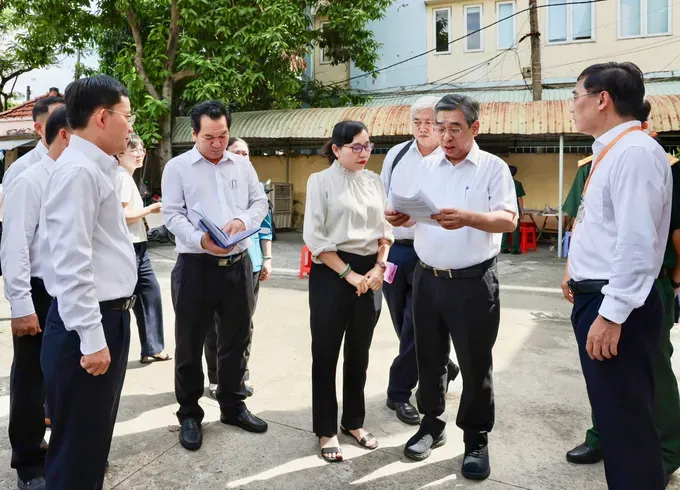
Regarding the implementation timeline, Vice Secretary of the municipal Party Committee Nguyen Phuoc Loc called on the Ho Chi Minh City Department of Health, Department of Finance, local Party committees and authorities, and the hospitals to urgently coordinate in completing legal procedures related to land allocation, site handover, land plot consolidation, planning adjustments and investment implementation.
He stressed that all procedures must be completed in 2026 to enable the projects to get underway in 2027.
Making use of surplus public premises following administrative restructuring and underutilized public land for healthcare and education development must be carried out urgently and effectively to prevent resource waste. Implementation must fully comply with legal regulations and follow the prescribed procedures and processes while ensuring that medical examinations, treatment, emergency services and healthcare for residents are not disrupted, Mr. Nguyen Phuoc Loc emphasized.
According to the Vice Secretary of the Ho Chi Minh City Party Committee, the selection of investment arrangements, assignment of project owners and allocation of funding must be appropriate to the scale of each project, ensuring timely implementation and effective disbursement.
Departments, agencies and local authorities were also urged to proactively coordinate, clearly define their respective responsibilities and promptly report any difficulties or obstacles to the competent authorities for resolution.