Health experts are particularly concerned that the disease is no longer confined to the rainy season, as dengue infections are now being reported throughout the year, posing a growing challenge for public health authorities.
Increase in critical cases
Children's Hospital of Ho Chi Minh City recently admitted a 17-day-old infant boy residing in Tan Vinh Loc Commune suffering from Dengue fever with severe complications. Test results confirmed the infant was infected with the Dengue virus, had a reduced platelet count, progressed to Dengue shock accompanied by liver damage and blood coagulation disorders, and required intensive care.
Earlier, the hospital also treated a 27-month-old girl from Thanh Hoa Province suffering from Dengue fever complicated by hyperacute myocarditis, cardiogenic shock, and multiple organ failure. Medical history indicated that the child had a continuous high fever for three days and vomited repeatedly.

Her family relatives revealed that they had self-purchased unknown medication for the child to drink, bringing her to the hospital only when she became lethargic. Just 12 hours after admission, the pediatric patient suffered respiratory failure, cyanosis, and low blood pressure, requiring endotracheal intubation, mechanical ventilation, and intensive resuscitation.
At the Ho Chi Minh City Hospital for Tropical Diseases, the number of severe Dengue cases admitted to the hospital is also trending upward rapidly. Specialist II Doctor Phan Vinh Tho, Head of Infection Department D, stated that the hospital is treating 14 severe cases, including instances admitted in state of prolonged shock, multiple organ failure, and severe liver damage, requiring the application of advanced resuscitation measures such as continuous blood filtration, respiratory support, and transfusion of blood products. Not only are severe cases appearing, but the number of Dengue cases in Ho Chi Minh City is also increasing significantly.
According to the Ho Chi Minh City Center for Disease Control (HCDC), over the past week, the city recorded 1,959 cases, an increase of 16.2 percent compared to the average of the preceding four weeks. Since the beginning of the year, the entire city has recorded 44,549 cases. Localities with high Dengue infection rates include Con Dao Special Zone, Ngai Giao Commune, and Minh Thanh Commune.
Many changes in epidemiological characteristics
Faced with the reality of rising Dengue cases occurring outside seasonal norms, the health sector launched a peak prevention campaign with a determination to control the epidemic.
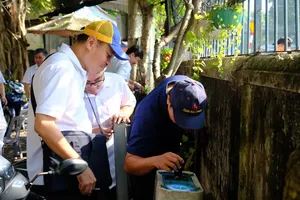
Doctor Huynh Minh Chin, Deputy Director of the Ho Chi Minh City Department of Health, requested local authorities to mobilize forces for environmental sanitation, thoroughly review and treat high-risk points, assign clear responsibilities, and strengthen inspection and supervision.
Each family should spend at least once a week inspecting, scrubbing, and tightly covering water containers, eliminating waste materials capable of holding water, destroying mosquito larvae, and maintaining the habit of washing hands with soap and cleaning children's toys and items to prevent Dengue fever.
According to Dr. Le Hong Nga, Deputy Director of HCDC, Dengue fever is undergoing many changes in epidemiological characteristics. Previously, the epidemic usually increased during the rainy season, with periods of clear reduction and cyclical major outbreaks.
However, in recent years, the disease has tended to circulate year-round, maintaining high case numbers without clear seasonal patterns as before. This is due to the impact of climate change, which alters temperature, rainfall, and humidity, creating favorable conditions for disease-transmitting mosquitoes to breed and develop.
Along with that, rapid urbanization, high population density, boarding houses, construction sites, and water containers that are not regularly cleaned become favorable environments for Aedes aegypti mosquitoes to thrive. People who have had Dengue fever can still be reinfected with a different virus serotype.
The rotation of virus serotypes, along with mosquitoes developing chemical resistance, makes epidemic forecasting and control increasingly difficult. "Dengue fever currently has no specific treatment. The disease usually progresses through a fever phase and a dangerous phase.
Particularly from day three to day seven, when the patient begins to lower their fever, complications such as plasma leakage, shock, severe hemorrhage, or organ damage can still appear. Patients must not be subjective when the fever subsides and need to closely monitor warning signs and seek follow-up examinations according to instructions," Master of Medicine Doctor Le Hong Nga recommended.
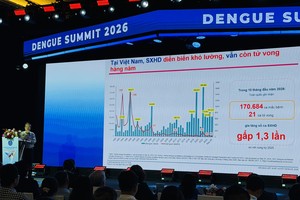
According to the Ministry of Health, in the first 10 months of the year, the entire country recorded 170,684 cases and 21 deaths due to Dengue fever. Doctor Hoang Minh Duc, Director General of the Department of Disease Prevention, noted that Dengue fever is not only evolving in high-risk localities in the South but is also spreading to Northern mountainous provinces such as Tuyen Quang and Son La, where few cases were previously recorded.
Changes in epidemic cycles, climate change, and the simultaneous circulation of multiple Dengue virus serotypes are posing major challenges to epidemic prevention and control work.