Since August 2026, Ho Chi Minh City has introduced a policy providing tuition and living expense support for resident doctors, with priority given to medical specialties that have difficulty attracting personnel, in an effort to build a highly specialized healthcare workforce.
However, recruiting doctors, assigning them to positions suited to their professional qualifications, and creating opportunities for career development so they can build long-term careers in the city remain key challenges in implementing the policy.
Healthcare facilities continue to face difficulties recruiting doctors
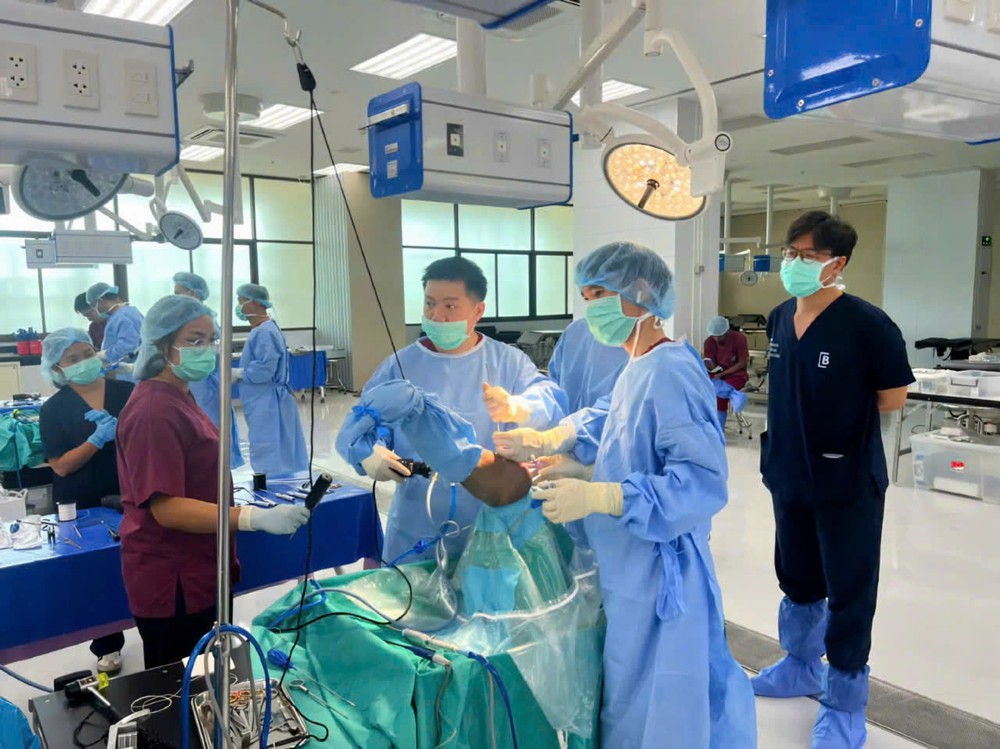
In October 2025, Dr. Tran Tuan Kiet completed his residency program at Can Tho University of Medicine and Pharmacy. With a residency qualification, he had numerous career opportunities but chose to work closer to home at Vung Tau General Hospital.
He explained that demand for treatment of injuries caused by traffic and occupational accidents in the area was increasing, while the hospital faced a shortage of orthopedic trauma specialists. He therefore decided to work where patients needed him most.
Having received guidance and mentorship from his supervisors during his residency training, he is now confident in handling specialized medical procedures. His work includes minimally invasive surgery, the application of 3D printing technology, and tourniquet-free surgery. He has also presented research at domestic and international medical conferences.
Dr. Tran Tuan Kiet is one of only two resident doctors recruited by Vung Tau General Hospital in recent years. According to Dr. Lam Tuan Tu, a Level II Specialist and the hospital's director, despite its pressing need for highly qualified personnel, the hospital continues to face difficulties attracting resident doctors.
He acknowledged that income is one of the barriers preventing the hospital from attracting and retaining this group of doctors.
Although resident doctors are highly qualified professionals who shoulder substantial workloads, their salaries at public hospitals remain disproportionate to their responsibilities, with a starting salary coefficient of 2.67. Meanwhile, private healthcare providers offer more flexible remuneration policies, often based on negotiated employment terms.

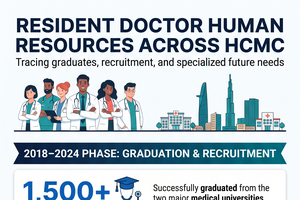
According to the Ho Chi Minh City Department of Health, between 2018 and 2024, only 417 of approximately 1,500 resident doctors graduating from major medical universities in the city — equivalent to 28 percent — were recruited by public healthcare facilities under the department. Following the administrative merger, Ho Chi Minh City has more than 25,000 doctors, with residency-trained physicians accounting for approximately 10 percent to 12 percent of the total medical workforce at public hospitals. Many specialties involving heavy workloads and requiring advanced technical expertise continue to struggle to attract personnel, partly due to limited post-graduation remuneration policies and insufficient coordination between training institutions and healthcare employers.
Following the issuance of Resolution No. 36/2026/NQ-HDND by the Ho Chi Minh City People's Council on August 27, 2026, introducing special support policies for resident doctor training to meet the healthcare sector's demand for advanced specialization, the Department of Health has instructed public hospitals to review and report their recruitment needs by staffing numbers and medical specialties. This will enable trainees to identify potential workplaces after graduation.
According to Associate Professor Dr. Tang Chi Thuong, Director of the Ho Chi Minh City Department of Health, efforts to attract resident doctors must be aligned with each hospital's professional development orientation, operational scale, and staffing requirements. Priority should be given to specialties facing personnel shortages, recruitment difficulties, or requiring the development of advanced medical techniques.
These measures are expected to gradually address workforce imbalances across medical specialties, as well as between tertiary hospitals and healthcare facilities in outlying areas.
Recipients of financial support must commit to six years of service, creating opportunities for long-term retention

Resolution No. 30 reflects the city's proactive approach to investing in a highly specialized medical workforce from the training stage, rather than waiting for staffing needs to arise before recruiting additional personnel.
According to Associate Professor Dr. Tang Chi Thuong, selected resident doctors will receive financial support covering 100 percent of actual tuition fees, capped at VND100 million (US$3,900) per person per academic year. The city expects to support approximately 400 resident doctors annually, with a total budget of around VND40 billion (US$1.6 million).
For specialties that have difficulty attracting trainees, including psychiatry, pathology, tuberculosis and lung diseases, emergency and intensive care, anesthesiology and neurosurgery, trainees will also receive living expense support equivalent to twice the Region I minimum wage throughout their training.
Approximately 80 resident doctors are expected to qualify for this additional support, requiring an estimated VND10.2 billion annually. The total annual budget for implementing the policy is capped at VND50.2 billion.
According to Associate Professor Dr. Tang Chi Thuong, the financial assistance could encourage young doctors to pursue specialties they might otherwise hesitate to choose because of financial pressures or uncertain career prospects.
Recipients must comply with their assigned work placements and commit to working for at least six years at public healthcare facilities under the Department of Health. Those who breach their commitments must reimburse the funding in accordance with regulations.
However, the commitment should be viewed as a two-way responsibility: while the city expects doctors receiving public funding to contribute their expertise, healthcare facilities must also create an environment in which resident doctors want to build long-term careers. Beyond income, doctors need opportunities to conduct research, access new technologies, have their professional capabilities recognized, and follow clear career development pathways.
Associate Professor Dr. Tang Chi Thuong said that, as of November 14, a total of 44 hospitals had registered recruitment needs for 725 resident doctors. Gia Dinh People's Hospital reported the highest demand, at 90 doctors, followed by the Hospital for Rehabilitation and Treatment of Occupational Diseases, with 54; Binh Duong General Hospital, with 57; and Hoc Mon Regional General Hospital, with 35. Other specialties in demand include emergency and intensive care, anesthesiology, cardiovascular medicine, surgery, diagnostic imaging, pediatrics, and other highly specialized fields.
Dr. Tran Van Song, a Level II Specialist and Director of People's Hospital 115, said the hospital is developing into a specialized medical center for stroke treatment and advanced medical techniques. It therefore plans to recruit 10–12 resident doctors across six specialties for the 2026–2029 training cohort.
During their training, the doctors will have opportunities to participate in academic activities, research and quality improvement initiatives. Their job assignments after graduation will be determined based on the hospital's needs, their professional capabilities, and available positions, provided they meet the requirements for medical practice.
In the longer term, Associate Professor Dr. Tran Thi Khanh Tuong of Pham Ngoc Thach University of Medicine proposed establishing a commissioned training mechanism. Under this approach, hospitals would identify their resident doctor requirements, recruitment timelines, and positions to be filled, while the city would coordinate with medical universities to allocate training quotas, provide funding, and arrange employment after graduation.
She also proposed identifying hard-to-recruit specialties in each locality and expanding training enrollment only in line with the capacity of teaching staff, teaching hospitals and the diversity of clinical cases available for practical training.
Training outcome standards should also be standardized to ensure that resident doctors in the same specialty, regardless of which university they graduate from, possess the competencies needed to practice safely and effectively, meet the requirements of advanced healthcare development and help patients access high-quality medical treatment.
According to Associate Professor Dr. Tang Chi Thuong, Director of the Ho Chi Minh City Department of Health, attracting resident doctors after graduation requires the healthcare system to provide opportunities for professional development, research and access to new medical techniques, as well as clear career pathways and due recognition. If doctors are retained solely through administrative commitments, without a supportive working environment and opportunities for advancement, the investment is unlikely to deliver the expected results. Recruitment of resident doctors should be closely aligned with hospitals’ professional development orientations and staffing needs, with priority given to specialties facing personnel shortages, difficulties in recruitment or a need to develop advanced medical techniques.
Professor Tran Diep Tuan, Rector of the University of Medicine and Pharmacy at Ho Chi Minh City, said that interviews in resident doctor admissions help assess applicants’ suitability for a specialty, in addition to their professional knowledge. To ensure objectivity and minimize external influence, universities should establish rigorous procedures and scoring criteria and provide training for admissions panels. Each institution may adopt flexible assessment methods, but a common set of graduate standards is essential. Resident doctors in the same specialty, regardless of where they receive their training, must meet core requirements in medical knowledge, clinical skills, and the ability to handle clinical situations. Standardizing graduate competencies will improve training quality, ensure consistency and provide a basis for assessing doctors’ capabilities after graduation.
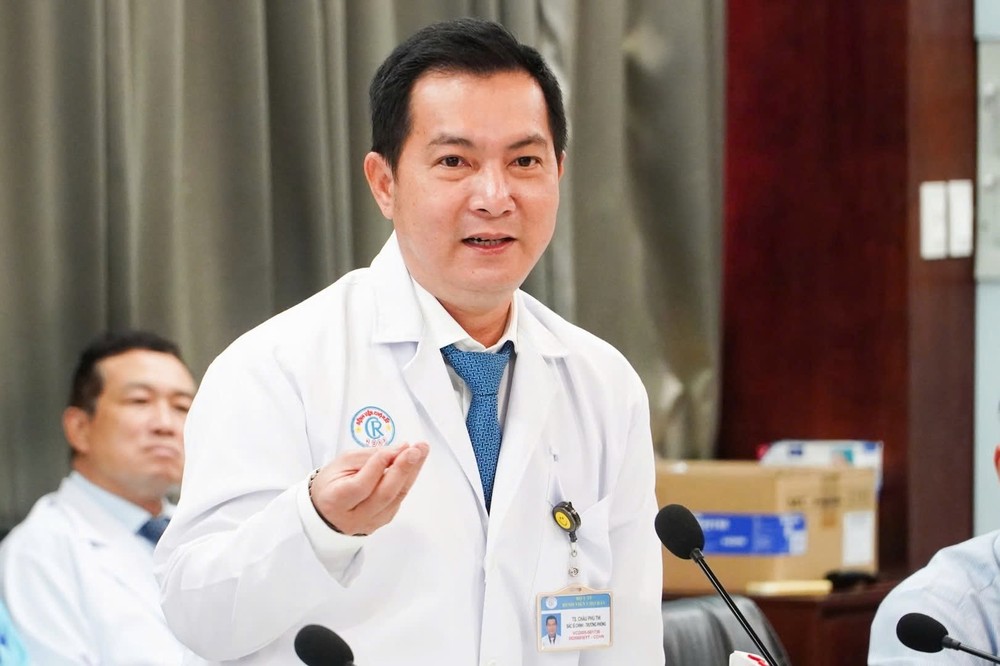
According to Dr. Chau Phu Thi, Head of the Personnel Organization Division at Cho Ray Hospital, recruitment and workforce allocation at public hospitals must comply with staffing positions, approved personnel quotas, and regulations governing the recruitment and employment of public employees. Therefore, not every resident doctor can be recruited immediately upon graduation into their preferred specialty or position.
The leading tertiary-level hospitals face intense workloads and significant responsibilities, requiring their medical staff to continuously update their knowledge and techniques. The employment of resident doctors should go beyond simply recruiting qualified personnel; hospitals must also create conditions for them to fully develop their capabilities, pursue research, advance professionally, and build long-term careers at the institutions.