The scandal has raised urgent concerns about weaknesses in the country’s pork supply-chain controls, threatening consumer trust in a staple food that makes up more than 60 percent of national meat consumption.
Pigs test positive despite quarantine certificates
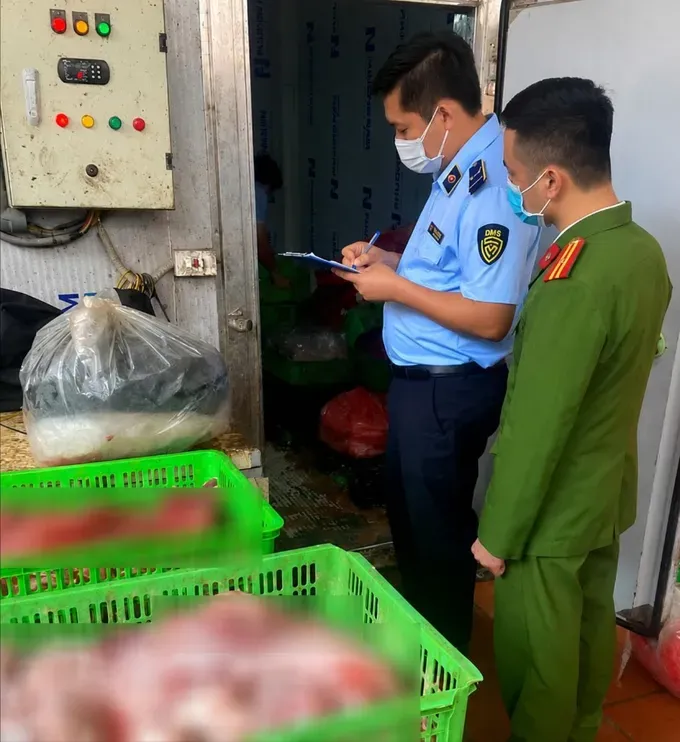
On July 26, authorities in Ho Chi Minh City inspected trucks carrying more than 201 pigs from Dong Nai City to Ho Chi Minh City for slaughter. Although the pigs had quarantine certificates issued that same day, rapid tests showed that all 201 pigs tested positive for Salbutamol, a banned growth-promoting chemical.
Following the case, authorities in Dong Nai City expanded traceability efforts and inspected pig herds at livestock farms. By Aug. 5, the Dong Nai City Sub-Department of Livestock Production and Fisheries had detected more than 4,100 pigs testing positive for Salbutamol at one facility and six pig-raising and fattening farms.
The case has raised major questions about food safety management that what stage was Salbutamol introduced into the pig herds.
Pork is a staple in Vietnamese diets. According to the Ministry of Agriculture and Environment, pork accounts for about 63 percent of the country's total meat production. In 2025, pork production reached 5.42 million tons, with average annual consumption at about 37 kilograms per person.
With a national herd of more than 26 million pigs, a single weak link in the control chain could allow unsafe food to enter the market and have a significant impact on consumers.
Tighter controls needed from the start
Following the discovery of thousands of pigs testing positive for Salbutamol in Ho Chi Minh City and Dong Nai City, the Department of Livestock Production and Veterinary Medicine under the Ministry of Agriculture and Environment issued an urgent document asking provincial and municipal departments of agriculture and environment to coordinate inter-agency inspections at entry points, livestock collection and fattening facilities, wholesale markets and slaughterhouses.
The department will also conduct widespread surveillance sampling covering three high-risk groups: processed animal feed, livestock urine samples at fattening facilities, and meat and organ samples at slaughterhouses.
Experts said these measures mainly aim to prevent violations at the final stages of the supply chain. To address the problem at its source, controls must begin with chemical supplies, animal feed and fattening facilities, where growth-promoting substances are often introduced into pig herds before sale.
According to Dr. Nguyen Duy Thinh, a former official at the Hanoi University of Science and Technology's Institute of Biotechnology and Food Technology, Salbutamol and other lean-meat-promoting substances in the Beta-agonist group are often mixed into feed during the final 15-30 days before pigs are sent to market to increase lean meat and weight.
Farmers often sell pigs soon after using the substances, meaning residues may remain in the meat.
The case also shows that tightening inspections after each incident is unlikely to bring sustainable improvements unless shortcomings in management are addressed comprehensively.
Alongside stronger inspections and enforcement, authorities need to review the entire management system for Beta-agonists and precursor substances that could be misused in livestock production; tighten controls from importation and distribution to use; and improve overlapping or inconsistent regulations to close loopholes that allow chemicals to enter the production chain.
For serious violations, case files should also be transferred to investigative agencies for criminal prosecution of farm owners, traders and slaughterhouse operators who deliberately introduce banned substances into the food chain, under Article 317 of the Penal Code on violations of food safety regulations.
Salbutamol, a banned growth-promoting chemical, belongs to the Beta-agonist group. It is permitted for medical use to treat asthma and certain respiratory conditions but is banned in livestock production because it promotes lean muscle growth.