Proposing elimination of “no more than once a year” inspection rule
The National Assembly (NA) delegates’ opinions unanimously emphasized that food safety isn’t merely a trivial matter of daily meals. More critically, it encompasses the people’s health, the nation’s lineage, and the country’s sustainable development.
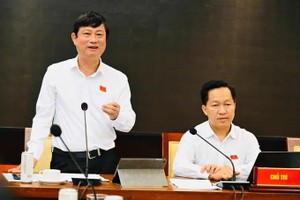
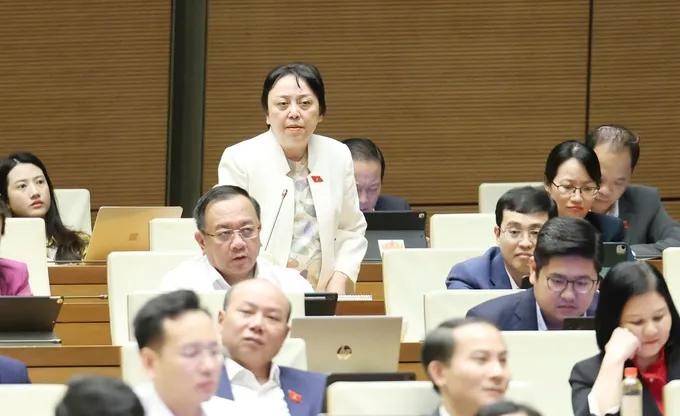
Delegate Pham Khanh Phong Lan, Director of the HCMC Department of Food Safety, urgently petitioned for shifting the focus toward post-inspection, effectively dismantling the stifling barriers hindering unannounced inspections.
She tellingly cited that the vast majority of violation cases uncovered recently by police possessed flawless pre-inspection dossiers and were meticulously legalized. She didn’t even rule out the grim possibility of negative activities arising specifically to “purchase” a license at all costs.
Furthermore, Ms. Lan acutely pointed out glaring inadequacies that essentially “tie the hands” of functional forces. Scheduled inspections remain woefully ineffective, yielding an horribly low detection rate. Meanwhile, the draft’s rigid provision capping inspections at “no more than once a year” will inevitably forge a complacent thinking among establishments while simultaneously handcuffing regulatory agencies.
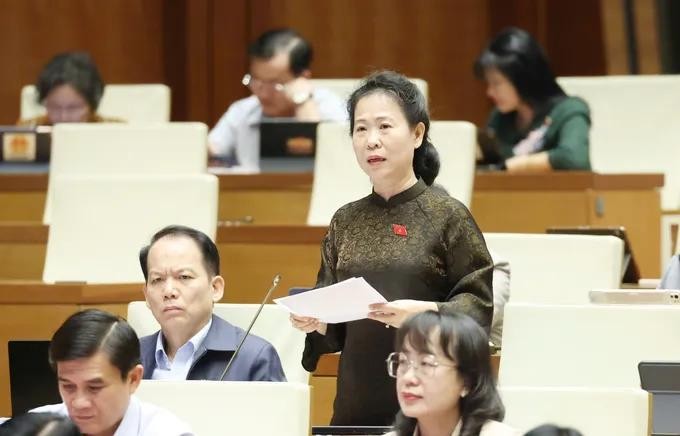
In strong agreement, Delegates Nguyen Dinh Xuan from Tay Ninh Province and To Ai Vang from Can Tho City fervently proposed abolishing this maximum inspection frequency cap. It’s precisely the gripping mindset of potentially being inspected at absolutely any moment that serves as the classic driving force compelling establishments to strictly maintain strict safety standards.
“We must scrap the one-year limit for collective catering services, school cafeterias, hospitals, industrial parks, or high-risk establishments. Post-inspection must be executed abruptly, relying entirely on rigorous risk analysis,” she firmly proposed.
Meanwhile, Delegate Pham Trong Nhan from HCMC urgently demanded clear regulations explicitly designating a central food safety focal point. “When a batch of food produced in one province is sold across an e-commerce platform to numerous other provinces, ultimately triggering poisoning elsewhere, who issues the very first warning?” he tellingly questioned.
He also suggested that the Ministry of Health should wield the power to definitively designate a presiding agency when ministries remain stubbornly deadlocked, and that this ministry should spearhead the handling of inter-provincial incidents, ultimately dictating the scope of nationwide warnings and product recalls.
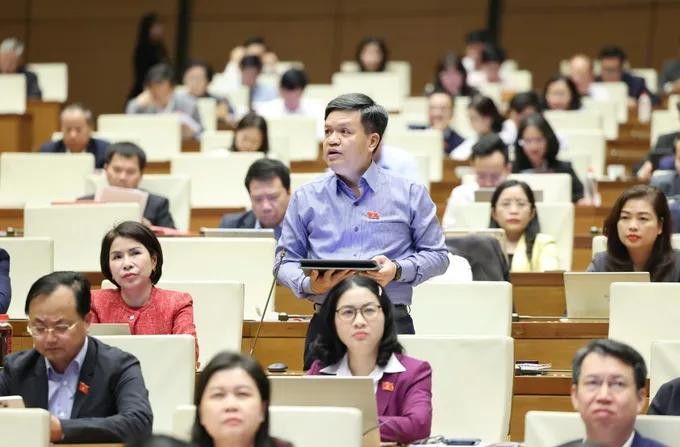
Delegate Ta Dinh Thi from Hanoi passionately proposed clarifying the core principle of one product, one supply chain, one focal point bearing primary accountability. He strongly advocated facilitating genuine data sharing among various ministries to eradicate fragmented fiefdoms alongside glaring overlaps, particularly at intersectional pinch points like wholesale markets.
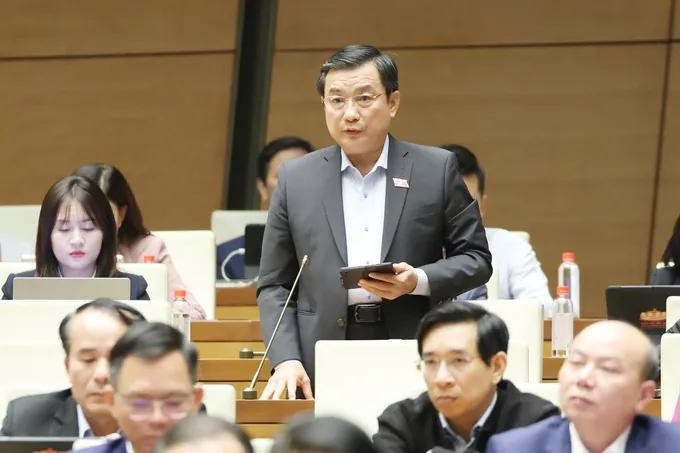
Proposing thorough license revocation and financial penalties
Citing stark data from the Central Interdisciplinary Steering Committee, Delegate Pham Trong Nhan noted that during this year’s first half, the nation recorded 58 poisoning cases, resulting in 10 tragic fatalities. He fervently proposed revoking the certification absolutely must be articulated with crystal clarity.
“For however much we slash red tape for honest businesspeople, we must tighten the punitive sanctions against those engaging in fraudulent practices by the exact same magnitude,” he emphatically underscored.
Delegate To Ai Vang also strongly proposed implementing thorough financial penalties, specifically targeting the deliberate use of banned substances. Crucially, any owners caught engaging in such acts must be permanently banned from establishing or managing food businesses.
Arguing consumers currently lack requisite tools to proactively protect themselves amidst a chaotic battlefield of counterfeit foods, she urgently proposed operating a robust national digital traceability platform. Citizens would merely need to scan a QR code to instantaneously look up safety certifications.
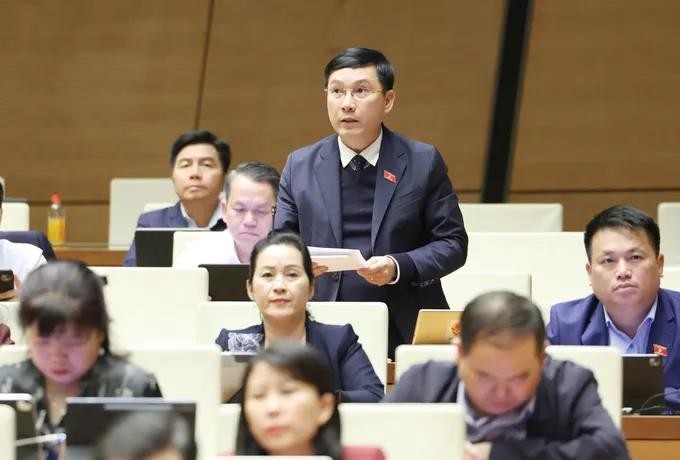
Finally, Delegate Le Hoang Anh resolutely petitioned that the law must mandate front-of-pack nutritional warning labels. This would tangibly empower consumers while simultaneously forging a powerful incentive for enterprises to proactively slash sugar content on their own volition.
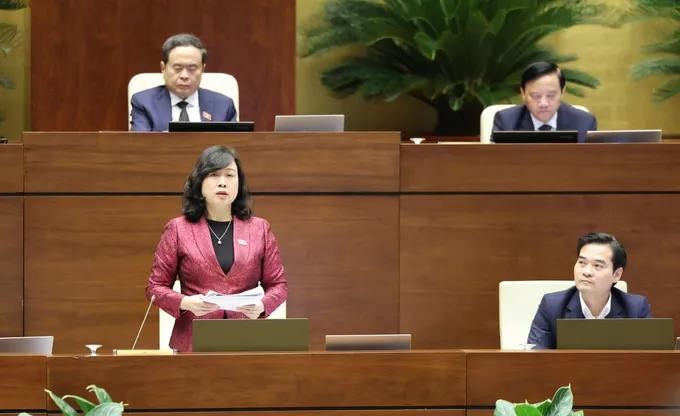
In response to the proposals, Minister of Health Dao Hong Lan emphatically stressed that food safety management desperately requires a radical model shift toward proactive prevention, actively thwarting risks early instead of merely resorting to reactive post-inspections after shoddy products have directly harmed unwary consumers.
“This iteration of the law actively reforms the overall management methodology, strictly limiting disruptions to corporate operations, vehemently protecting legitimate enterprises, while steadily progressing toward eradicating profiteering businesses.”
Minister of Health Dao Hong Lan
The 2010 Law on Food Safety stipulated that all pre-packaged food products must be certified as conforming to national technical regulations. The current draft outlines three distinct modalities for managing food products, namely registering the product declaration, declaring product standards, and effectively implementing both declaration processes.
Regarding product standard declarations, organizations are legally permitted to autonomously commence production the very moment they finalize the declaration process. This specific modality relies entirely on post-inspection mechanisms. Products officially exempted from declaration registration must still strictly satisfy food safety conditions, while remaining subject to stringent supervision throughout their circulation.
The product declaration registration modality is strictly applied to food groups demanding exceptionally high-quality management, like health supplements and infant nutritional products. These must adhere to exceptionally stringent regulations, inherently aiming to curb the rampant exaggeration of benefits that severely misleads consumers.
The Minister elaborated that the Ministry of Health operates as the focal agency actively assisting the Government in state management, whereas localized People’s Committees function as regional state management organizations.
The Ministry of Health purportedly manages food safety by establishing maximum residue limits regarding veterinary drugs that could detrimentally impact human health. Meanwhile, various ministries will continuously execute assigned control duties at critical input stages. This monumental task still desperately necessitates tight coordination across numerous sectors, flawlessly aligning with Vietnam’s unique characteristics.
“Waiving administrative procedures for organizations producing street food doesn’t equate to loosening management; rather, it must be inextricably linked to localized authorities’ strong supervisory responsibilities,” Minister Lan emphatically highlighted.
She stressed the draft explicitly preserves the legal right to conduct unannounced inspections if glaring violations are detected, promising to explicitly define responsibilities regarding collective catering while subjecting school catering to substantially more stringent regulations.