On October 12, the Royal Swedish Academy of Sciences awarded the 2026 Economics Nobel Prize to Robert E. Hall and Michael Woodford. This prestigious prize officially recognizes their groundbreaking work in constructing the microeconomic foundations for macroeconomic stability policies, with a straightforward message: “The impacts of a policy on the broader economy is determined by studying how individual families decide to spend and how businesses determine their pricing.”
Just a week later, right in the middle of the National Assembly hall, HCMC Party Secretary Tran Luu Quang firmly asserted that authorities must meticulously evaluate all possible resources for double-digit growth.
One crucial element is essentially the purchasing power of millions of families living and making a living on this very land. After all, growth is inextricably woven from countless daily decisions, both big and small, ranging from a mother in Ba Chieu Market carefully considering buying her child a new outfit for the upcoming Lunar New Year, a bricklayer in Thu Duc Ward deciding to treat his entire family to bowls of noodle over the weekend, to a young couple in Go Vap Ward discussing replacing their secondhand refrigerator.
These decisions only materialize when people actually have money in their pockets, or at least harbor a strong belief that they soon will. The pressing question of “where the money come from” has already been answered by HCMC in a quiet, incredibly persistent manner by systematically alleviating mandatory expenses that relentlessly weigh down every family’s budget.
In the healthcare sector, the municipality reportedly covers the entirety of co-payments for medical examinations and treatments within the scope of health insurance benefits for certain beneficiary groups under a highly specific resolution. Simultaneously, it provides supplementary financial support covering non-insurance costs for individuals battling critical illnesses.
Students and citizens aged between 65 and under 75 who aren’t currently covered by other welfare policies have their premiums entirely paid by the state budget. This essentially means they possess completely free health insurance cards, fueled by a massive funding allocation exceeding VND2 trillion (US$77.3 million) for over 2.7 million residents. Furthermore, the city rolled out completely free health check-ups and medical screenings for approximately 15 million citizens across 168 wards, communes, and special zones.
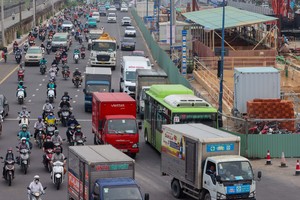
Shifting to transportation, for the very first time, HCMC has completely waived bus fares on a citywide scale. This monumental initiative features an estimated budget of approximately VND665 billion ($25.7 million) explicitly earmarked for the latter half of 2026.
When viewed in isolation, each policy might only help a single household save a few hundred thousand or a couple of million VND. However, when multiplied across millions of households, it transforms into a massively substantial wellspring of purchasing power that has just been successfully unleashed.
The currency spared from hospital bills and transit fares will invariably flood back into the retail market, seamlessly metamorphosing into a slightly better meal, a brand-new consumer item, extra tutoring sessions, or a well-deserved weekend getaway. It isn’t merely social welfare; it’s a profoundly astute investment directly into the macroeconomic aggregate demand.
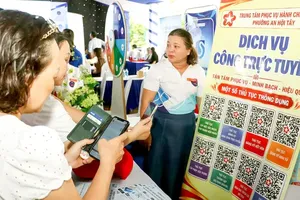
Building upon that robust foundation, the year-end demand stimulus program has taken another proactive stride forward. The municipality will heavily leverage e-commerce, digital payments, alongside digital gift or discount vouchers so consumers can conveniently buy now and pay later during the festive season, a highly significant model shift compared to previous years.
Following a remarkably similar approach, the city strongly encourages enterprises to disburse Lunar New Year bonuses straight away in November and December. This empowers workers to finish their holiday shopping early while prices remain relatively comfortable. Running parallel to this push is a vibrant chain of entertainment and tourism activities, ranging from massive musical extravaganzas to hotels strategically adjusting room rates to effectively retain weary travelers.
Thus, the pressing question of “where the money come from” is being comprehensively answered by the city from three distinct angles. They’re determinedly reducing mandatory expenses through robust welfare policies; funneling incomes to families earlier via early bonus disbursements; and drastically expanding consumer affordability through buy-now-pay-later credit mechanisms.
Above all, the ultimate bedrock must still be stable employment, steadily rising incomes, reasonable living costs, alongside moderate interest rates. In that ecosystem, consumer credit programs should inherently be designed with crystal-clear fee structures and credit limits perfectly commensurate with the clients’ actual earning capacities.
When every family sheds their anxieties over medical bills and transit costs while gaining the extra capacity to shop for the year-end holidays, millions of seemingly microscopic spending decisions will synergistically converge into a colossal growth engine.
The economy only genuinely prospers when every single family and every individual citizen truly prospers.