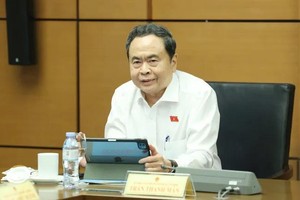
On October 18, National Assembly deputies continued group discussions on the socio-economic situation over the first nine months of the year and the development plan for 2027. Taking part in the discussions, Prime Minister Le Minh Hung provided updates on several important issues.
New approaches to governance
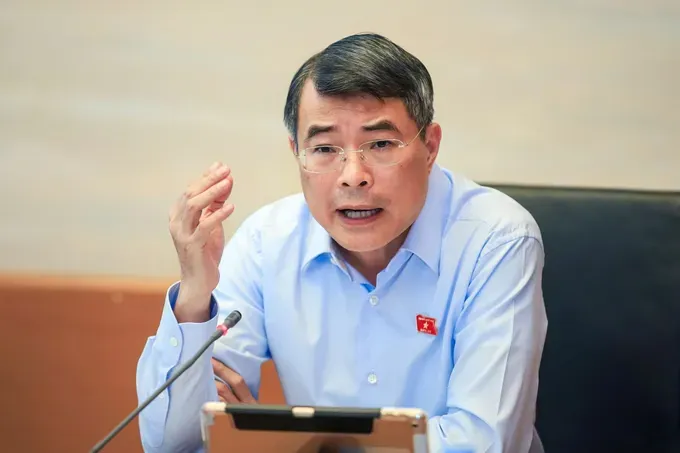
In a broad assessment of governance and leadership in recent months, the Prime Minister highlighted a significant and important shift: a clear and positive change in the mindset, awareness, and sense of responsibility among authorities at all levels and across sectors.
Growth cannot be achieved without the involvement of local authorities, the Prime Minister said.
He noted that working methods had become more effective, direct, and focused on practical issues, while local governments had taken more decisive action. In particular, some localities had promptly reassigned officials who failed to meet requirements.
The Prime Minister described this shift in mindset as a fundamental foundation. He said that when he sets a target but cannot deliver on it, he also feels deeply concerned and keep thinking about it. He has to discuss the matter with others to find a solution and ensure that the problem is addressed.
According to the Prime Minister, when the Government assigns tasks to ministries and sectors, responsibilities are clearly defined for the lead and coordinating agencies in each area, along with implementation schedules, timelines, and expected outcomes. This reflects a broader shift across the entire administrative system toward a scientific, focused, and targeted approach that can address the issues at hand.
Controlling inflation and maintaining major economic balances
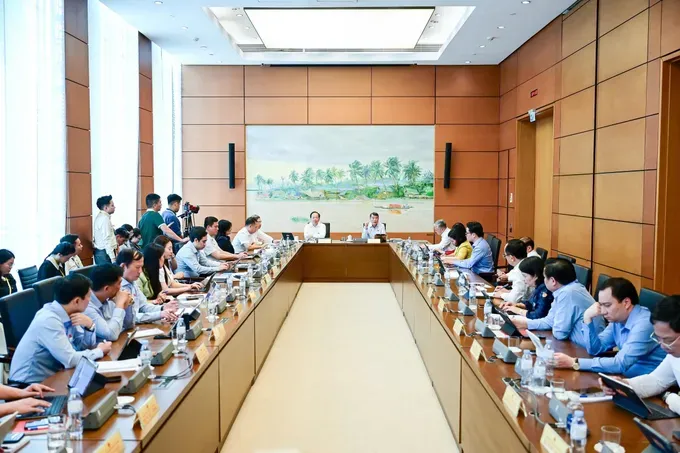
Regarding macroeconomic management to establish a solid foundation, Prime Minister Le Minh Hung emphasized that inflation could not have been kept at its current level without responsive and timely policy measures.
He cited global oil and fuel prices, which had risen by 65 percent to nearly 90 percent. Without immediate tax measures, domestic fuel prices would have increased by 60–80 percent, driving up the prices of other goods.
Fuel supplies remain sufficient at the lowest prices compared with other countries in the region. Although state budget revenue has fallen significantly short of expectations, the goverment has taken measures to share the burden with the economy and businesses, demonstrating the responsibility toward the public and consumers. Similarly, to achieve 1 percent GDP growth, electricity output needs to grow by around 1.3–1.5 percent. Electricity prices remain unchanged, with no increase.
As a result, prices of other goods have also been kept under control, helping maintain inflation at 4.52 percent. He described this as a major achievement in macroeconomic management.
The Prime Minister stressed that rising inflation would erode the gains from economic growth, preventing people from benefiting fully from those gains.
High growth must be built on a foundation of strong stability. That has been the outcome over the past nine months, and it is also our goal for 2027. It is necessary to remain steadfast in maintaining macroeconomic stability. The Government will implement coordinated measures to keep inflation under control and maintain the economy’s major balances, Prime Minister Le Minh Hung affirmed.
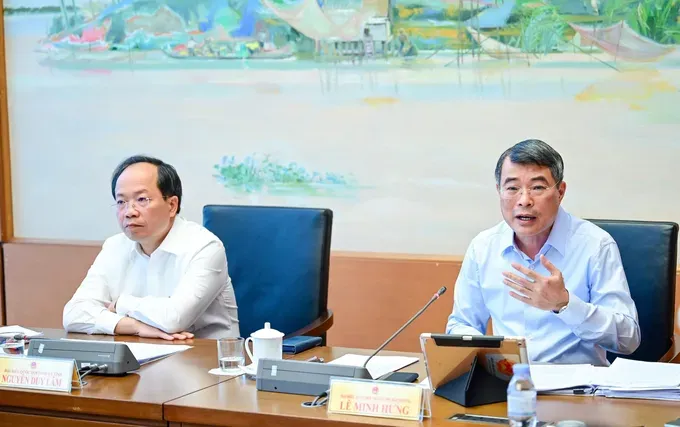
Prime Minister Le Minh Hung said the Government was prioritizing investment in major infrastructure projects that would contribute to economic growth for years to come, reduce costs across the economy, and lower logistics expenses. Citizens and businesses would also benefit from access to improved infrastructure.
He emphasized that, in line with directives from the Party Central Committee and the National Assembly, the Government has been taking decisive measures to reduce input costs across the economy. For example, vigorously implementing policies to develop social housing and rental housing would immediately help bring down housing prices, particularly apartment prices.
When the National Assembly considers and passes the revised Land Law, the Government will take stronger measures to regulate land prices, and land and real estate prices will certainly fall, he said.
Similarly, upcoming amendments to the decree on petroleum trading will eliminate intermediaries and reduce additional costs, putting downward pressure on fuel prices. The same approach will apply to medicines and medical equipment for patients, electricity prices, and agricultural commodities, among other items.
All measures must be geared toward reducing input costs across the economy. At the same time, it needs to accelerate the development of science and technology to increase value, lower costs, and improve efficiency across economic sectors, the Prime Minister stressed.
According to PM Le Minh Hung, the national digital architecture framework will be finalized to enable seamless connectivity through the National Public Service Portal and provide a one-stop administrative service system. Citizens and businesses will no longer need to resubmit documents, as all information can be retrieved from national and sector-specific databases.
Prioritizing projects with tangible and far-reaching benefits
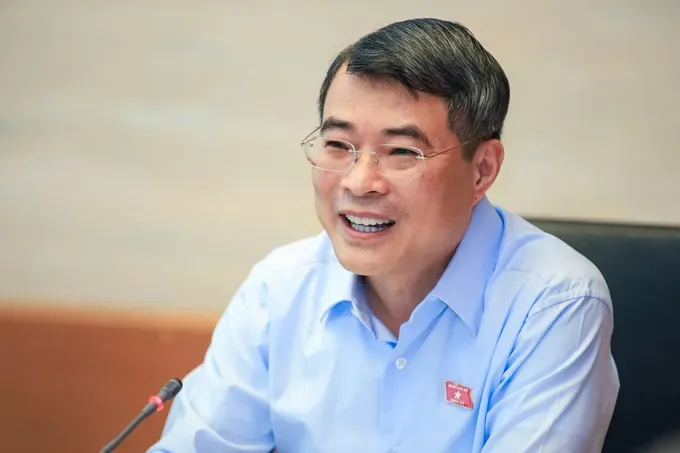
Regarding resource mobilization, Prime Minister Le Minh Hung emphasized that achieving the target of double-digit economic growth would require substantial capital. Since the state budget could cover only part of investment needs through public investment, public investment disbursement must reach 100 percent, with project portfolios carefully selected to ensure genuine efficiency and broad spillover effects.
The Prime Minister noted that approximately 5,000 public investment projects were implemented nationwide during the previous term, and the number must be reduced by at least 30 percent during the current term. Ministries, sectors, and localities must thoroughly review and prioritize investment projects.
He stressed the responsibility of local authorities to select projects that deliver the fastest and greatest socio-economic benefits, generate spillover effects, and directly benefit citizens and businesses.
At the same time, the Government, ministries, sectors, and localities must mobilize resources from private investment, foreign investment, and other funding sources to unlock capital. To achieve this, local authorities must reform administrative procedures, reduce business conditions, and streamline internal administrative processes to create a competitive environment.
During the discussions, several National Assembly deputies expressed concerns about consumer purchasing power. The average consumer price index (CPI) rose 4.52 percent in the first nine months of 2026 compared with the same period last year.
Even with high growth, if businesses struggle to maintain profits and people do not see real improvements in their incomes, the quality of growth remains a matter of concern, National Assembly deputy Nguyen Ngoc Viet of Hanoi said.
In response, the Prime Minister said this was understandable, as people tended to tighten their spending when economic conditions were difficult. Therefore, stimulating domestic demand was essential to boost consumption, while the year-end period presented an opportunity for localities to accelerate growth.