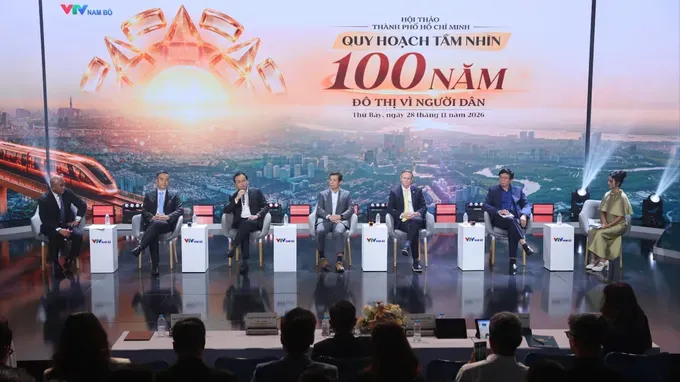
Speaking at the seminar, Nguyen Quang Sang, Deputy Director of the VTV Southern Region, said the master plan had established broad strategic directions for the city’s long-term development. However, translating strategic plans on paper into reality remained a challenging journey.
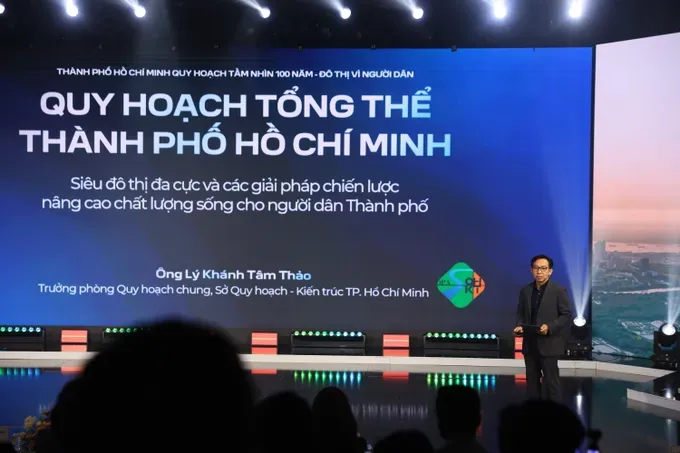
Ly Khanh Tam Thao, Head of the General Planning Division at the Ho Chi Minh City Department of Planning and Architecture, said that as the city entered a new phase of development with an expanded geographical footprint and a new position, formulating a 100-year master plan centered on people was an urgent task of historic significance.
A key shift in planning philosophy is the move away from measuring accessibility in terms of “travel distance” toward focusing on “travel time and accessibility.” This is reflected in two principles, including the “15-minute city” and the “30-minute polycentric city.”
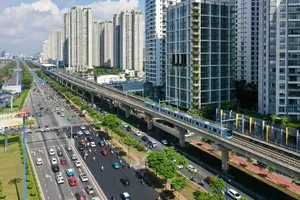
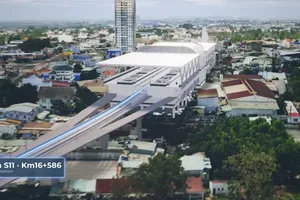
Under this approach, residents would be able to access essential services within a 15-minute walk, while growth hubs and urban centers would be connected within approximately 30 minutes through urban railways, expressways, and digital infrastructure.
Meanwhile, Nguyen Do Dung, CEO of international consulting firm EnCity, said long-term planning needed to remain stable, as it represented a commitment by the State to residents and investors. By contrast, planning approaches and implementation mechanisms needed to be flexible enough to adapt to changing circumstances.
Drawing on his experience advising on the planning of the highly interactive innovative urban area in the east of the city, Mr. Dung said land management approaches also needed greater flexibility. The area's goal is to attract businesses and start-up projects, requiring an integrated ecosystem that combines education and training, research, pilot production, and commercialization.
Strengthening connectivity and improving residents’ quality of life
Huynh Pham Tuan Anh, Deputy Director of the Ho Chi Minh City Department of Planning and Architecture, outlined four development corridors shaping the city's new spatial structure.
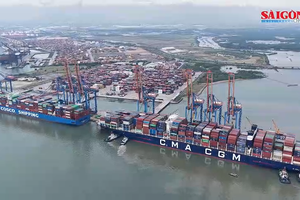
Under the proposed orientation, the northern area is envisioned as an industrial region integrated with urban services; the east as a hub for science and technology; the west as a center for education and training; and the south as an area leveraging its strengths in seaports, tourism, and ecology, alongside the city's long-established urban core.
The delineation of these development hubs is intended not only to reorganize urban space but also to provide a basis for concentrating resources, investing in infrastructure, and developing functions suited to the specific characteristics of each area.
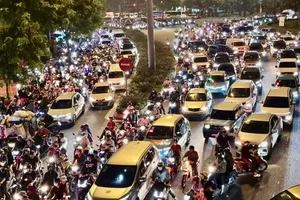
However, according to leaders of the Ho Chi Minh City Department of Planning and Architecture, a major challenge is ensuring that the new urban hubs do not become merely residential areas where people live but must commute to the city center every day.
For population redistribution to be genuinely effective, each hub must be capable of sustaining itself in terms of employment, social services, and technical infrastructure. Three factors—local employment opportunities, convenient connectivity, and quality of life—will determine the degree of self-sufficiency of these urban hubs.
When each hub is equipped with comprehensive functions and effectively connected to the wider urban network, the polycentric model can help ease pressure on the central area while creating high-quality living environments and generating new growth drivers for the city as a whole.

)
)