This underscores the need for solutions to strengthen water extraction, treatment, and distribution capacity.
Rising demand puts pressure on water supply
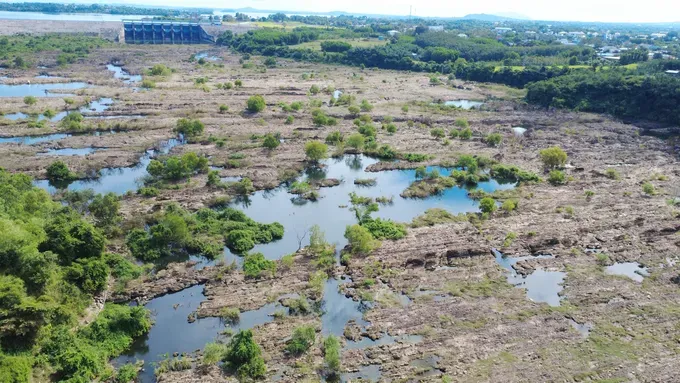
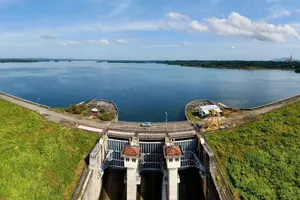
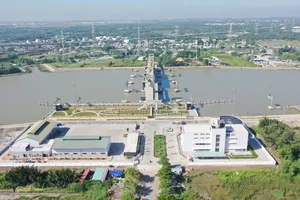
According to Nguyen Minh Chanh, Deputy Director of the Ho Chi Minh City Department of Agriculture and Environment, the city has 36 reservoirs and numerous facilities serving irrigation, drainage, water supply, flood control, saltwater intrusion prevention, and freshwater retention, as well as 131 urban and rural water supply facilities with a combined designed capacity of approximately 3.81 million cubic meters per day.
Water resources are affected by a range of factors, including climate change, declining river flows, pollution, and water extraction and consumption activities across river basins spanning multiple provinces and cities.
Ensuring water security cannot be addressed solely within administrative boundaries but must be approached through integrated management of the Dong Nai River basin and other interconnected river systems.
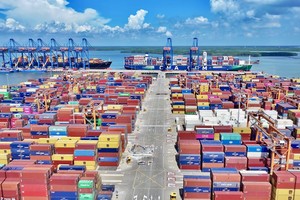
In eastern Ho Chi Minh City, the water supply system is managed by five operators, with a combined designed capacity of 563,000 cubic meters per day. They supply approximately 400,000-450,000 cubic meters of water daily to 11 wards and 18 communes, serving around 350,000 customers, including households, government agencies, businesses, industrial parks, seaports, and tourist areas.
Raw water is sourced primarily from the Da Den, Song Ray, Suoi Nhum, Song Hoa, Kim Long, Xuyen Moc, and Suoi Ca reservoirs, accounting for approximately 96 percent of the total supply, while the remainder comes from groundwater.
Ba Ria-Vung Tau Water Supply Joint Stock Company is currently completing investment procedures for Phase 1 of the Xuyen Moc Water Treatment Plant, which is expected to have a capacity of 10,000 cubic meters per day to meet water demand among residents and support tourism activities. However, raw water resources in the area are relatively scarce, potentially posing challenges for the plant once it becomes operational.
Phu My Water Supply Joint Stock Company currently supplies approximately 60,000 cubic meters of water per day to industrial parks in Phu My, Tan Phuoc, and Tan Hai wards in Ho Chi Minh City, accounting for 75 percent of its total output.
According to the company's leadership, a prolonged El Niño event that leads to water shortages could significantly intensify pressure on water supply operations. The biggest risks lie in declining reserves at Da Den Reservoir and reduced replenishment from the water conveyance channel supplying Song Ray Reservoir. If these sources fail to maintain adequate flow rates, the volume of raw water entering the system could drop sharply.
Avoiding a reactive approach
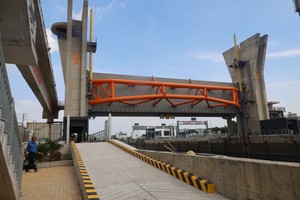
The Ho Chi Minh City Irrigation Works Management and Operation Center currently manages and operates 59 irrigation facilities. As of November 5, 2026, the total water storage at these facilities stood at 305.93 million cubic meters, equivalent to 94.14 percent of their designed capacity and 102.39 percent of the same period in 2025. After deducting dead storage, the usable water volume stood at 270.37 million cubic meters.
Total water demand for agricultural production, aquaculture, and domestic use during the dry season is estimated at approximately 228.01 million cubic meters. The current usable water reserves therefore exceed projected demand by about 42.36 million cubic meters.
The center assesses that water resources are basically sufficient to meet essential needs. However, actual water supply capacity will depend on the location of facilities, water conveyance capacity, the timing of demand, and the ability to regulate and replenish supplies between reservoirs.
To avoid being caught off guard by drought and saltwater intrusion, the center will intensify inspections, dredge canals and waterways, repair infrastructure, develop irrigation schedules, and coordinate water distribution among areas. Local authorities have also been asked to strengthen water-user cooperatives and encourage residents to conserve water and sow crops within the recommended seasonal planting schedules.
At the regional level, Nguyen Minh Chanh, Deputy Director of the Ho Chi Minh City Department of Agriculture and Environment, said the city needs to strengthen coordination with Dong Nai, Tay Ninh, and other localities within the Dong Nai River basin to share data, regulate water resources, and mitigate the risks of pollution, drought, and saltwater intrusion.
Regular updates on rainfall, river flows, reservoir storage, water extraction volumes, and wastewater discharge are essential to ensuring coordinated water resource management, he said. Water extraction activities upstream must not be allowed to proceed without due consideration of their impacts on water supply needs downstream.
For water supply operators, Tran Thai Nguyen, Director of Thu Duc Water Plant, said the plant maintains coordination with Tri An Hydropower Company to update information on discharge volumes, river flow patterns, and upstream water conditions. The plant is also developing a safe water supply contingency plan amid climate change, focusing on flexible coordination among facilities within the Thu Duc water supply cluster, proactively extracting and storing treated water ahead of forecast saltwater intrusion and establishing reserve supplies for the peak dry-season period.
Water supply companies, including Saigon Water Corporation (SAWACO), Ba Ria-Vung Tau Water Supply Joint Stock Company, and other operators, have proactively developed multiple contingency plans, ranging from source regulation to ensuring the stable operation of distribution networks.
The operators are prepared to adjust water pressure and flow rates, prioritizing areas at the end of the supply network, while stepping up maintenance, repairs, leak detection and control, and preparing emergency water supply arrangements in the event of disruptions.
In addition, the companies are strengthening raw water quality monitoring, conducting regular sampling, integrating monitoring data, and controlling pollution risks. They are also proactively regulating and interconnecting distribution networks, prioritizing water for domestic use and essential activities, and coordinating the operation of upstream reservoirs along the Dong Nai and Saigon rivers to store water, push back saltwater intrusion, and respond to adverse conditions.

According to Vice Chairman of the Ho Chi Minh City People's Committee, Bui Minh Thanh, water resources are directly linked to people's livelihoods, production, disaster prevention, and the ability to adapt to climate change. Ho Chi Minh City therefore needs to develop response scenarios for different risk levels, including water shortages, water supply system failures, the impacts of El Niño, and saltwater intrusion. Alongside developing response plans, the city must organize training and clearly assign responsibilities to ensure that functional forces and local authorities fully understand their duties and are ready to act immediately when situations arise.
Accordingly, relevant agencies must comprehensively assess water supply capacity, water intake points, and daily demand while identifying alternative supply sources, groundwater extraction capacity, and storage volumes at reservoirs and water storage tanks in the event of disruptions. For the city's 36 existing reservoirs, assessments should specifically identify those connected to water supply systems, their extraction capacity, and plans for mobilizing them as reserve sources.

Vice Chairwoman of the Dong Nai City People's Committee, Nguyen Thi Cat Tien, said that Dong Nai has directed departments, agencies, local authorities, and relevant units to proactively develop response plans to ensure adequate water supplies for domestic use and production during the 2026-2027 dry season. Reservoir operators must develop plans for water storage and regulation to ensure infrastructure safety while meeting downstream demand.
In particular, hydropower reservoir operations must be aligned with efforts to control saltwater intrusion, maintain river flows, and ensure water supplies for treatment plants. This is a regional task requiring close coordination among localities and operators throughout the Dong Nai River basin to balance water needs for domestic consumption, production, and power generation.

Director of the Water Resources Management Department under the Ministry of Agriculture and Environment, Chau Tran Vinh, said that under the very high-risk scenario, rainfall and river flow deficits could reach 20-40 percent. Response measures will be adjusted accordingly depending on the risk level. From the beginning of the dry season, authorities need to assess stored water volumes, balance supply, and ensure efficient water allocation.
In particular, reservoir discharge volumes must be adjusted flexibly, economically, and efficiently in line with actual downstream demand. Specifically, discharge should be reduced during periods of lower water demand to conserve reserves for increased supply during peak demand periods.
In addition, the Ministry of Agriculture and Environment will lead and coordinate with other ministries, agencies, and localities to establish unified plans for water regulation and distribution, adjust water extraction quotas, and modify the operating regimes of individual reservoirs and reservoir systems when necessary. Localities cannot wait until the 2027 dry season to tackle drought; preparations and action must begin early and proactively.

According to Deputy General Director of Ba Ria-Vung Tau Water Supply Joint Stock Company, Pham Tan Luan, to ensure a safe and uninterrupted water supply, Ho Chi Minh City needs to promptly resolve bottlenecks in planning, infrastructure investment, and funding for relocating water pipelines affected by transport projects. Timely coordination and resolution of these issues will enable water supply facilities to operate more proactively and avoid disruptions caused by the construction schedules of other projects.
In the long term, the city needs to strengthen water storage capacity and diversify raw water sources by promptly considering and approving projects to expand reservoir capacity, upgrade irrigation infrastructure, and develop additional water sources. It should also review and incorporate key transmission pipelines into Ho Chi Minh City's water supply infrastructure plan for 2026-2030, with a vision to 2050, providing a basis for coordinated investment, improved operational capacity, and stronger resilience to adverse fluctuations in water resources.
The company recommends that the city and relevant departments promptly implement the Song Ray 2 Reservoir project under Decision No. 1629/QD-TTg dated December 16, 2023, issued by the Prime Minister. The project is considered an urgent and important solution to strengthen water storage capacity, develop sustainable irrigation infrastructure, ensure water supply security, and enhance disaster prevention and response capabilities under the most adverse conditions.