
Nearly 1,000 healthcare workers and voters engaged in a candid discussion with the Standing Committee of the Ho Chi Minh City People's Council and the Standing Committee of the Vietnam Fatherland Front Committee of Ho Chi Minh City on November 25, raising concerns over staffing shortages, compensation disparities, and digital transformation.
The meeting, held at the 272 Conference Center in Xuan Hoa Ward and connected online with Ba Ria and Thu Dau Mot wards, came as the city's healthcare system expands after administrative restructuring and the introduction of a two-tier local government model.
Participants called for measures to address persistent bottlenecks in staffing, benefits, and infrastructure, with the ultimate goal of improving healthcare services and ensuring better access to medical care for residents.

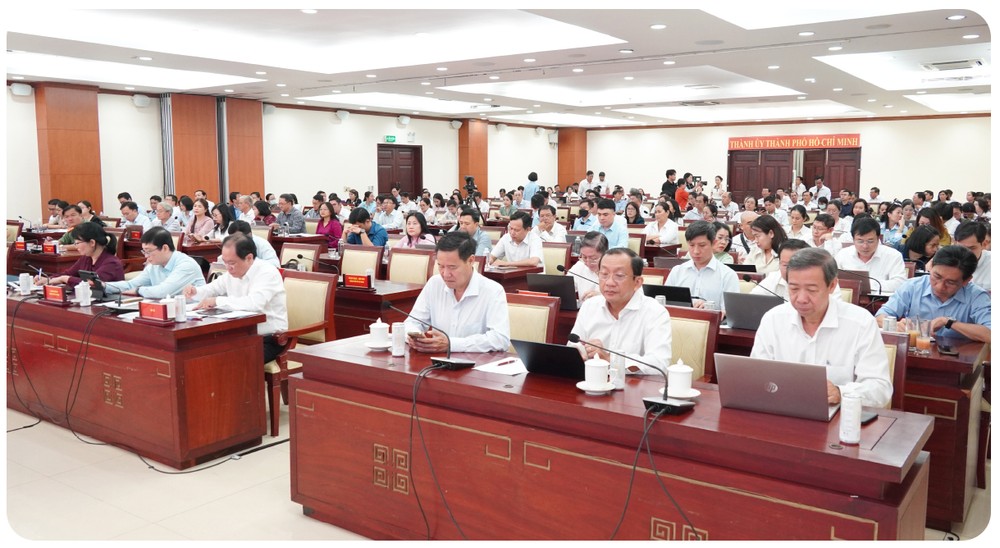

Healthcare workers highlighted mounting pressure on grassroots medical facilities and disparities in compensation across professional groups. After the administrative reorganization, the city's healthcare network has expanded in population coverage, geographical reach, and the number of facilities, requiring coordinated policies and additional personnel.
In response, the municipal health sector has advised the Ho Chi Minh City People's Committee to review and harmonize policies through a phased approach, ensuring transparency, fiscal sustainability, and the protection of existing beneficiaries' lawful entitlements.
To address shortages of doctors and nurses at primary healthcare facilities, the Department of Health has introduced a staff rotation program for commune- and ward-level health stations. Personnel assigned to temporary rotations remain on the payroll of their original institutions and retain their salaries, allowances, insurance contributions, and other existing benefits.
Rotating staff also receive State-funded support under Resolution No.51/2026/NQ-HDND, ensuring that healthcare facilities operating under financial autonomy are not burdened by the additional payments.
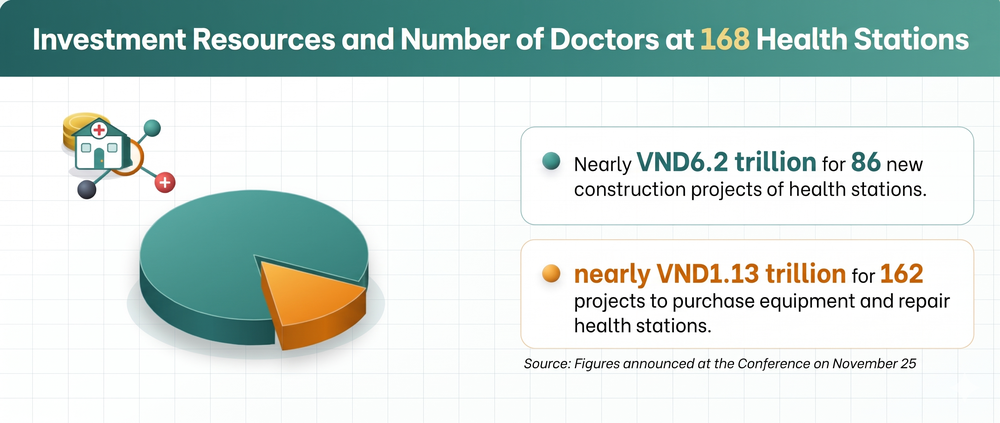
In response to calls for greater investment in primary healthcare, a department representative said the city had approved nearly VND6.2 trillion for 86 projects to build new health stations, alongside VND1.128 trillion for 162 projects involving equipment purchases and facility repairs.
A hospital-to-health-station support network covering 168 health stations was launched on October 1, 2026, with each station assigned a general hospital to provide direct professional assistance.

Alongside temporary rotations, the city is implementing a targeted incentive program under Resolution No.80/2026/NQ-HDND to attract doctors to work permanently at health stations in communes, wards, and special administrative zones.
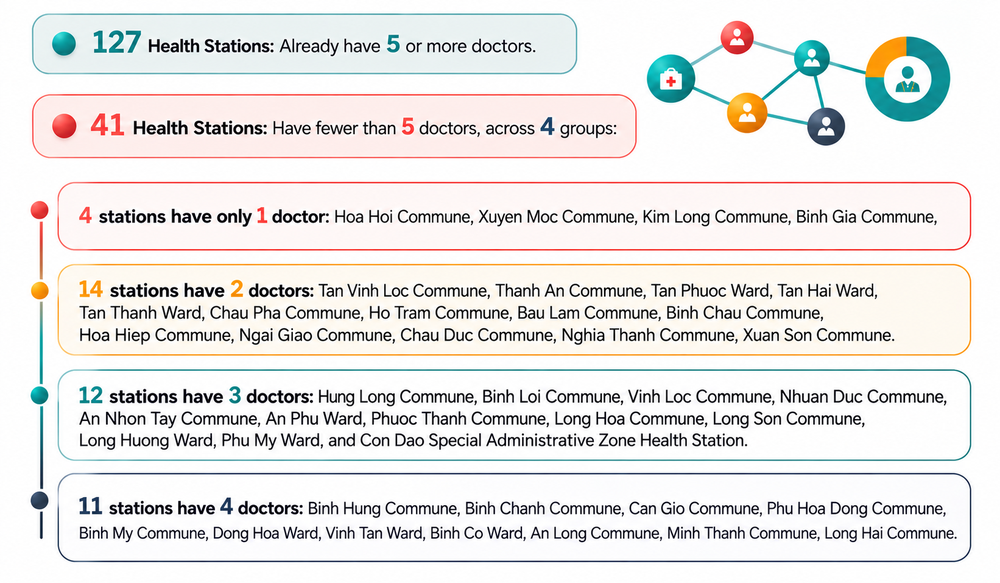
The supplementary policy prioritizes positions that are difficult to recruit and essential to delivering medical services. It also supports the implementation of Politburo Resolution No.72-NQ/TW, which sets a goal of having at least four to five doctors at each health station by 2027 and raising the proportion of health insurance-covered medical visits at these facilities to more than 20 percent.
The incentives apply to stations with fewer than five doctors that have failed to recruit enough personnel after two recruitment rounds.
Doctors with residency training, master's degrees, or specialist qualifications receive a one-time payment equivalent to 80 times the monthly regional minimum wage in Region I, while other eligible doctors receive 40 times that amount.
The allowance is multiplied by 1.2 for doctors working at Thanh An Island Commune Health Station and 1.5 for those serving at Con Dao Special Administrative Zone Health Station. Recipients must commit to working at their assigned facilities for at least 60 months.

Ho Chi Minh City's healthcare digitalization has achieved broad coverage, but challenges remain in making systems more practical and reducing administrative workloads.
All 164 public and private hospitals in the city have announced the implementation of electronic medical records.
At the meeting, Mr. Pham Nguyen Anh Vu, Deputy Director of Binh Chanh General Hospital, raised concerns about digital signatures required from patients. Although Ministry of Health regulations allow authentication through biometric methods or electronic signatures, service providers charge fees that hospitals cannot pass on to patients.
A Department of Health representative said patients were not yet required to obtain electronic signatures immediately and that hospitals could use appropriate verification methods in accordance with existing regulations.
Some facilities also face unreliable network infrastructure, duplicate data entry across multiple specialized software systems, and the continued use of both paper and electronic records.
The department is developing a shared data repository to improve interoperability and reduce redundant administrative work.
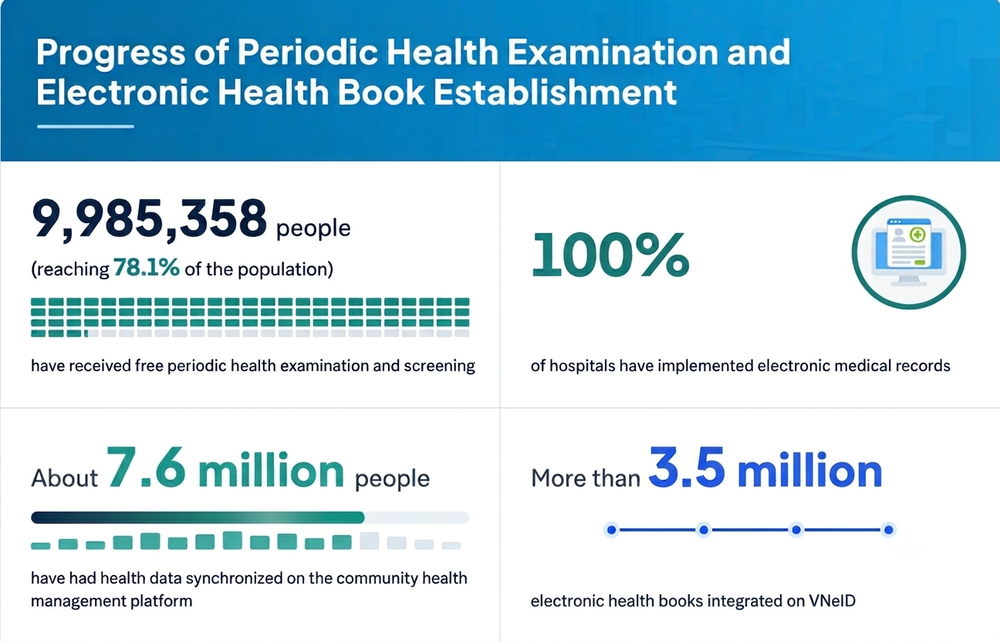
To ensure the city's free health examination program meets its targets, the city is expanding mobile medical teams and organizing after-hours examinations at businesses, workers' rental housing areas, and student dormitories. Older adults, people with disabilities, and disadvantaged residents are being given priority.
Medical inspections and data checks are also being conducted to prevent duplicate examinations.

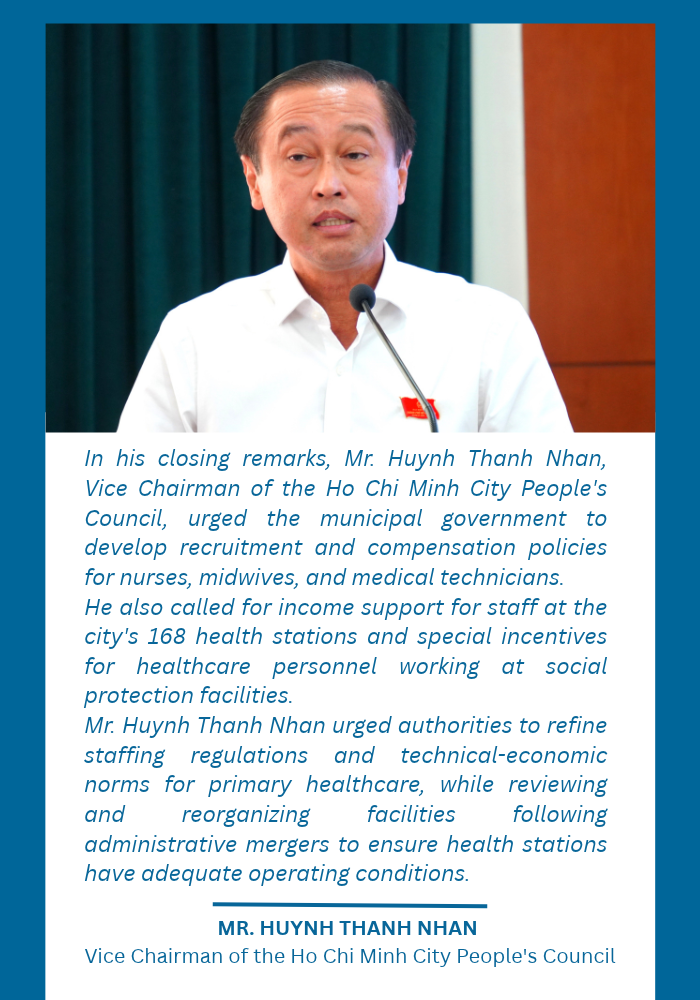
After the November 25 meeting, the Standing Committee of the Vietnam Fatherland Front Committee of Ho Chi Minh City will compile the healthcare workers' concerns and submit them to the municipal government and relevant departments for written responses. Issues falling under central government jurisdiction will be consolidated into formal recommendations.
The consultation is intended to provide a foundation for policy improvements, strengthen the healthcare system's capacity, protect the rights of medical personnel, and improve the quality of care for the city's residents.